


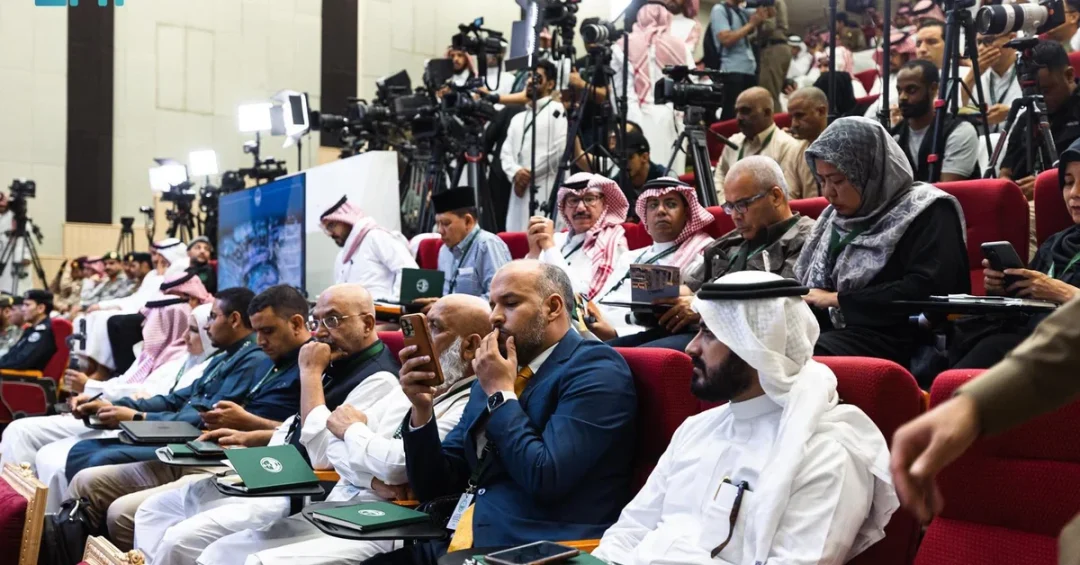
The Ministry of the Interior held a press conference on June 8, 2024, at the Unified Security Operations Center (911) in Makkah, bringing together commanders of the Hajj security forces for the 1445-2024 season to outline comprehensive security, traffic, and organizational plans for the annual pilgrimage. The briefing underscored Saudi Arabia’s unwavering commitment to ensuring the safety and security of millions of pilgrims expected to perform Hajj this year.
Context and Background
The Hajj, one of the Five Pillars of Islam, draws millions of Muslims from around the world to the holy city of Makkah each year. Managing this massive influx requires meticulous planning and coordination across multiple security and government agencies. The Ministry of the Interior, under the leadership of Lieutenant-General Mohammad bin Abdullah Al-Bassami, Director of Public Security and Chairman of the Hajj Security Committee, has assembled a multi-faceted force to oversee every aspect of the pilgrimage. The press conference served as a platform to detail the strategies and resources deployed to protect pilgrims and maintain order.
Key Details
Lieutenant-General Al-Bassami emphasized that “the security of the country, pilgrims, and holy sites is a red line,” and reaffirmed that safeguarding pilgrims until they return home is the top priority. He warned against fraudulent Hajj campaigns and unlicensed transporters, revealing that authorities have already seized 140 fake Hajj campaigns and 64 carriers violating regulations. Additionally, 97,664 violating vehicles were turned back, and 171,587 non-residents of Makkah were denied entry. Security forces apprehended 4,032 individuals attempting Hajj without permits and 6,105 violators of residency, work, and border security laws. The General Directorate of Passports, represented by Major General Dr. Saleh bin Saad Al-Murabba, continues to provide services at all entry points using advanced technology, and penalties for transporting violators include imprisonment up to six months and fines up to SAR 50,000, multiplied by the number of violators.
Major General Mohammed Al-Omari, Commander of the Special Emergency Forces, detailed their role in maintaining order in Makkah and Madinah, managing crowd movement, and organizing the stoning ritual. Major General Pilot Abdulaziz bin Muhammad Al-Duraijan of Security Aviation highlighted reconnaissance sorties to ensure smooth traffic and support medical evacuations. Major General Dr. Hamoud Sulaiman Al-Faraj of Civil Defense stressed preventive measures, use of modern technologies, and coordination with volunteers and the Haram Support Forces.
Implications and Impact
The measures outlined reflect Saudi Arabia’s proactive approach to crowd management and counter-terrorism during Hajj. By integrating advanced technologies such as artificial intelligence and mobile verification devices, the Kingdom enhances its capacity to handle emergencies and prevent disruptions. These efforts not only ensure a safe environment for pilgrims but also uphold the reputation of Saudi Arabia as a responsible custodian of Islam’s holiest sites. The international community, particularly Muslim-majority countries, watches closely, as the success of Hajj security directly impacts global perceptions of the Kingdom’s organizational capabilities.
Vision 2030 Alignment
This comprehensive security framework aligns with Vision 2030, Saudi Arabia’s strategic roadmap to diversify the economy and enhance quality of life. By leveraging technology, improving service delivery, and ensuring the safety of millions of visitors, the Kingdom demonstrates its commitment to becoming a global leader in managing large-scale events. The Hajj experience is a cornerstone of Saudi Arabia’s religious tourism strategy, and these efforts reinforce the nation’s dedication to continuous improvement and modernization in line with its long-term vision.
20 Questions
Q1. What was the purpose of the press conference held by the Ministry of the Interior?
A1. The Ministry of the Interior held a press conference to highlight its security, traffic, and organizational plans for the Hajj season 1445, ensuring the safety of pilgrims and holy sites.
Q2. Who chaired the Hajj Security Committee and led the press conference?
A2. Lieutenant-General Mohammad bin Abdullah Al-Bassami, Director of Public Security and Chairman of the Hajj Security Committee, led the press conference.
Q3. What did Lt. Gen. Al-Bassami emphasize regarding security?
A3. He emphasized that the security of the country, pilgrims, and holy sites is a red line, and safeguarding pilgrims is the top priority for the Hajj security forces.
Q4. How many fake Hajj campaigns have been seized by authorities?
A4. Authorities have seized 140 fake Hajj campaigns and 64 carriers violating Hajj regulations, as part of efforts to prevent fraud and unauthorized pilgrimages.
Q5. What penalties face transporters of violators without Hajj permits?
A5. Penalties include imprisonment for up to six months and fines up to SAR 50,000, with fines multiplying according to the number of violators transported.
Q6. What role does Security Aviation play during Hajj?
A6. Security Aviation conducts reconnaissance sorties to ensure smooth traffic, support security sectors, and provide humanitarian services like medical evacuation, rescue, and firefighting.
Q7. How many non-residents of Makkah were returned?
A7. Authorities returned 171,587 non-residents of Makkah and 97,664 violating vehicles to maintain order and prevent unauthorized entry to the holy sites.
Q8. What did Maj. Gen. Al-Omari say about the Special Emergency Forces?
A8. He explained they maintain security in Makkah and Madinah, protect guests, prevent violators from reaching holy places, manage crowds, and organize the stoning ritual.
Q9. How does Civil Defense use technology during Hajj?
A9. Civil Defense uses modern technologies and artificial intelligence for preventive supervision, emergency management, and coordination with volunteers and the Haram Support Forces.
Q10. What services does the General Directorate of Passports provide?
A10. It provides services at air, land, and sea ports using mobile devices, security documentation cameras, document verification devices, and simultaneous translation devices for pilgrims.
Q11. How many violators of residency and border regulations were apprehended?
A11. Authorities apprehended 6,105 violators of residency, work, and border security regulations, ensuring compliance with Hajj and residency laws.
Q12. What is the significance of the Unified Security Operations Center (911)?
A12. The Unified Security Operations Center (911) in Makkah serves as a central hub for coordinating security efforts and emergency responses during the Hajj season.
Q13. How many individuals were caught performing Hajj without a permit?
A13. A total of 4,032 individuals were apprehended for violating Hajj regulations by attempting to perform Hajj without the required permits.
Q14. What is the role of the Haram Support Forces?
A14. The Haram Support Forces assist in managing crowds, providing support to pilgrims, and cooperating with government agencies in emergency situations within the holy sites.
Q15. How does Saudi Arabia ensure the safety of roads leading to holy sites?
A15. Security Aviation conducts reconnaissance sorties and security forces monitor roads to prevent unauthorized intruders and ensure smooth traffic flow for pilgrims.
Q16. What measures are taken against misleading advertisements for Hajj?
A16. Security authorities monitor and arrest those behind misleading advertisements, referring them to competent authorities to prevent fraud and protect pilgrims from exploitation.
Q17. How many holders of visit visas for Hajj were recorded?
A17. There were 153,998 holders of visit visas for the purpose of Hajj, reflecting the high demand and the need for stringent regulation.
Q18. What is the penalty for transporting multiple violators?
A18. The fine multiplies according to the number of violators transported, with penalties including imprisonment up to six months and fines up to SAR 50,000 per violator.
Q19. How does the Hajj security plan align with Vision 2030?
A19. The plan leverages technology, improves service delivery, and ensures safety, aligning with Vision 2030’s goals of modernization and enhancing the quality of life for visitors.
Q20. What is the ultimate goal of the Hajj security forces?
A20. The ultimate goal is to safeguard the safety and security of pilgrims until they complete their rituals and return home, upholding the Kingdom’s role as custodian of the holy sites.
Reader Feedback
We value your thoughts. Please share your feedback on this article.
Your feedback helps us improve our coverage.