


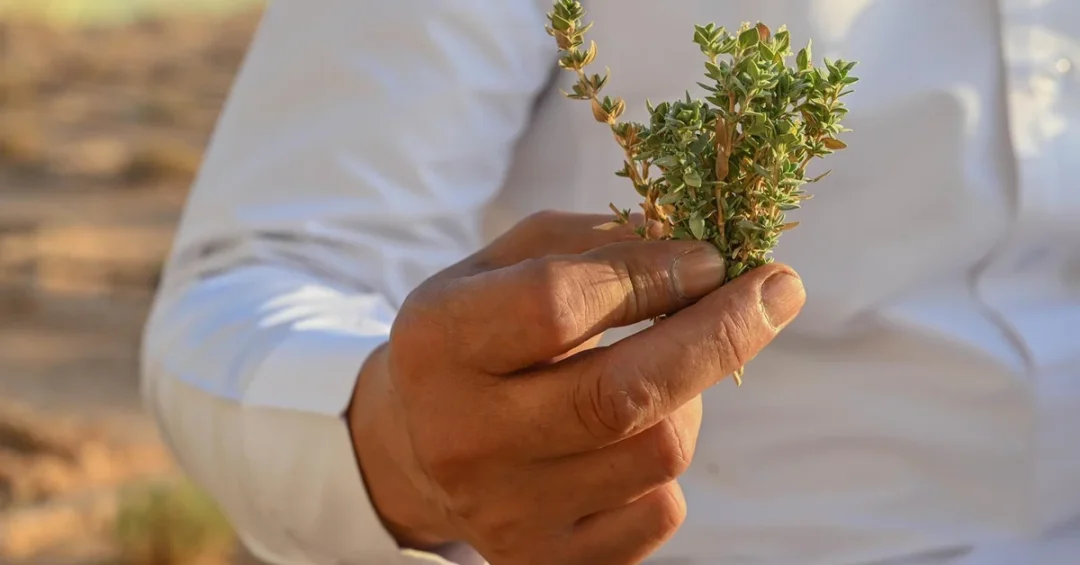
Wild thyme, a fragrant and nutritionally valuable plant native to Saudi Arabia’s Northern Borders Region, has been successfully cultivated in Arar City, marking a significant step in environmental conservation and sustainable agriculture. The achievement was announced by the Saudi Press Agency (SPA) on June 9, 2024, highlighting the efforts of local environmentalist Mohammed Obaid Al-Jumayshi and the Aman Environmental Association. This development not only preserves an endangered species but also supports the Kingdom’s broader goals of increasing green cover and promoting ecological balance.
Context and Background
The northern wild thyme, known locally for its aromatic leaves and branches, is distinct from other thyme varieties due to its high quality, pungent taste, and ability to thrive in rocky terrains along valleys and streams. It is valued for its nutritional and medicinal properties, and its cultivation contributes to expanding vegetation cover in arid regions. However, the plant has been endangered, prompting efforts to conserve and propagate it. The Aman Environmental Association in the Northern Borders, led by President Nasser Al-Majlad, has been at the forefront of these initiatives, recognizing the plant’s ecological and cultural significance.
Key Details
In an interview with SPA, Mohammed Obaid Al-Jumayshi, a member of the Aman Environmental Association, shared his journey: “I started by planting wild thyme in my home, with two seedlings, and the experiment was successful. Then, I expanded to a larger site near Arar, suitable for plant growth, and now the farm has more than 3,000 seedlings of the northern wild thyme.” This success demonstrates the feasibility of cultivating the plant on a larger scale. Nasser Al-Majlad added that the region is rich in plants and trees that enhance green cover, with the northern wild thyme being particularly notable for its unique characteristics and high demand.
Implications and Impact
The successful cultivation of wild thyme has multiple implications. Environmentally, it helps combat desertification and increases biodiversity in the Northern Borders. Economically, it offers opportunities for local farmers to cultivate a high-value crop, potentially creating new income streams and supporting rural development. Culturally, it preserves a plant deeply rooted in the region’s heritage. Furthermore, this initiative aligns with Saudi Arabia’s Vision 2030 goals of environmental sustainability and economic diversification, showcasing how local actions can contribute to national objectives.
Vision 2030 Alignment
This achievement exemplifies the Kingdom’s commitment to environmental stewardship and sustainable development under Vision 2030. By successfully cultivating endangered native plants, Saudi Arabia is not only preserving its natural heritage but also promoting green initiatives that enhance quality of life. The efforts of individuals like Al-Jumayshi and organizations like the Aman Environmental Association reflect the grassroots engagement essential to realizing Vision 2030’s ambitious targets, including the Saudi Green Initiative, which aims to plant billions of trees and restore degraded lands. As the Northern Borders Region continues to benefit from such projects, it stands as a testament to the Kingdom’s forward-looking approach to balancing ecological conservation with economic progress.
20 Questions
Q1. What is the northern wild thyme and why is it significant?
A1. The northern wild thyme is a fragrant, nutritious plant native to Saudi Arabia’s Northern Borders. It is significant for its high quality, medicinal properties, and role in increasing vegetation cover, but it is endangered and requires conservation efforts.
Q2. Where has the wild thyme been successfully cultivated?
A2. It has been successfully cultivated in Arar City, located in the Northern Borders Region of Saudi Arabia, as announced by the Saudi Press Agency on June 9, 2024.
Q3. Who is Mohammed Obaid Al-Jumayshi?
A3. Mohammed Obaid Al-Jumayshi is a member of the Aman Environmental Association in the Northern Borders who successfully cultivated wild thyme, starting with two seedlings at home and expanding to over 3,000 seedlings on a farm near Arar.
Q4. What is the Aman Environmental Association?
A4. The Aman Environmental Association is a Saudi organization based in the Northern Borders, dedicated to environmental conservation. Its president, Nasser Al-Majlad, highlighted the region’s rich plant life and the importance of the wild thyme.
Q5. How does the northern wild thyme differ from other thyme species?
A5. It is distinguished by its high quality, fragrant aroma, pungent taste, and preference for rocky areas along valleys and streams, unlike other thyme varieties.
Q6. Why is the northern wild thyme considered endangered?
A6. The plant is endangered due to overharvesting and habitat loss, prompting conservation efforts such as cultivation to ensure its survival and continued benefits.
Q7. What are the main uses of the northern wild thyme?
A7. It is used for its aromatic leaves and branches, which have nutritional and medicinal value. It also contributes to increasing vegetation cover and preventing desertification.
Q8. How many seedlings does Al-Jumayshi’s farm currently have?
A8. The farm now has more than 3,000 seedlings of the northern wild thyme, demonstrating the success of the cultivation experiment.
Q9. What inspired Al-Jumayshi to start cultivating wild thyme?
A9. He began with two seedlings at home as an experiment, which succeeded, motivating him to expand to a larger site near Arar suitable for plant growth.
Q10. What role does the Northern Borders Region play in this initiative?
A10. The region is rich in plants and trees that increase green cover. It provides a suitable environment for cultivating wild thyme, supporting environmental and economic goals.
Q11. How does this cultivation support Saudi Arabia’s environmental goals?
A11. It helps combat desertification, increases biodiversity, and supports the Saudi Green Initiative, which aims to plant billions of trees and restore degraded lands.
Q12. What economic opportunities does wild thyme cultivation offer?
A12. It offers local farmers a high-value crop, potentially creating new income streams and supporting rural development through sustainable agriculture.
Q13. How does this initiative align with Vision 2030?
A13. It aligns with Vision 2030’s environmental sustainability and economic diversification goals, showcasing grassroots efforts that contribute to national objectives.
Q14. What did Nasser Al-Majlad say about the region’s plants?
A14. He stated that the region is rich in plants and trees that enhance green cover, with the northern wild thyme being particularly notable for its unique characteristics and high demand.
Q15. What is the significance of the plant’s flowering branches and leaves?
A15. They are the most important parts, valued for their aroma and nutritional value, and they contribute to increasing vegetation cover in the region.
Q16. How can the success of this cultivation be replicated?
A16. By following Al-Jumayshi’s model: starting with small-scale planting, then expanding to suitable sites with proper care, as demonstrated by the Aman Environmental Association’s efforts.
Q17. What challenges might arise in cultivating wild thyme?
A17. Challenges include ensuring suitable rocky terrain and water availability, but the success in Arar shows these can be managed with proper techniques.
Q18. How does this project benefit the local community?
A18. It provides environmental benefits, economic opportunities, and preserves cultural heritage, enhancing community pride and engagement in conservation.
Q19. What future plans exist for expanding wild thyme cultivation?
A19. While specific plans are not detailed, the success paves the way for broader cultivation, potentially involving more farmers and areas in the Northern Borders.
Q20. How can the public support wild thyme conservation?
A20. The public can support by participating in cultivation efforts, raising awareness, and supporting organizations like the Aman Environmental Association in their conservation initiatives.
Reader Feedback
We value your thoughts. Please share your feedback on this article.
Your feedback helps us improve our coverage.