


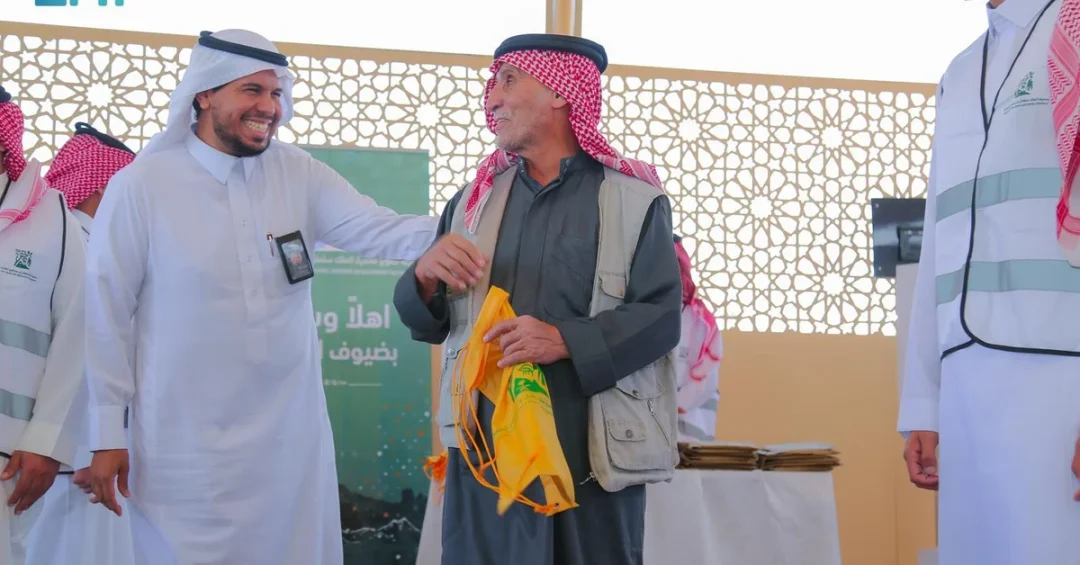
The King Salman bin Abdulaziz Royal Reserve Development Authority has extended a warm welcome to Hajj pilgrims passing through the Pilgrims City in Abu Ajram, Al-Jouf Region, and the pilgrims’ reception center in Taima, Tabuk Region. The initiative, carried out in coordination with official Saudi channels, is part of the Authority’s ongoing efforts to provide comfort, facilitate the sacred journey, and share in the joy of performing Hajj. Pilgrims were presented with gifts including awareness books detailing the rituals and steps of Hajj, souvenirs, and umbrellas to shield them from the sun during the performance of rituals.
Context and Background
The King Salman bin Abdulaziz Royal Reserve, one of Saudi Arabia’s most significant environmental and cultural conservation areas, is named after the Custodian of the Two Holy Mosques, King Salman bin Abdulaziz Al Saud. The Reserve encompasses vast landscapes in the northern regions of the Kingdom, including parts of Al-Jouf and Tabuk. Its Development Authority is tasked with preserving the area’s natural and historical heritage while promoting sustainable development and community engagement.
The Pilgrims City in Abu Ajram and the reception center in Taima serve as vital transit points for pilgrims traveling overland to Makkah. These facilities are strategically located to offer rest, guidance, and support to the millions of pilgrims who undertake the Hajj annually. The Authority’s involvement underscores its commitment to serving those performing one of the Five Pillars of Islam, aligning with the Kingdom’s broader mission to ensure a smooth and fulfilling pilgrimage experience.
Hospitality and Support for Pilgrims
At both locations, the Authority distributed gifts that reflect Saudi hospitality and practical support. The awareness books are designed to help pilgrims correctly perform the rites of Hajj, ensuring their spiritual journey is both valid and enriching. Souvenirs serve as mementos of their visit, while umbrellas offer necessary protection from the intense desert sun. This gesture is part of a long-standing tradition of Saudi generosity toward guests of the Kingdom, particularly those traveling for religious purposes.
The Authority’s efforts are integrated with those of other Saudi agencies, including the Ministry of Hajj and Umrah and the General Authority for the Care of the Two Holy Mosques, to provide a seamless pilgrimage experience. The reception centers are equipped with facilities to meet the needs of pilgrims, from rest areas to medical assistance, reflecting the Kingdom’s dedication to hosting pilgrims with the utmost care and respect.
International and Regional Impact
The warm reception of pilgrims from around the world highlights Saudi Arabia’s role as a global leader in facilitating religious tourism and intercultural exchange. Pilgrims from diverse nationalities pass through these centers, experiencing firsthand the Kingdom’s hospitality and organizational excellence. This contributes to Saudi Arabia’s image as a welcoming and capable host, reinforcing its position as the guardian of Islam’s holiest sites.
Furthermore, the involvement of the King Salman bin Abdulaziz Royal Reserve Development Authority demonstrates how environmental and cultural conservation can intersect with religious services. By supporting pilgrims, the Authority also promotes awareness of the Reserve’s broader mission, potentially encouraging future visits to explore Saudi Arabia’s natural and historical treasures. This integrated approach enhances the overall pilgrimage experience and showcases the Kingdom’s holistic development strategy.
Vision 2030 Alignment
This initiative aligns closely with Saudi Vision 2030, which aims to enhance the quality of life for citizens and visitors, diversify the economy, and promote the Kingdom’s cultural and natural heritage. By facilitating Hajj and providing exceptional services to pilgrims, the Kingdom strengthens its spiritual leadership and demonstrates its capacity to host large-scale events. The King Salman bin Abdulaziz Royal Reserve Development Authority’s efforts also support Vision 2030’s environmental sustainability goals by protecting and promoting the Reserve’s unique ecosystems.
As Saudi Arabia continues to welcome millions of pilgrims each year, such initiatives reflect the nation’s enduring commitment to serving Islam and Muslims worldwide, while advancing its broader objectives of economic diversification and international engagement. The Authority’s work is a testament to the Kingdom’s forward-looking vision and its dedication to preserving its heritage for future generations.
20 Questions
Q1. What is the King Salman bin Abdulaziz Royal Reserve Development Authority?
A1. The King Salman bin Abdulaziz Royal Reserve Development Authority is a Saudi government body responsible for managing and developing the King Salman bin Abdulaziz Royal Reserve, a vast conservation area in northern Saudi Arabia, focusing on environmental protection, sustainable development, and community engagement.
Q2. Where did the Authority receive pilgrims recently?
A2. The Authority received pilgrims at the Pilgrims City in Abu Ajram, Al-Jouf Region, and at the pilgrims’ reception center in Taima, Tabuk Region, as part of its ongoing efforts to support those traveling for Hajj.
Q3. What gifts were given to the pilgrims?
A3. Pilgrims received awareness books about Hajj rituals, souvenirs, and umbrellas to protect them from the sun during the performance of rituals, reflecting Saudi hospitality and practical support.
Q4. Why are the Pilgrims City and Taima reception center important?
A4. These locations serve as key transit points for pilgrims traveling overland to Makkah, providing rest, guidance, and essential services to ensure a smooth and comfortable journey.
Q5. How does this initiative align with Saudi Vision 2030?
A5. It aligns with Vision 2030 by enhancing the quality of life for visitors, promoting cultural and natural heritage, and supporting economic diversification through improved pilgrimage services and sustainable development.
Q6. What is the significance of the King Salman bin Abdulaziz Royal Reserve?
A6. The Reserve is a major environmental and cultural conservation area in Saudi Arabia, preserving natural landscapes and historical sites while promoting sustainable development and community involvement in the northern regions.
Q7. Who oversees the reception of pilgrims in Saudi Arabia?
A7. Multiple Saudi agencies, including the Ministry of Hajj and Umrah, the General Authority for the Care of the Two Holy Mosques, and the King Salman bin Abdulaziz Royal Reserve Development Authority, coordinate to ensure a seamless pilgrimage experience.
Q8. How many pilgrims perform Hajj annually?
A8. Millions of pilgrims from around the world perform Hajj annually, with numbers varying each year. The Kingdom continuously enhances its infrastructure and services to accommodate them safely and comfortably.
Q9. What are the awareness books about?
A9. The awareness books provide detailed guidance on the rituals and steps of Hajj, helping pilgrims correctly perform their religious duties and enriching their spiritual journey.
Q10. Why are umbrellas distributed to pilgrims?
A10. Umbrellas are distributed to protect pilgrims from the intense sun during outdoor rituals, ensuring their health and comfort as they perform Hajj in the hot desert climate.
Q11. How does this initiative reflect Saudi hospitality?
A11. It reflects Saudi hospitality by warmly welcoming pilgrims, providing thoughtful gifts, and offering practical support, embodying the Kingdom’s tradition of generosity toward guests and its commitment to serving Islam.
Q12. What other services are available at the reception centers?
A12. The reception centers offer rest areas, medical assistance, guidance, and other facilities to meet pilgrims’ needs, ensuring a safe and fulfilling experience as they travel to Makkah.
Q13. How does the Authority promote environmental conservation?
A13. The Authority promotes conservation by protecting the Reserve’s unique ecosystems, raising awareness about environmental stewardship, and integrating sustainability into its development projects and community programs.
Q14. What is the role of the Ministry of Hajj and Umrah?
A14. The Ministry of Hajj and Umrah oversees the organization and facilitation of Hajj and Umrah, ensuring pilgrims receive necessary services, and coordinates with other agencies to provide a smooth pilgrimage experience.
Q15. Can non-Muslims visit the King Salman bin Abdulaziz Royal Reserve?
A15. The Reserve may have areas open to visitors, but access is regulated. It is primarily a conservation area, and any tourism is managed to protect its natural and cultural heritage while respecting local customs.
Q16. How does the initiative impact local communities?
A16. The initiative creates opportunities for local engagement and employment, promotes community pride, and supports the local economy by attracting pilgrims and visitors to the regions of Al-Jouf and Tabuk.
Q17. What is the significance of Taima in Tabuk Region?
A17. Taima is a historic city in Tabuk Region and serves as a key transit point for pilgrims. Its reception center provides essential services, reflecting the Kingdom’s commitment to facilitating the pilgrimage journey.
Q18. How does Saudi Arabia ensure pilgrim safety during Hajj?
A18. Saudi Arabia employs comprehensive measures including security, medical services, infrastructure, and guidance from trained personnel to ensure pilgrim safety and comfort throughout the Hajj season.
Q19. What makes the King Salman bin Abdulaziz Royal Reserve unique?
A19. The Reserve is unique for its diverse landscapes, including mountains, deserts, and historical sites, and for its role in conservation and sustainable development, named after the Custodian of the Two Holy Mosques.
Q20. How can international pilgrims learn more about Saudi Arabia’s heritage?
A20. International pilgrims can explore Saudi Arabia’s heritage through official tourism channels, visiting historical sites, museums, and natural reserves like the King Salman bin Abdulaziz Royal Reserve, which offer insights into the Kingdom’s rich culture and history.
Reader Feedback
We value your thoughts. Please share your feedback on this article.
Your feedback helps us improve our coverage.