


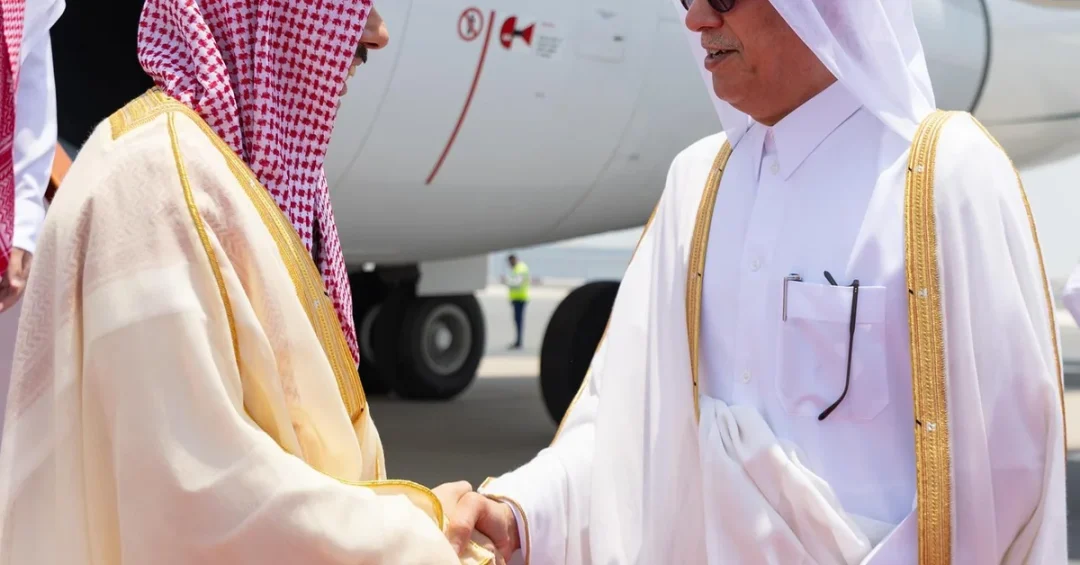
Minister of Foreign Affairs Prince Faisal bin Farhan bin Abdullah arrived in Doha today to participate in the 160th Gulf Cooperation Council (GCC) Ministerial Council meeting, as well as the GCC ministerial meetings with the Republic of Türkiye and the Republic of Yemen, according to the Saudi Press Agency (SPA). The Saudi foreign minister was received upon arrival by Qatar State Minister for Foreign Affairs Sultan bin Saad bin Sultan Al Muraikhi, Saudi Ambassador to Qatar Prince Mansour bin Khalid bin Farhan, and GCC Secretary-General Jasem Mohamed Albudaiwi. This participation underscores Saudi Arabia’s ongoing commitment to regional diplomacy and cooperation within the Gulf bloc.
Context and Background
The GCC Ministerial Council is the principal decision-making body of the Gulf Cooperation Council, which comprises Saudi Arabia, the United Arab Emirates, Qatar, Kuwait, Bahrain, and Oman. The council meets regularly to coordinate policies on political, economic, and security issues. The 160th session is particularly significant as it includes joint meetings with Türkiye and Yemen, reflecting the GCC’s expanding engagement with regional and international partners. Saudi Arabia, as a founding member and leading economy in the GCC, plays a pivotal role in shaping the council’s agenda and outcomes.
Historically, the GCC has been a cornerstone of stability and prosperity in the Gulf region, fostering integration among member states. The inclusion of Türkiye and Yemen in these discussions highlights the council’s proactive approach to addressing shared challenges and opportunities. Saudi Arabia’s active participation aligns with its Vision 2030 objectives, which emphasize international cooperation and economic diversification.
Key Details
The 160th Ministerial Council meeting will address a range of topics, including regional security, economic cooperation, and humanitarian efforts. The GCC-Türkiye meeting is expected to focus on enhancing trade and investment ties, while the GCC-Yemen meeting will discuss support for Yemen’s stability and development. Prince Faisal bin Farhan’s presence reaffirms Saudi Arabia’s dedication to these discussions.
Upon arrival, the Saudi foreign minister was greeted by senior Qatari and GCC officials, demonstrating the strong bonds between member states. The meetings are held in Doha, Qatar’s capital, which has increasingly become a hub for diplomatic engagements in the region. The outcomes of these discussions are anticipated to further solidify the GCC’s role as a unifying force in the Middle East.
Implications and Impact
The 160th GCC Ministerial Council meeting carries significant implications for regional diplomacy and economic integration. By engaging with Türkiye, a major non-Arab regional power, the GCC aims to broaden its strategic partnerships. Similarly, the meeting with Yemen underscores the GCC’s commitment to resolving conflicts and promoting development in its neighborhood. Saudi Arabia’s leadership in these dialogues enhances its position as a key mediator and facilitator of regional stability.
For the international community, these meetings signal the GCC’s openness to collaboration and its willingness to address transnational issues. The participation of high-level officials like Prince Faisal bin Farhan indicates the seriousness with which member states approach these discussions. The outcomes could influence trade flows, security arrangements, and diplomatic alignments across the region.
Vision 2030 Alignment
Saudi Arabia’s participation in the 160th GCC Ministerial Council meeting is a testament to its Vision 2030 goals, which seek to transform the Kingdom into a global investment powerhouse and a hub for international diplomacy. By fostering stronger ties within the GCC and with partners like Türkiye and Yemen, Saudi Arabia contributes to a more stable and prosperous region. This engagement also supports Vision 2030’s aim of enhancing Saudi Arabia’s global standing and economic diversification through increased trade and cooperation.
As the Kingdom continues to lead in regional affairs, its role in the GCC remains integral to achieving long-term peace and development. The outcomes of this meeting will likely pave the way for further collaboration and shared success among member states and their partners.
20 Questions
Q1. What is the 160th GCC Ministerial Council meeting?
A1. The 160th GCC Ministerial Council meeting is a gathering of foreign ministers from the Gulf Cooperation Council member states to discuss regional and international issues. It serves as a platform for coordinating policies and enhancing cooperation among the six member countries.
Q2. Who represented Saudi Arabia at the meeting?
A2. Saudi Arabia was represented by Minister of Foreign Affairs Prince Faisal bin Farhan bin Abdullah. His participation highlights the Kingdom’s active role in regional diplomacy and its commitment to the GCC’s objectives.
Q3. Where was the meeting held?
A3. The meeting was held in Doha, the capital of Qatar. Doha has become a key venue for diplomatic engagements in the Gulf region, hosting numerous high-level events.
Q4. What other meetings took place alongside the GCC Ministerial Council?
A4. Alongside the GCC Ministerial Council, there were joint ministerial meetings with the Republic of Türkiye and the Republic of Yemen. These meetings aimed to strengthen ties and address shared challenges.
Q5. Why is the inclusion of Türkiye and Yemen significant?
A5. The inclusion of Türkiye and Yemen signifies the GCC’s expanding engagement with regional partners. It reflects a proactive approach to fostering dialogue and cooperation beyond the Gulf region, addressing broader Middle Eastern issues.
Q6. Who received Prince Faisal bin Farhan upon arrival?
A6. He was received by Qatar State Minister for Foreign Affairs Sultan bin Saad bin Sultan Al Muraikhi, Saudi Ambassador to Qatar Prince Mansour bin Khalid bin Farhan, and GCC Secretary-General Jasem Mohamed Albudaiwi.
Q7. What is the role of the GCC Secretary-General?
A7. The GCC Secretary-General, Jasem Mohamed Albudaiwi, oversees the administrative and executive functions of the Gulf Cooperation Council. He facilitates meetings and ensures the implementation of decisions made by member states.
Q8. How does Saudi Arabia benefit from GCC meetings?
A8. Saudi Arabia benefits through enhanced regional cooperation, economic integration, and collective security. These meetings also reinforce the Kingdom’s leadership role and support its Vision 2030 goals of diversification and global engagement.
Q9. What topics were discussed at the meeting?
A9. The meeting addressed regional security, economic cooperation, and humanitarian efforts. Discussions also focused on strengthening trade and investment ties with Türkiye and supporting stability in Yemen.
Q10. What is the significance of the 160th session?
A10. The 160th session marks a continuation of the GCC’s long-standing tradition of dialogue and cooperation. It highlights the council’s adaptability and its expanding partnerships with non-member states.
Q11. How does this meeting align with Saudi Vision 2030?
A11. The meeting aligns with Vision 2030 by promoting international diplomacy, economic diversification, and regional stability. Saudi Arabia’s active participation supports its goal of becoming a global investment hub and a key player in international affairs.
Q12. What is the GCC’s role in the region?
A12. The GCC serves as a political and economic alliance that fosters integration among its six member states. It addresses shared challenges, promotes stability, and enhances the region’s collective voice on global issues.
Q13. How often do GCC Ministerial Council meetings occur?
A13. GCC Ministerial Council meetings are held periodically, typically several times a year. They provide a regular forum for foreign ministers to consult and coordinate on pressing regional matters.
Q14. What outcomes are expected from the meeting?
A14. Expected outcomes include strengthened cooperation agreements, joint statements on regional issues, and enhanced partnerships with Türkiye and Yemen. These outcomes aim to promote stability and economic growth.
Q15. What is Saudi Arabia’s stance on Yemen?
A15. Saudi Arabia supports Yemen’s stability and development through humanitarian aid and diplomatic efforts. The Kingdom advocates for a peaceful resolution to the conflict and reconstruction of the country.
Q16. How does the GCC engage with Türkiye?
A16. The GCC engages with Türkiye through dialogue and joint meetings to enhance trade, investment, and security cooperation. This partnership reflects mutual interests in regional stability and economic prosperity.
Q17. What is the significance of Prince Faisal bin Farhan’s attendance?
A17. His attendance underscores Saudi Arabia’s commitment to active diplomacy and regional leadership. It signals the Kingdom’s support for GCC initiatives and its willingness to engage on key issues.
Q18. How does this meeting impact regional security?
A18. The meeting contributes to regional security by fostering dialogue and cooperation among member states and partners. It helps align policies on counterterrorism, defense, and conflict resolution.
Q19. What economic issues were on the agenda?
A19. Economic issues included trade facilitation, investment opportunities, and economic diversification. The discussions aimed to enhance integration and create a more conducive environment for business and innovation.
Q20. What message does Saudi Arabia’s participation send?
A20. Saudi Arabia’s participation sends a message of unity and commitment to regional cooperation. It reaffirms the Kingdom’s role as a stabilizing force and its dedication to the principles of the GCC and Vision 2030.
Reader Feedback
We value your thoughts. Please share your feedback on this article.
Your feedback helps us improve our coverage.