


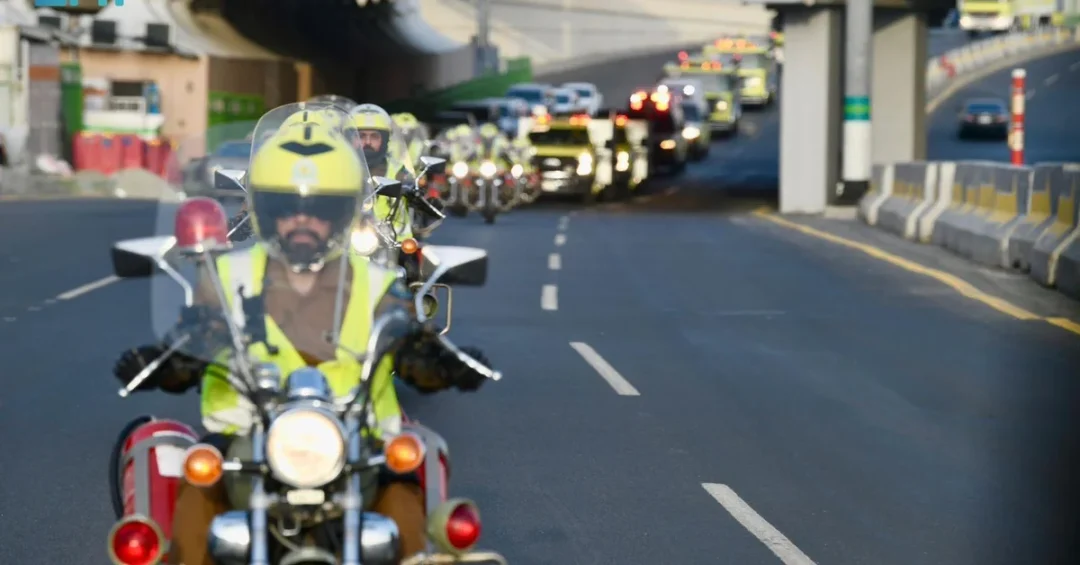
Makkah, June 10, 2024 — The General Directorate of Civil Defence announced that it is intensifying preparations for the arrival of pilgrims in Muzdalifah, implementing a comprehensive Hajj emergency plan that combines preventive safety measures, emergency response protocols, and advanced technology to ensure the safety and security of all attendees. The directorate confirmed that additional civil defense officers have been deployed to field centers, where personnel will operate at full capacity in close coordination with other concerned authorities to facilitate a smooth and safe Hajj experience.
Context and Background
Muzdalifah, located southeast of Makkah, is a critical stopover for pilgrims during the Hajj. After spending the day at Arafat, pilgrims move to Muzdalifah to spend the night under the open sky, performing prayers and collecting pebbles for the symbolic stoning ritual in Mina. The massive influx of millions of pilgrims within a short timeframe presents significant logistical and safety challenges. The General Directorate of Civil Defence, a key agency under the Ministry of Interior, is responsible for safeguarding lives and property during this annual event. Its efforts are part of a broader national strategy to ensure that Hajj remains a safe and spiritually fulfilling experience, reflecting the Kingdom’s commitment to serving the Guests of Allah.
Key Details
The Civil Defence’s plan for Muzdalifah includes a substantial increase in the number of officers stationed at field centers. These personnel are trained to handle emergencies, provide first aid, and manage crowd flow. The directorate is leveraging cutting-edge technology to enhance security and safety at the Grand Mosque and surrounding areas. This includes surveillance systems, communication networks, and data analytics to monitor conditions in real-time and respond swiftly to any incidents. The statement emphasized close coordination with other authorities such as the Ministry of Hajj and Umrah, the General Authority for the Care of the Grand Mosque and the Prophet’s Mosque, and the Saudi Red Crescent Authority. This inter-agency collaboration ensures a unified command and control structure, enabling efficient resource allocation and rapid deployment during peak times.
Implications and Impact
The enhanced safety measures in Muzdalifah have far-reaching implications for the millions of pilgrims who undertake the Hajj each year. By increasing the number of civil defense officers and integrating advanced technologies, the Kingdom aims to prevent accidents, manage crowds effectively, and provide immediate assistance when needed. This not only protects lives but also enhances the overall pilgrimage experience, allowing worshippers to focus on their spiritual journey. Furthermore, the successful execution of these plans reinforces Saudi Arabia’s reputation as a capable and responsible steward of the Two Holy Mosques. It also demonstrates the Kingdom’s ability to host large-scale events safely, a key aspect of its Vision 2030 goal to attract more visitors and diversify the economy.
Vision 2030 Alignment
The Civil Defence’s preparations for Hajj align closely with Saudi Arabia’s Vision 2030, which seeks to enhance the quality of life for citizens and visitors, improve public safety, and strengthen the Kingdom’s position as a global leader in event management. By investing in technology and human resources, the directorate contributes to the vision’s objectives of building a safer society and providing world-class services to pilgrims. As Saudi Arabia continues to welcome increasing numbers of Hajj and Umrah performers, such proactive measures underscore the nation’s unwavering commitment to their well-being. The success of these efforts will further cement the Kingdom’s role as a beacon of security and hospitality on the world stage.
20 Questions
Q1. What is the General Directorate of Civil Defence preparing for in Muzdalifah?
A1. The General Directorate of Civil Defence is preparing for the arrival of pilgrims in Muzdalifah by implementing a comprehensive Hajj emergency plan, preventive safety measures, and emergency response protocols.
Q2. Why is Muzdalifah important during Hajj?
A2. Muzdalifah is where pilgrims spend the night after Arafat, performing prayers and collecting pebbles for the stoning ritual, making it a critical stopover.
Q3. How has the number of civil defense officers changed?
A3. The number of civil defense officers has increased at field centers, and personnel will work at full capacity to ensure safety.
Q4. What technology is being used to enhance safety?
A4. The directorate is leveraging technology such as surveillance systems, communication networks, and data analytics to monitor conditions and respond swiftly at the Grand Mosque and surrounding areas.
Q5. Which other authorities are coordinating with the Civil Defence?
A5. They are coordinating with the Ministry of Hajj and Umrah, the General Authority for the Care of the Grand Mosque and the Prophet’s Mosque, and the Saudi Red Crescent Authority.
Q6. What is the main goal of the Civil Defence’s efforts?
A6. The main goal is to ensure a smooth and safe Hajj experience for all pilgrims by preventing accidents and providing immediate assistance.
Q7. How does this effort align with Vision 2030?
A7. It aligns with Vision 2030 by enhancing public safety, improving quality of life, and supporting the goal to attract more visitors.
Q8. What is the role of field centers?
A8. Field centers serve as operational hubs where civil defense officers are stationed to monitor, respond to emergencies, and manage crowd flow.
Q9. How does the Civil Defence handle emergencies?
A9. They have emergency response protocols in place, including first aid, rescue operations, and coordination with medical teams.
Q10. What is the significance of the Grand Mosque in this context?
A10. The Grand Mosque is the focal point of Hajj, and ensuring safety there is paramount due to the massive crowds.
Q11. How many pilgrims are expected this year?
A11. The article does not specify the number, but millions typically perform Hajj annually.
Q12. What preventive safety measures are being taken?
A12. Preventive measures include crowd management, fire safety inspections, and public awareness campaigns.
Q13. How does the Civil Defence train its officers?
A13. Officers undergo specialized training in emergency response, first aid, and crowd control to handle Hajj scenarios.
Q14. What is the role of the Saudi Red Crescent Authority?
A14. The Saudi Red Crescent Authority provides emergency medical services and coordinates with Civil Defence during incidents.
Q15. How does technology improve response times?
A15. Real-time data and communication tools allow for quick identification of incidents and swift deployment of resources.
Q16. What happens if there is a fire emergency?
A16. Civil Defence teams are equipped to respond immediately, with firefighting units and evacuation plans in place.
Q17. How does the Civil Defence ensure coordination among agencies?
A17. Through a unified command center that facilitates information sharing and joint decision-making.
Q18. What is the impact on pilgrims’ experience?
A18. Enhanced safety measures allow pilgrims to focus on their spiritual journey without worry, improving overall satisfaction.
Q19. How does this reflect Saudi Arabia’s commitment to pilgrims?
A19. It demonstrates the Kingdom’s dedication to serving the Guests of Allah and ensuring their well-being.
Q20. What is the ultimate goal of these preparations?
A20. The ultimate goal is to facilitate a safe, secure, and spiritually fulfilling Hajj for all pilgrims, showcasing Saudi Arabia’s capability and hospitality.
Reader Feedback
We value your thoughts. Please share your feedback on this article.
Your feedback helps us improve our coverage.