


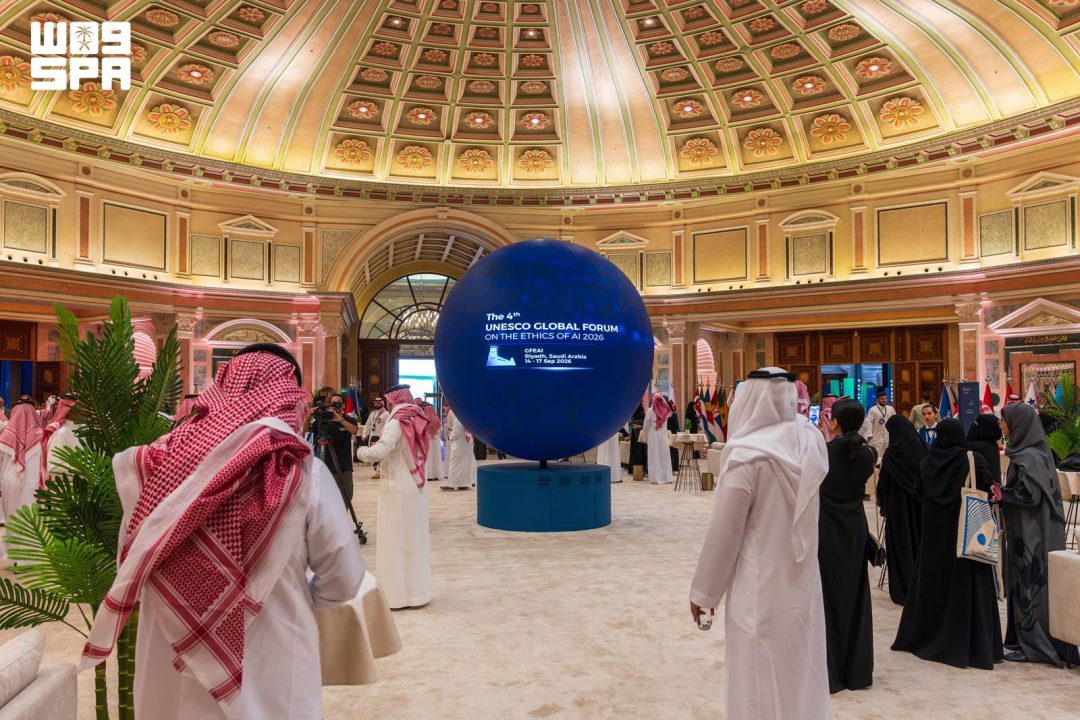
Riyadh is hosting the fourth edition of the UNESCO Global Forum on the Ethics of AI. The event brings together decision-makers, experts, academics, representatives of international organizations, and public- and private-sector representatives.
According to SPA, the forum takes place over four days to address the ethical standards and responsibilities associated with artificial intelligence as it influences the economy, society, knowledge, and decision-making.
The dialogue focuses on the limits of AI technologies and who bears responsibility for the consequences of their outputs. While AI systems can analyze, predict, and handle complex issues by extracting patterns from data, the forum notes that assessing fairness, appropriateness, and public interest remains a human and institutional responsibility.
The event addresses emerging questions regarding transparency, privacy, fairness, accountability, and trust as AI becomes part of daily life for governments, institutions, and individuals.
What is the purpose of the UNESCO Global Forum on the Ethics of AI in Riyadh? The forum aims to address the question of what artificial intelligence technologies should do and who determines their limits. It brings together experts, academics, and decision-makers over four days to discuss responsibility and ethical standards as AI influences society, knowledge, and the economy.
Who is participating in the AI ethics forum in Riyadh? The event brings together a diverse group of participants, including representatives from international organizations and both the public and private sectors. It also includes academics, experts, and decision-makers to engage in a dialogue that algorithms cannot resolve independently.
What specific ethical challenges are being addressed at the forum? The forum explores challenges related to transparency, privacy, fairness, accountability, and trust. It emphasizes that while AI can provide predictions and recommendations at great speed, the responsibility for assessing the public interest and appropriateness remains with humans and institutions.