


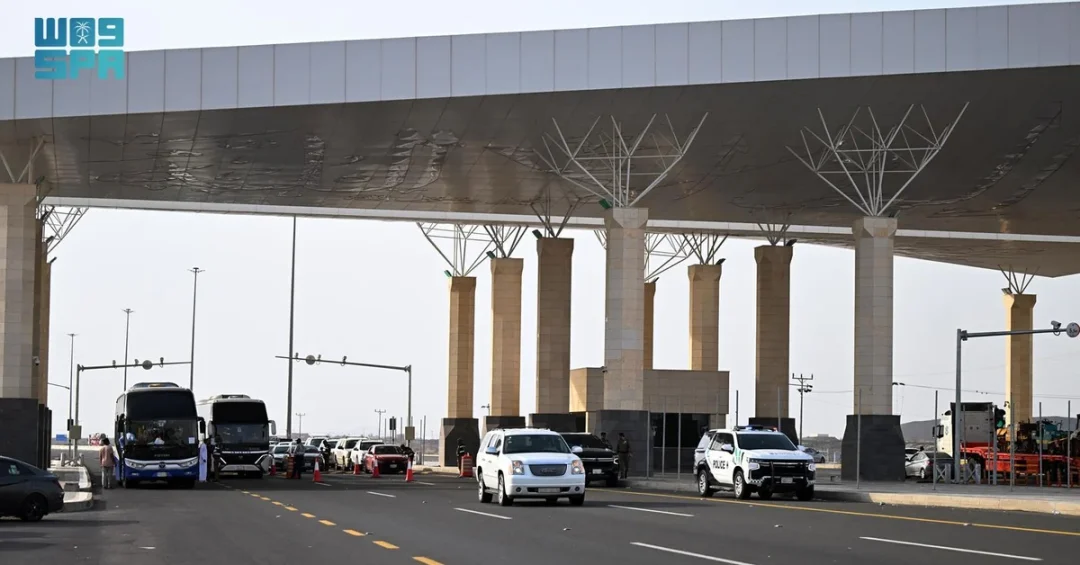
The Saudi Press Agency (SPA) has documented heightened security measures along the Hijrah Road, the vital Makkah-Madinah Highway, during the peak Hajj season, as Saudi authorities work to ensure a safe and seamless pilgrimage for the millions of faithful traveling between the two holy cities. The security control center, in coordination with the Special Forces for Roads Security in Madinah, has intensified patrols and monitoring to manage the significant increase in pilgrim traffic. This comprehensive effort underscores the Kingdom’s unwavering commitment to the safety and well-being of Hajj pilgrims, a priority under the leadership of the Custodian of the Two Holy Mosques, King Salman bin Abdulaziz Al Saud, and His Royal Highness Crown Prince Mohammed bin Salman.
Context and Background
The Hajj pilgrimage is one of the Five Pillars of Islam, requiring all able-bodied Muslims to undertake the journey to Makkah at least once in their lifetime. Each year, millions of pilgrims from around the world converge on the holy sites, with many traveling first to Madinah to visit the Prophet’s Mosque before proceeding to Makkah. The Makkah-Madinah Highway, also known as Hijrah Road, serves as a critical artery for this movement, particularly during the Hajj season when traffic volumes surge dramatically. Ensuring the safety and security of this route is a monumental logistical task, managed by Saudi authorities with precision and care. The Kingdom has a long-standing tradition of hosting the Hajj with exceptional organization, and this year’s measures build on decades of experience and continuous improvement.
Key Details
The Saudi Press Agency reported that the security control center and the Special Forces for Roads Security in Madinah are working tirelessly to maintain order and facilitate the smooth passage of pilgrims. These forces are deployed along the highway to monitor traffic, provide assistance, and respond to any emergencies. Their presence is part of a broader security and logistical framework that includes traffic management, medical services, and crowd control. The Special Forces for Roads Security are highly trained to handle the unique challenges of the Hajj season, from managing dense convoys of buses to ensuring that emergency vehicles can move swiftly when needed. Their efforts are complemented by advanced technology, including surveillance systems and communication networks, which enable real-time coordination and rapid response.
Implications and Impact
The enhanced security measures on the Makkah-Madinah Highway have far-reaching implications for the overall Hajj experience. By ensuring a safe and smooth journey, the Kingdom not only protects the pilgrims but also upholds the spiritual sanctity of the pilgrimage. The efficient movement of pilgrims between Madinah and Makkah is essential for the timely performance of Hajj rituals, and any disruption could have significant consequences. Moreover, the seamless operation of this route reflects Saudi Arabia’s capability to manage large-scale events, reinforcing its reputation as a reliable and responsible steward of the holy sites. Internationally, these efforts demonstrate the Kingdom’s dedication to serving all pilgrims, regardless of their nationality, and contribute to the positive image of Saudi Arabia as a leader in crowd management and public safety.
Vision 2030 Alignment
The security measures on the Makkah-Madinah Highway align closely with Saudi Vision 2030, which aims to enhance the quality of life for citizens and visitors, and to elevate the Kingdom’s capacity to host millions of pilgrims through improved infrastructure and services. Under Vision 2030, Saudi Arabia has invested heavily in expanding the capacity of the Two Holy Mosques and upgrading transportation networks to accommodate the growing number of pilgrims. These efforts are part of a broader strategy to diversify the economy and promote religious tourism, while ensuring that the Hajj remains a safe and spiritually fulfilling experience. As the Kingdom continues to modernize and innovate, the safety and security of pilgrims will remain a top priority, reflecting the leadership’s commitment to serving Islam and Muslims worldwide.
20 Questions
Q1. What is the Makkah-Madinah Highway also known as?
A1. The Makkah-Madinah Highway is also known as Hijrah Road, named after the historic migration of the Prophet Muhammad from Makkah to Madinah.
Q2. Why is security heightened on this highway during Hajj season?
A2. Security is heightened due to the significant increase in pilgrim traffic as millions travel between Madinah and Makkah to perform Hajj rituals, requiring careful management for safety.
Q3. Which Saudi agency is responsible for security on the highway?
A3. The Special Forces for Roads Security in Madinah, in coordination with the security control center, is responsible for maintaining safety and order on the highway.
Q4. How does the security control center operate?
A4. The security control center operates around the clock, using advanced monitoring systems and communication networks to coordinate patrols and respond swiftly to any incidents.
Q5. What is the primary goal of these security measures?
A5. The primary goal is to ensure a safe and smooth pilgrimage experience for all pilgrims, protecting them and facilitating their timely movement between the holy cities.
Q6. When does the Hajj season take place?
A6. The Hajj season takes place annually during the Islamic month of Dhu al-Hijjah, with pilgrims arriving in the weeks leading up to the main rituals.
Q7. How many pilgrims typically travel on this highway?
A7. Millions of pilgrims travel on the Makkah-Madinah Highway during Hajj season, making it one of the busiest routes in the Kingdom during this period.
Q8. What role does the Special Forces for Roads Security play?
A8. The Special Forces for Roads Security patrols the highway, manages traffic flow, assists pilgrims, and ensures rapid response to emergencies, contributing to overall safety.
Q9. Are there any technological tools used for security?
A9. Yes, the authorities employ advanced technologies such as surveillance cameras, GPS tracking, and integrated communication systems to monitor and manage traffic effectively.
Q10. How does Saudi Arabia prepare for the influx of pilgrims?
A10. Saudi Arabia prepares through comprehensive planning, infrastructure upgrades, and coordinated efforts among various government agencies to handle the large crowds safely.
Q11. What is the significance of the Hijrah Road?
A11. The Hijrah Road holds historical significance as the route taken by the Prophet Muhammad during the migration to Madinah, and it remains a vital pilgrimage route.
Q12. How do security measures benefit pilgrims?
A12. Security measures ensure pilgrims can travel safely and without delay, allowing them to focus on their spiritual journey and complete their rituals on time.
Q13. Is the highway closed to regular traffic during Hajj?
A13. The highway remains open but is heavily regulated, with priority given to pilgrim convoys and enhanced security to manage the increased volume.
Q14. What kind of emergencies might occur on the highway?
A14. Potential emergencies include vehicle breakdowns, medical incidents, or traffic accidents, all of which are addressed by trained personnel and emergency services.
Q15. How does Saudi Arabia ensure coordination among agencies?
A15. Coordination is achieved through a unified command center that links the Special Forces, traffic police, medical teams, and other stakeholders for seamless operations.
Q16. What message does this send to the international community?
A16. It demonstrates Saudi Arabia’s capability and commitment to hosting millions of pilgrims safely, reinforcing its role as a responsible custodian of the holy sites.
Q17. How does this align with Vision 2030?
A17. Vision 2030 emphasizes enhancing pilgrimage services and infrastructure, and these security efforts are part of that broader strategy to improve the Hajj experience.
Q18. Are there any specific challenges during Hajj season?
A18. Challenges include managing massive crowds, ensuring timely movement, and handling potential emergencies, all of which are addressed through meticulous planning and resource allocation.
Q19. What training do the Special Forces receive?
A19. The Special Forces for Roads Security receive specialized training in crowd control, emergency response, and traffic management to handle the unique demands of the Hajj season.
Q20. How can pilgrims stay safe on the highway?
A20. Pilgrims should follow instructions from authorities, stay with their groups, and report any issues to security personnel, ensuring a safe and smooth journey.
Reader Feedback
We value your thoughts. Please share your feedback on this article.
Your feedback helps us improve our coverage.