


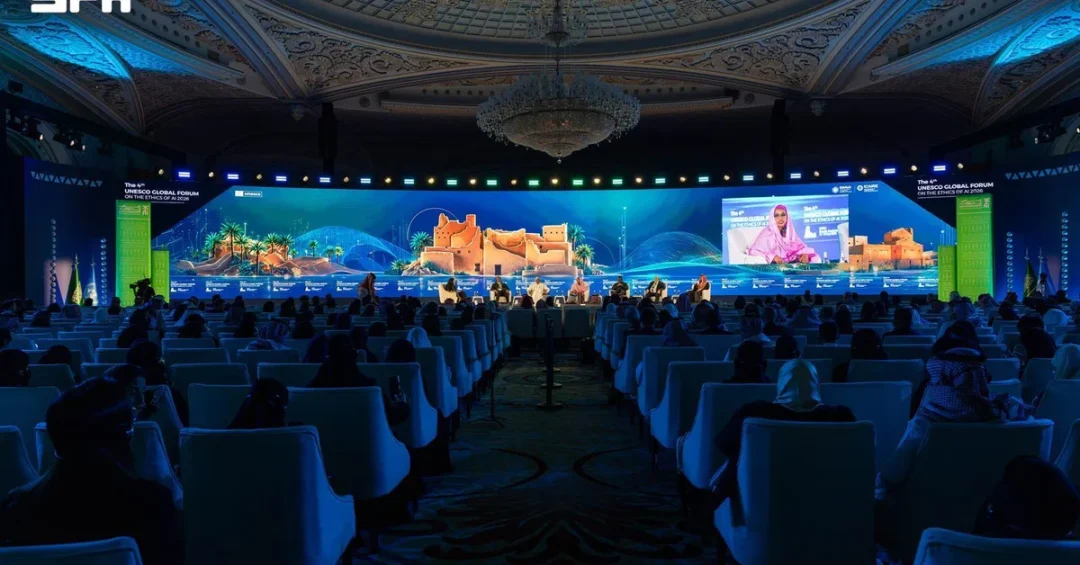
The first day of the fourth UNESCO Global Forum on the Ethics of Artificial Intelligence (GFEAI 2026) concluded in Riyadh on Tuesday, drawing a large international gathering of ministers representing UNESCO member states, along with senior officials, experts, researchers, and policymakers. The sessions focused on the future of ethical AI governance and explored ways to strengthen international cooperation in the field, according to the Saudi Press Agency (SPA).
Context and Background
The forum, hosted by the Kingdom of Saudi Arabia in partnership with UNESCO, builds on the UNESCO Recommendation on the Ethics of Artificial Intelligence, adopted in 2021. This year’s edition marks five years since its adoption, providing an opportunity to assess progress and chart the way forward. The GFEAI 2026 brings together global stakeholders to address the challenges and opportunities presented by AI, with a particular emphasis on ethical frameworks, multilateralism, and diplomacy.
Saudi Arabia’s hosting of the forum underscores its commitment to leading international efforts in AI governance, aligning with the Kingdom’s Vision 2030 objectives to diversify the economy and become a global hub for technology and innovation. The event also highlights the Kingdom’s proactive role in fostering dialogue and cooperation on emerging technologies.
Key Details
The day’s sessions addressed a range of topics related to AI and its governance, multilateralism and diplomacy, ongoing regional cooperation, and ways to move from multilateral dialogue to implementation. Participants explored ways to strengthen international efforts to build effective frameworks for AI governance.
One session examined the convergence of global perspectives on ethical AI governance, focusing on strengthening international consensus on the principles and ethical frameworks governing the development and use of AI technologies. Another session, titled “Five Years of the Recommendation: Where We Are, Where We Go Next,” reviewed progress on the UNESCO Recommendation since its adoption and discussed prospects for further development and implementation.
The program also featured the presentation of the National AI Index (NAII) awards, honoring eight government entities for their performance in the index. This recognition highlights Saudi Arabia’s efforts to promote AI adoption and excellence across its public sector.
Additionally, panel discussions highlighted the importance of mobilizing resources and strengthening partnerships to support ethical AI governance initiatives and ensure AI serves people and society. A dedicated session focused on women and shaping the future of responsible AI, discussing women’s role in shaping the field and advancing their participation and empowerment in responsible innovation.
Implications and Impact
The outcomes of GFEAI 2026 are expected to influence global AI governance frameworks, promoting ethical practices and international cooperation. The forum provides a platform for countries to share best practices and align their approaches to AI regulation, which is crucial as AI technologies become increasingly integrated into economies and societies worldwide.
Saudi Arabia’s leadership in hosting this event reinforces its position as a key player in shaping the future of AI ethics and governance. By facilitating dialogue among diverse stakeholders, the Kingdom is contributing to the development of a global consensus on ethical AI that benefits all of humanity.
The emphasis on financing and partnerships underscores the need for sustained investment in ethical AI initiatives. The focus on women’s participation highlights the importance of inclusivity in AI development, ensuring that diverse perspectives are considered in shaping responsible AI.
Vision 2030 Alignment
The forum aligns with Saudi Arabia’s Vision 2030, which aims to transform the Kingdom into a knowledge-based economy and a global leader in technology and innovation. By hosting GFEAI 2026, Saudi Arabia demonstrates its commitment to international collaboration and its role in advancing ethical AI governance. This initiative supports the Kingdom’s goals of fostering a vibrant society, a thriving economy, and an ambitious nation, while contributing to the global community’s efforts to harness AI for the benefit of all.
20 Questions
Q1. What was the main focus of the first day of GFEAI 2026?
A1. The first day focused on the future of ethical AI governance, strengthening international cooperation, and moving from multilateral dialogue to implementation.
Q2. Where was the fourth UNESCO Global Forum on the Ethics of AI held?
A2. The forum was held in Riyadh, Saudi Arabia, bringing together ministers, experts, and policymakers from around the world.
Q3. Who attended the forum?
A3. The forum drew a large international gathering of ministers representing UNESCO member states, along with senior officials, experts, researchers, and policymakers.
Q4. What is the UNESCO Recommendation on the Ethics of AI?
A4. It is a global standard adopted in 2021 that provides ethical principles and policy guidance for AI development and use, now marking five years of progress.
Q5. What is the National AI Index (NAII) awards?
A5. The NAII awards recognize government entities in Saudi Arabia for their performance in AI adoption and excellence, honoring eight entities this year.
Q6. What session addressed women’s role in AI?
A6. A session focused on women and shaping the future of responsible AI, discussing women’s participation and empowerment in responsible innovation.
Q7. How does the forum promote international cooperation?
A7. By facilitating dialogue among countries, sharing best practices, and aligning approaches to AI regulation for global consensus.
Q8. What does ‘Five Years of the Recommendation’ refer to?
A8. It refers to the five-year anniversary of the UNESCO Recommendation on the Ethics of AI, reviewing progress and future implementation.
Q9. What is the significance of Saudi Arabia hosting the forum?
A9. It underscores Saudi Arabia’s leadership in AI ethics and its commitment to Vision 2030 goals of becoming a tech and innovation hub.
Q10. What topics were discussed in the sessions?
A10. Topics included AI governance, multilateralism, diplomacy, regional cooperation, financing, partnerships, and women in AI.
Q11. What is the goal of the forum?
A11. To strengthen international frameworks for ethical AI governance and ensure AI serves people and society globally.
Q12. Were there any awards presented?
A12. Yes, the National AI Index (NAII) awards were presented to eight government entities for their AI performance.
Q13. How does the forum address financing for AI governance?
A13. Panel discussions highlighted the importance of mobilizing resources and strengthening partnerships to support ethical AI initiatives.
Q14. What is the expected outcome of GFEAI 2026?
A14. It aims to influence global AI governance frameworks, promote ethical practices, and enhance international cooperation.
Q15. How many years has it been since the UNESCO Recommendation was adopted?
A15. Five years, as highlighted in the session ‘Five Years of the Recommendation: Where We Are, Where We Go Next’.
Q16. What role does Saudi Arabia play in AI governance?
A16. Saudi Arabia is a key player, hosting forums like GFEAI to facilitate global dialogue and consensus on ethical AI.
Q17. What does the forum aim to achieve in terms of implementation?
A17. It seeks to move from dialogue to actionable frameworks and policies for ethical AI governance.
Q18. How does the forum align with Vision 2030?
A18. It supports Vision 2030 by promoting technology, innovation, and international collaboration, enhancing Saudi Arabia’s global role.
Q19. What was discussed about regional cooperation?
A19. Sessions explored ongoing regional cooperation and ways to strengthen it through shared ethical AI frameworks.
Q20. What is the overall message of the forum?
A20. The forum emphasizes that ethical AI governance requires global cooperation, inclusivity, and sustained investment to benefit humanity.
Reader Feedback
We value your thoughts. Please share your feedback on this article.
Your feedback helps us improve our coverage.