


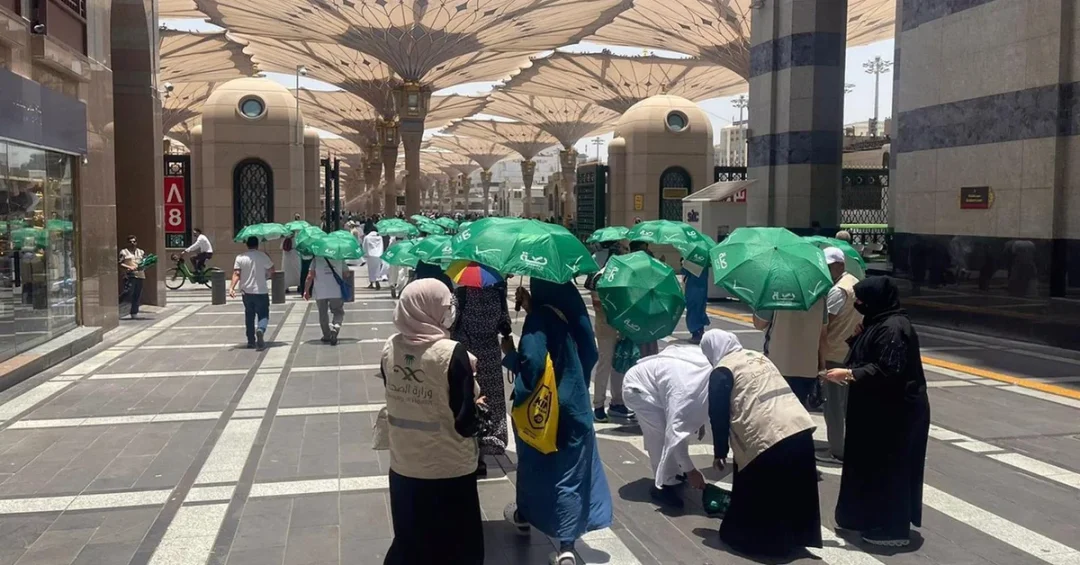
The Madinah branch of the Ministry of Health has launched a Smart Robot service in the Central Area near the Prophet’s Mosque, delivering educational and health guidance in over 96 languages to pilgrims from around the world. The initiative, announced on Saturday, June 8, 2024, is part of a broader effort to enhance the pilgrimage experience and ensure the safety and well-being of visitors to the holy site.
Context and Background
The Prophet’s Mosque in Madinah is one of the holiest sites in Islam, attracting millions of pilgrims annually, especially during the Hajj season. The Ministry of Health’s Madinah branch has been at the forefront of providing health services to these visitors, leveraging technology and volunteer efforts to meet the diverse needs of an international audience. The Smart Robot service represents a significant step in modernizing health communication and awareness, aligning with Saudi Arabia’s Vision 2030 goals of enhancing the quality of services for pilgrims and utilizing advanced technologies.
In addition to the robot, the Ministry’s volunteer and awareness teams are actively working on the ground. With 220 male and female volunteers organized into over 12 teams, they operate around the clock to serve the guests of Allah. Their efforts are concentrated at key locations including the Prophet’s Mosque and its access roads, Prince Mohammad bin Abdulaziz International Airport, Haramain Train Station, and several prominent mosques such as Quba, Khandaq, Sayyid Al-Shuhada, and Miqat Dhul-Hulaifah.
Key Details
The Smart Robot is designed to present and broadcast educational messages, guidance, and health instructions to ensure the safety and awareness of pilgrims. Its ability to communicate in over 96 languages makes it a powerful tool for reaching a diverse global audience. This service is particularly crucial during the Hajj season, when the number of international pilgrims surges. By providing clear, multilingual health information, the robot helps prevent health issues and promotes safe practices among visitors.
The volunteer teams complement the robot’s efforts by offering direct health and emergency services. Their presence at airports, train stations, and mosques ensures that pilgrims receive immediate assistance when needed. This combination of technology and human touch reflects the Ministry’s comprehensive approach to healthcare during the pilgrimage.
International Impact
The launch of the Smart Robot service underscores Saudi Arabia’s commitment to leveraging innovation for the benefit of pilgrims from around the world. By breaking down language barriers, the service ensures that health messages are accessible to all, regardless of nationality or language. This not only enhances the pilgrimage experience but also showcases the Kingdom’s leadership in utilizing technology for humanitarian purposes. The initiative is likely to be welcomed by the international community, reinforcing Saudi Arabia’s role as a responsible and forward-thinking host of the Hajj and Umrah.
Furthermore, the multilingual capabilities of the robot reflect the Kingdom’s dedication to serving the Guests of Allah with the highest standards of care. It also highlights the successful integration of advanced technologies into public health strategies, setting a precedent for other sectors.
Vision 2030 Alignment
This initiative is a clear embodiment of Saudi Arabia’s Vision 2030, which aims to transform the Kingdom into a global leader in various fields, including healthcare and technology. By enhancing the services provided to pilgrims, the Ministry of Health contributes to the Vision’s objectives of improving the quality of life, fostering innovation, and strengthening the Kingdom’s position as a preferred destination for millions of Muslims worldwide. The Smart Robot service and the dedicated volunteer teams exemplify the nation’s unwavering commitment to serving Islam and Muslims, while also demonstrating the progressive and modern face of Saudi Arabia.
20 Questions
Q1. What is the Smart Robot service launched by the Madinah Health branch?
A1. The Smart Robot service is an initiative by the Ministry of Health’s Madinah branch to provide educational and health guidance in over 96 languages to pilgrims near the Prophet’s Mosque. It aims to enhance safety and awareness during Hajj season.
Q2. Where is the Smart Robot service located?
A2. It is deployed in the Central Area near the Prophet’s Mosque in Madinah, a key location visited by millions of pilgrims annually. This strategic placement ensures maximum reach among visitors.
Q3. How many languages does the Smart Robot support?
A3. The robot supports over 96 languages, enabling it to communicate health instructions effectively with pilgrims from diverse linguistic backgrounds. This wide range ensures inclusivity and clear communication.
Q4. What is the main goal of the Smart Robot service?
A4. The primary goal is to broadcast educational messages, guidance, and health instructions for the safety and awareness of pilgrims. It aims to prevent health issues and promote safe practices among visitors.
Q5. Who launched the Smart Robot service?
A5. The service was launched by the Madinah branch of the Ministry of Health, as part of its efforts to serve pilgrims during the Hajj season. The branch continues to innovate in healthcare delivery.
Q6. When was the Smart Robot service launched?
A6. It was launched on Saturday, June 8, 2024, according to the Saudi Press Agency. The timing aligns with the influx of pilgrims for the Hajj season.
Q7. How many volunteers are working with the Ministry’s teams?
A7. There are 220 male and female volunteers organized into over 12 teams. They work around the clock to provide health and emergency services.
Q8. Where do the volunteer teams operate?
A8. They operate at the Prophet’s Mosque and its access roads, Prince Mohammad bin Abdulaziz International Airport, Haramain Train Station, and several mosques including Quba, Khandaq, Sayyid Al-Shuhada, and Miqat Dhul-Hulaifah.
Q9. What services do the volunteer teams provide?
A9. The teams provide health and emergency services to the guests of Allah during the Hajj season. They are trained to handle various medical situations and assist pilgrims in need.
Q10. How does the Smart Robot contribute to pilgrim safety?
A10. By broadcasting health instructions and guidance in multiple languages, the robot helps pilgrims understand safety protocols and health practices. This reduces the risk of health issues and ensures a safer pilgrimage experience.
Q11. Is the Smart Robot service part of a larger initiative?
A11. Yes, it is part of the Ministry of Health’s comprehensive efforts to enhance healthcare services for pilgrims, aligning with Saudi Vision 2030 goals. The initiative also includes volunteer teams and other technological solutions.
Q12. What role do volunteers play in the Ministry’s efforts?
A12. Volunteers are crucial in providing direct health and emergency services, complementing the Smart Robot’s awareness messages. Their presence ensures immediate assistance and personalized care for pilgrims.
Q13. How does the service cater to international pilgrims?
A13. With support for over 96 languages, the Smart Robot effectively communicates with pilgrims from around the world, breaking down language barriers. This ensures that all visitors receive vital health information.
Q14. What are the key locations covered by the volunteer teams?
A14. Key locations include the Prophet’s Mosque, its access roads, Prince Mohammad bin Abdulaziz International Airport, Haramain Train Station, and mosques such as Quba, Khandaq, Sayyid Al-Shuhada, and Miqat Dhul-Hulaifah.
Q15. How does this initiative reflect Saudi Vision 2030?
A15. It showcases the use of advanced technology to improve services for pilgrims, a key aspect of Vision 2030. It also demonstrates the Kingdom’s commitment to innovation and enhancing the quality of life for visitors.
Q16. What types of messages does the Smart Robot broadcast?
A16. The robot broadcasts educational messages, health guidance, and safety instructions. These messages are designed to raise awareness and prevent health issues among pilgrims.
Q17. Are there any other technological tools used by the Ministry?
A17. The Smart Robot is a notable example, but the Ministry employs various technologies to enhance healthcare delivery. These include digital platforms and telemedicine services, although specifics are not detailed in the source.
Q18. How long will the Smart Robot service be active?
A18. The service is expected to operate throughout the Hajj season and likely beyond, as part of ongoing efforts to serve pilgrims. The Ministry aims for sustained improvements in pilgrim care.
Q19. What impact does the service have on the pilgrimage experience?
A19. It enhances the pilgrimage experience by ensuring pilgrims have access to crucial health information in their native languages, promoting safety and well-being. This leads to a more comfortable and spiritually fulfilling journey.
Q20. How can pilgrims access the Smart Robot service?
A20. Pilgrims can encounter the Smart Robot in the Central Area near the Prophet’s Mosque, where it actively broadcasts messages. No additional access steps are required; it is designed to be readily available to all visitors.
Reader Feedback
We value your thoughts. Please share your feedback on this article.
Your feedback helps us improve our coverage.