


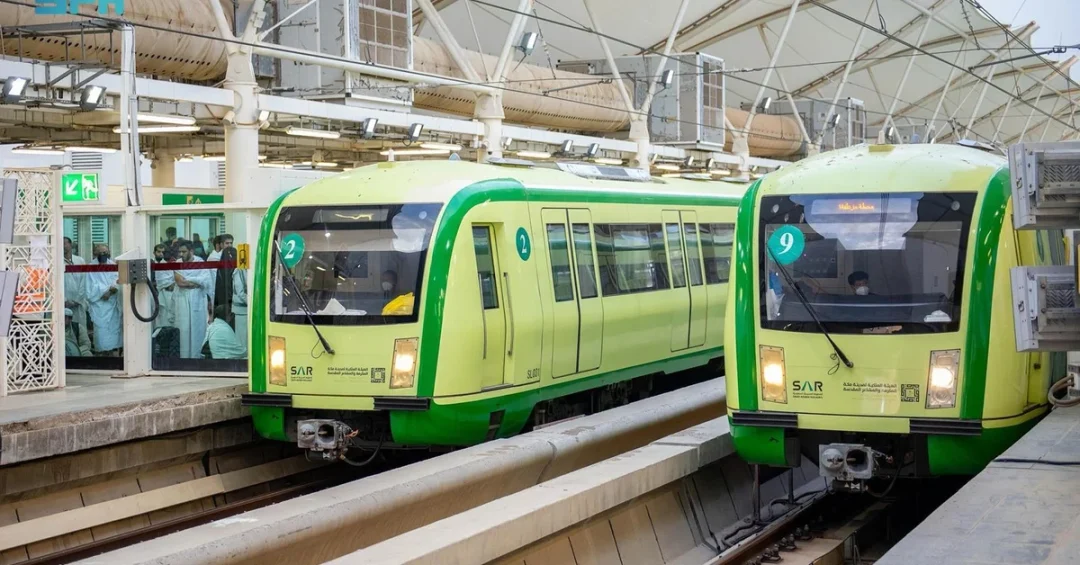
Saudi Arabia Railways (SAR) has announced the full readiness of the Al-Mashaer Metro Train to serve pilgrims during the Hajj season 1445H, with operations set to begin on the seventh day of Dhul-Hijjah. According to the Saudi Press Agency (SPA), the train will start transporting pilgrims from Mina to Arafat on the evening of Tarwiyah Day, the eighth day of Dhul-Hijjah, ensuring a smooth and efficient movement across the holy sites.
Context and Background
The Al-Mashaer Metro Train, inaugurated in 2010, is a vital component of Saudi Arabia’s efforts to enhance the Hajj experience. It operates on a dedicated track spanning the holy sites of Arafat, Muzdalifah, and Mina, with nine stations—three in each area. The final station extends to the fourth level of the Jamarat Bridge, facilitating easy access for pilgrims performing the stoning ritual. This year, SAR has dedicated significant efforts over the past three months to prepare for the Hajj season, conducting extensive maintenance and testing to ensure the train and its stations meet the highest safety and quality standards.
Key Details
The Al-Mashaer train fleet consists of 17 trains, each with a capacity of 3,000 passengers, enabling a total capacity of up to 72,000 passengers per hour. This high capacity is crucial for managing the massive influx of pilgrims during the Hajj, one of the world’s largest annual gatherings. The train’s operations are meticulously scheduled to transport pilgrims between the holy sites, reducing traffic congestion and enhancing safety. SAR’s preparations include rigorous testing of all systems, ensuring seamless operation across the nine stations. The train will commence services on the evening of Tarwiyah Day, moving pilgrims from Mina to Arafat, and will continue throughout the Hajj rituals.
Implications and Impact
The readiness of the Al-Mashaer Metro Train underscores Saudi Arabia’s commitment to providing world-class services to pilgrims. By facilitating efficient movement between the holy sites, the train significantly reduces reliance on road transport, easing congestion and minimizing environmental impact. This aligns with the Kingdom’s broader efforts to enhance the pilgrimage experience through infrastructure development and smart mobility solutions. The train’s high capacity and reliability ensure that pilgrims can focus on their spiritual journey, knowing that their transportation needs are well managed. Furthermore, the successful operation of the metro train demonstrates Saudi Arabia’s capability to handle large-scale events, reinforcing its status as a global leader in crowd management and public service.
Vision 2030 Alignment
The Al-Mashaer Metro Train project is a testament to Saudi Arabia’s Vision 2030, which aims to elevate the quality of services provided to pilgrims and enhance the Kingdom’s role as a global hub for Hajj and Umrah. By investing in advanced transportation infrastructure, Saudi Arabia not only improves the pilgrimage experience but also showcases its commitment to innovation and sustainable development. As the Kingdom continues to modernize its facilities and services, the Al-Mashaer train stands as a symbol of progress, reflecting the nation’s dedication to serving the guests of God with excellence and efficiency.
20 Questions
Q1. What is the Al-Mashaer Metro Train?
A1. The Al-Mashaer Metro Train is a dedicated rail service operating across the holy sites of Arafat, Muzdalifah, and Mina during the Hajj season. Inaugurated in 2010, it transports pilgrims efficiently between these locations, reducing congestion and enhancing safety.
Q2. When will the Al-Mashaer train begin operations this year?
A2. The train will commence operations on the evening of Tarwiyah Day, the eighth day of Dhul-Hijjah, transporting pilgrims from Mina to Arafat. This marks the start of its service during the Hajj season 1445H.
Q3. How many stations does the Al-Mashaer train serve?
A3. The train serves nine stations across the holy sites: three in Arafat, three in Muzdalifah, and three in Mina. The final station extends to the fourth level of the Jamarat Bridge for easy access.
Q4. What is the capacity of each Al-Mashaer train?
A4. Each train has a capacity of 3,000 passengers. With a fleet of 17 trains, the system can transport up to 72,000 passengers per hour, efficiently managing the large number of pilgrims.
Q5. How long did SAR prepare for this year’s Hajj season?
A5. Saudi Arabia Railways dedicated significant efforts over the past three months to prepare for the Hajj season. This included extensive maintenance and testing to ensure the train and stations meet high safety and quality standards.
Q6. What safety measures are in place for the Al-Mashaer train?
A6. SAR adheres to the highest safety standards and quality requirements. Rigorous testing and maintenance operations are conducted to ensure the train and its stations are fully prepared for seamless operation during the Hajj.
Q7. How does the train benefit pilgrims during Hajj?
A7. The train provides efficient, reliable transportation between the holy sites, reducing traffic congestion and travel time. It allows pilgrims to focus on their spiritual journey while ensuring their safety and comfort.
Q8. What areas does the Al-Mashaer train cover?
A8. The train covers the holy sites of Arafat, Muzdalifah, and Mina. It connects these key locations, facilitating the movement of pilgrims as they perform the necessary Hajj rituals.
Q9. When was the Al-Mashaer Metro Train inaugurated?
A9. The Al-Mashaer Metro Train was inaugurated in 2010. Since then, it has been an essential part of Hajj operations, continuously evolving to meet the needs of pilgrims.
Q10. How many trains are in the Al-Mashaer fleet?
A10. The fleet consists of 17 trains. Each train is designed to carry 3,000 passengers, contributing to the system’s total capacity of 72,000 passengers per hour.
Q11. What is the significance of the Jamarat Bridge station?
A11. The final station extends to the fourth level of the Jamarat Bridge, providing direct access for pilgrims to perform the stoning ritual. This enhances convenience and safety during a critical Hajj rite.
Q12. How does the train contribute to crowd management?
A12. With its high capacity and frequent service, the train efficiently moves large numbers of pilgrims, reducing overcrowding on roads and at the holy sites. This is crucial for maintaining safety and order during Hajj.
Q13. What role does SAR play in Hajj operations?
A13. Saudi Arabia Railways is responsible for operating the Al-Mashaer Metro Train, ensuring it runs smoothly and safely. SAR conducts maintenance, testing, and coordination to support the massive pilgrimage.
Q14. How does the train align with Vision 2030?
A14. The train reflects Vision 2030’s goals of enhancing pilgrim services and infrastructure. It showcases Saudi Arabia’s commitment to innovation and sustainable development, improving the overall Hajj experience.
Q15. What are the environmental benefits of the train?
A15. By reducing reliance on buses and cars, the train lowers carbon emissions and traffic congestion. This supports environmental sustainability efforts within the Kingdom’s broader development plans.
Q16. How often do the trains run during Hajj?
A16. The trains run frequently according to a schedule designed to accommodate pilgrim flows. The exact frequency is optimized to ensure timely transportation between the holy sites without delays.
Q17. Is the train accessible to all pilgrims?
A17. Yes, the train is designed to accommodate all pilgrims, with stations and carriages equipped to handle large crowds. Priority may be given to certain groups, but overall accessibility is a key focus.
Q18. What testing was conducted before operations?
A18. SAR conducted comprehensive testing of the train systems, tracks, and stations. This included mechanical checks, safety drills, and simulated operations to ensure everything functions flawlessly during Hajj.
Q19. How does the train enhance the pilgrim experience?
A19. The train offers a comfortable, efficient, and safe mode of transport, allowing pilgrims to move between rituals with ease. It reduces physical strain and time spent in transit, enriching the spiritual journey.
Q20. What message does this send about Saudi Arabia’s capabilities?
A20. The successful operation of the Al-Mashaer train demonstrates Saudi Arabia’s advanced infrastructure and event management skills. It reinforces the Kingdom’s dedication to serving pilgrims and its leadership in large-scale logistics.
Reader Feedback
We value your thoughts. Please share your feedback on this article.
Your feedback helps us improve our coverage.