


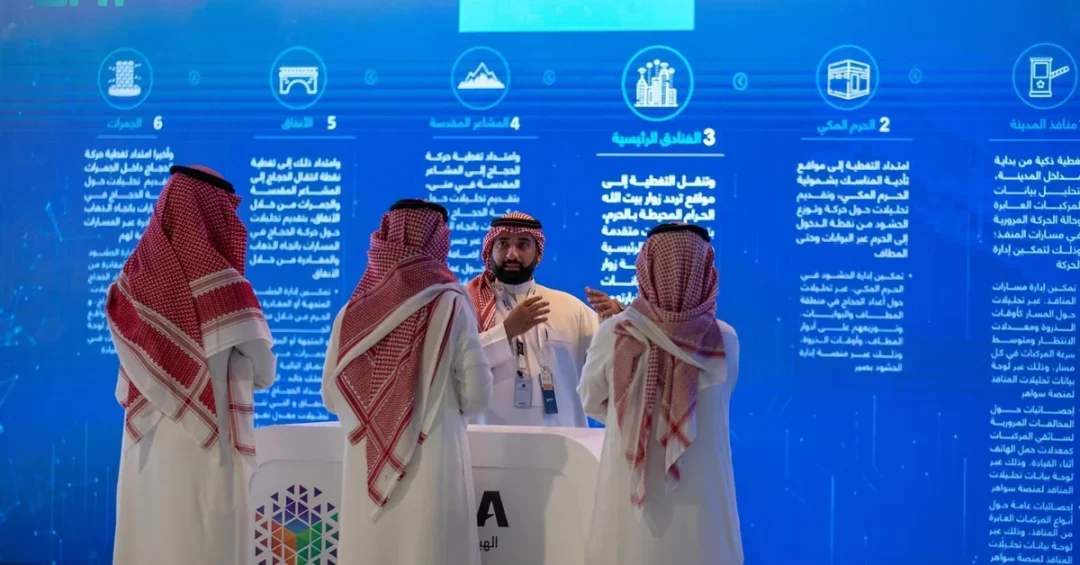
The Saudi Authority for Data and Artificial Intelligence (SDAIA) is showcasing its digital services and applications at the Hajj Media Hub, held at the Makkah Chamber Exhibitions and Events Center, to enhance the pilgrimage experience for millions of Hajj pilgrims. The participation highlights SDAIA’s commitment to leveraging data and artificial intelligence to provide seamless services, manage crowds, regulate traffic, and facilitate access to holy sites.
Context and Background
The Hajj Media Hub serves as a central platform for government agencies and media to coordinate and showcase services during the annual Hajj pilgrimage. SDAIA’s involvement underscores the Kingdom’s focus on integrating advanced technologies into the Hajj experience, aligning with the broader national strategy to enhance public services through digital transformation. This initiative is part of Saudi Arabia’s Vision 2030, which aims to improve the quality of life for citizens and visitors, and to position the Kingdom as a global leader in technology and innovation.
Key Details
At its pavilion, SDAIA is presenting several innovative platforms. The Baseer platform supports government agencies in crowd management, ensuring safety and efficiency during Hajj. The Sawaher platform provides advanced analytics to regulate vehicle traffic around the holy sites. The Tawakkalna application offers pilgrims convenient digital services, including viewing their digital card via the Nusuk app and accessing entry permits to holy sites. Additionally, the National Platform for Charitable Work (Ehsan) facilitates charitable acts such as sponsoring Hajj for first-time pilgrims and providing meals and water to pilgrims.
Implications and Impact
SDAIA’s participation at the Hajj Media Hub demonstrates the transformative role of data and artificial intelligence in managing one of the world’s largest annual gatherings. These technologies not only improve the pilgrim experience but also enhance operational efficiency for authorities, contributing to the safety and well-being of all attendees. By showcasing these solutions, SDAIA reinforces Saudi Arabia’s position as a leader in smart technology and its dedication to serving the guests of God with the highest standards.
Vision 2030 Alignment
This initiative is closely tied to Saudi Arabia’s Vision 2030, which seeks to diversify the economy, improve public services, and embrace digital innovation. SDAIA’s efforts in Hajj reflect the Vision’s objectives of enhancing the quality of life and promoting technological advancement, further solidifying the Kingdom’s role as a global hub for innovation and a model for leveraging AI for social good.
20 Questions
Q1. What is SDAIA showcasing at the Hajj Media Hub?
A1. SDAIA is showcasing digital services and applications related to data and artificial intelligence, including the Baseer platform, Sawaher platform, Tawakkalna application, and the National Platform for Charitable Work (Ehsan), to enhance the Hajj experience for pilgrims.
Q2. Where is the Hajj Media Hub being held?
A2. The Hajj Media Hub is being held at the Makkah Chamber Exhibitions and Events Center, providing a central location for government agencies and media to coordinate and showcase services during Hajj.
Q3. What is the purpose of SDAIA’s participation in the Hajj Media Hub?
A3. SDAIA aims to highlight the role of data technologies and artificial intelligence in providing the best services to pilgrims, managing crowds, regulating vehicle traffic, and facilitating entry to holy sites during Hajj.
Q4. What is the Baseer platform used for?
A4. The Baseer platform supports government agencies in crowd management during Hajj, helping to ensure safety and efficiency in managing the large number of pilgrims present at the holy sites.
Q5. How does the Sawaher platform contribute to Hajj operations?
A5. The Sawaher platform provides advanced analysis services to regulate vehicle traffic around the holy sites, helping to maintain smooth movement and reduce congestion during the Hajj season.
Q6. What services does the Tawakkalna application offer to pilgrims?
A6. The Tawakkalna application provides distinctive services such as viewing the pilgrim’s digital card through the Nusuk application and displaying entry permits to the holy sites, simplifying access for pilgrims.
Q7. What is the National Platform for Charitable Work (Ehsan)?
A7. The National Platform for Charitable Work (Ehsan) is a digital platform that facilitates charitable acts, including sponsoring Hajj for first-time pilgrims, supplying meals to pilgrims, and providing them with water.
Q8. How does SDAIA’s participation align with Vision 2030?
A8. SDAIA’s participation aligns with Vision 2030 by promoting digital transformation, enhancing public services, and leveraging technology to improve the quality of life for pilgrims, reflecting the Kingdom’s commitment to innovation.
Q9. What is the significance of using AI in Hajj management?
A9. Using AI in Hajj management enhances operational efficiency, improves crowd control and traffic regulation, and ensures a safer and more seamless experience for pilgrims, demonstrating the potential of technology in large-scale events.
Q10. How does the Tawakkalna application integrate with the Nusuk app?
A10. The Tawakkalna application allows pilgrims to view their digital card through the Nusuk app, providing a convenient digital identity and access to essential Hajj services on a single platform.
Q11. What are the key benefits of the Baseer platform for crowd management?
A11. The Baseer platform enables real-time monitoring and analysis of crowd density, helping authorities make informed decisions to prevent overcrowding and ensure the safety of pilgrims during Hajj rituals.
Q12. How does the Sawaher platform help regulate traffic?
A12. The Sawaher platform uses advanced analytics to monitor and manage vehicle movement around the holy sites, reducing congestion and improving the flow of transportation for pilgrims and emergency services.
Q13. In what ways does Ehsan support pilgrims?
A13. Ehsan supports pilgrims by offering opportunities to sponsor Hajj for those who have never performed it, as well as providing meals and water, ensuring that basic needs are met and charitable contributions are efficiently distributed.
Q14. What role does data play in SDAIA’s Hajj services?
A14. Data is central to SDAIA’s services, enabling real-time analysis, informed decision-making, and efficient resource allocation, which collectively enhance the overall Hajj experience for pilgrims and support government agencies.
Q15. How does SDAIA ensure the privacy and security of pilgrims’ data?
A15. SDAIA adheres to strict data protection regulations and employs advanced security measures to safeguard pilgrims’ personal information, ensuring that all digital services are delivered securely and responsibly.
Q16. What other government agencies are involved in the Hajj Media Hub?
A16. Various Saudi government agencies participate in the Hajj Media Hub, including the Ministry of Hajj and Umrah, the Ministry of Interior, and the Ministry of Health, all working together to provide comprehensive services to pilgrims.
Q17. How can pilgrims access the digital services provided by SDAIA?
A17. Pilgrims can access SDAIA’s digital services through user-friendly applications like Tawakkalna and Nusuk, which are available on mobile platforms and provide easy access to permits, digital cards, and other essential Hajj information.
Q18. What feedback has SDAIA received from pilgrims regarding these digital services?
A18. SDAIA has received positive feedback from pilgrims who appreciate the convenience and efficiency of the digital services, which have simplified various aspects of their Hajj journey and enhanced their overall experience.
Q19. How does SDAIA measure the success of its Hajj digital initiatives?
A19. SDAIA measures success through key performance indicators such as user adoption rates, service uptime, crowd management effectiveness, and pilgrim satisfaction surveys, continuously improving its offerings based on data-driven insights.
Q20. What future developments can be expected from SDAIA for Hajj?
A20. SDAIA plans to further integrate AI and data analytics to enhance predictive capabilities, streamline services, and introduce new innovations that will continue to improve the Hajj experience in line with Vision 2030 goals.
Reader Feedback
We value your thoughts. Please share your feedback on this article.
Your feedback helps us improve our coverage.