


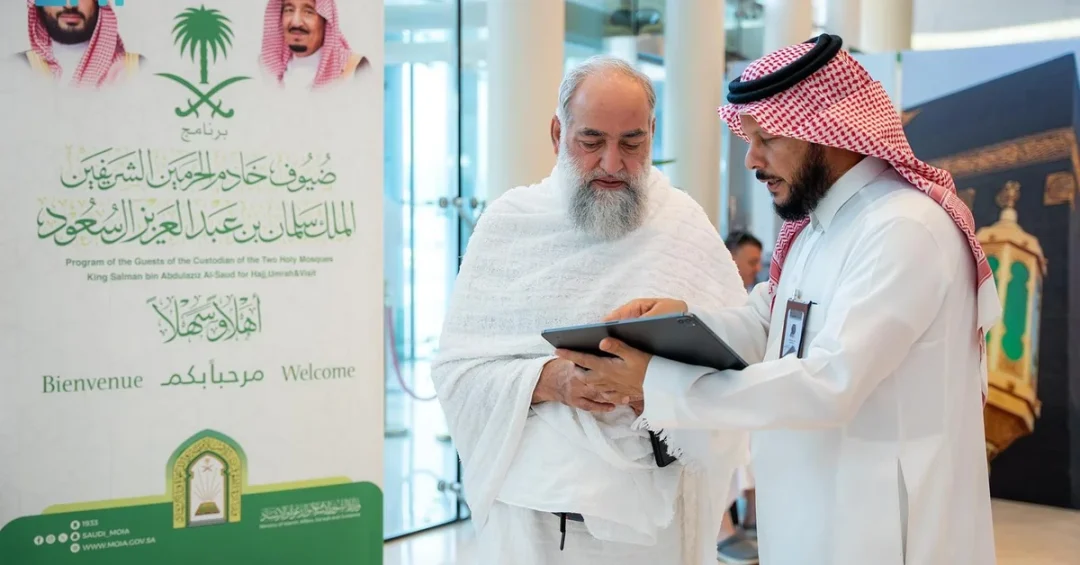
The Ministry of Islamic Affairs, Dawah, and Guidance has launched a multilingual 3D virtual reality application designed to teach Hajj and Umrah rituals, offering immersive virtual tours of the Grand Mosque and holy sites. Announced in Makkah on June 11, 2024, via the Saudi Press Agency, the initiative aims to train pilgrims on the correct performance of rituals, reduce common mistakes, and enhance the spiritual journey for millions of worshippers arriving in the Kingdom.
Context and Background
As part of its efforts to serve pilgrims, the Ministry of Islamic Affairs, Dawah, and Guidance introduced this application to coincide with the annual influx of pilgrims performing Hajj. The Kingdom welcomes millions of Muslims each year, and ensuring they can perform their rituals accurately is a top priority. The application leverages 3D models and virtual reality to create an educational environment that replicates the geographical and temporal realities of Hajj and Umrah. This approach aligns with Saudi Arabia’s Vision 2030, which emphasizes the use of technology to enhance services for pilgrims and improve their experience.
Key Details and Features
The multilingual and multi-environment application offers virtual tours that simulate the real environment of the Grand Mosque and the holy sites of Mina, Arafat, and Muzdalifah. By providing a realistic simulation, it helps pilgrims and Umrah performers overcome potential obstacles and familiarize themselves with the rituals before their journey. The application is available in various versions to cater to different nationalities and language backgrounds, ensuring accessibility for a diverse global audience. Its innovative design has earned several national and regional awards for its contribution to creating a virtual environment that mirrors the geographical reality and chronological order of the rituals.
Implications for Pilgrims and the Broader Region
This initiative represents a significant step forward in using advanced technology to serve Islam’s most sacred sites. For international pilgrims, the application provides a valuable preparatory tool that can alleviate anxiety and enhance their understanding of the rituals. By minimizing common mistakes, it contributes to a smoother and more spiritually fulfilling experience. Regionally, the application sets a benchmark for how technology can be harnessed to support religious education and pilgrimage services. It also underscores Saudi Arabia’s leadership in leveraging digital innovation for the benefit of the global Muslim community.
Vision 2030 Alignment
The launch of this multilingual 3D virtual reality application is a prime example of Vision 2030’s objectives in action. Under the leadership of the Custodian of the Two Holy Mosques, King Salman bin Abdulaziz Al Saud, and His Royal Highness Crown Prince Mohammed bin Salman, Saudi Arabia is committed to transforming the pilgrimage experience through technology. This initiative not only enhances the quality of services provided to pilgrims but also showcases the Kingdom’s dedication to innovation and its role as a global leader in serving Islam. As Vision 2030 continues to unfold, such projects will further elevate Saudi Arabia’s standing as a preferred destination for pilgrims and a hub for technological advancement in religious services.
20 Questions
Q1. What is the purpose of the new virtual reality application?
A1. The application aims to teach Hajj and Umrah rituals using 3D models and virtual reality, helping pilgrims perform rituals correctly and minimizing common mistakes. It provides an immersive educational environment that replicates the geographical and temporal realities of the pilgrimage.
Q2. Which Saudi ministry launched this application?
A2. The Ministry of Islamic Affairs, Dawah, and Guidance launched the application. It is part of the ministry’s ongoing efforts to serve pilgrims and enhance their experience through innovative technological solutions that align with Saudi Vision 2030.
Q3. When was the application announced?
A3. The application was announced in Makkah on June 11, 2024, as reported by the Saudi Press Agency. The launch coincided with the influx of pilgrims arriving in the Kingdom to perform Hajj that year.
Q4. What are the main features of the application?
A4. The application offers virtual tours simulating the Grand Mosque and holy sites like Mina, Arafat, and Muzdalifah. It uses 3D models and virtual reality to teach rituals, and is available in multiple languages to cater to pilgrims from different nationalities.
Q5. How does the application help pilgrims?
A5. It helps pilgrims by providing a realistic simulation of the rituals, allowing them to learn and practice before their journey. This reduces common mistakes and helps overcome obstacles, ensuring a smoother and more spiritually fulfilling pilgrimage experience.
Q6. Is the application available in multiple languages?
A6. Yes, the application is multilingual, with various versions designed to meet the needs of pilgrims from different nationalities and language backgrounds. This ensures that users can access the educational content in a language they understand.
Q7. What awards has the application won?
A7. The application has won several national and regional awards for its contribution to providing a virtual environment that mirrors the geographical reality and chronological order of Hajj and Umrah rituals, and for helping overcome obstacles faced by pilgrims.
Q8. How does the application align with Vision 2030?
A8. The application aligns with Vision 2030 by promoting the use of technology to provide improved services to pilgrims. It reflects the Kingdom’s commitment to innovation and enhancing the pilgrimage experience under the leadership of King Salman and Crown Prince Mohammed bin Salman.
Q9. What holy sites are simulated in the application?
A9. The application simulates the Grand Mosque in Makkah and the holy sites of Mina, Arafat, and Muzdalifah. These are key locations where pilgrims perform specific rituals during Hajj, and the virtual tours replicate their real environments.
Q10. Who can use this application?
A10. The application is designed for all pilgrims and Umrah performers, regardless of nationality or language. It is particularly useful for first-time pilgrims who may be unfamiliar with the rituals and want to prepare in advance.
Q11. How does the application reduce common mistakes?
A11. By providing a virtual environment that replicates the geographical and temporal reality of the rituals, the application allows users to practice and learn the correct procedures. This hands-on virtual experience helps prevent errors during the actual pilgrimage.
Q12. Is the application free to use?
A12. The article does not specify whether the application is free, but it is an initiative by the Ministry of Islamic Affairs to serve pilgrims, suggesting it is likely accessible to all. For details, users should check official sources.
Q13. What technology does the application use?
A13. The application uses 3D models and virtual reality technology to create immersive virtual tours. This advanced technology simulates the real environment of the holy sites, offering an educational experience that mirrors the actual rituals.
Q14. How does the application reflect Saudi Arabia’s leadership in serving Islam?
A14. It demonstrates Saudi Arabia’s dedication to leveraging cutting-edge technology to serve the global Muslim community. By facilitating the correct performance of Hajj and Umrah, the Kingdom reinforces its role as the custodian of Islam’s holiest sites.
Q15. Can the application be used offline?
A15. The article does not mention offline capabilities. Users should refer to official sources for information on accessibility and usage requirements. The application is likely available via digital platforms for online use.
Q16. What is the significance of the application for international pilgrims?
A16. For international pilgrims, the application provides a valuable preparatory tool that helps them understand the rituals before traveling. It bridges language and cultural gaps, making the pilgrimage more accessible and less daunting for first-timers.
Q17. How does the application simulate the chronological order of rituals?
A17. The application replicates the temporal reality by guiding users through the rituals in the correct sequence, from the Grand Mosque to Mina, Arafat, and Muzdalifah. This helps pilgrims understand the order and timing of each step.
Q18. What impact does the application have on the pilgrimage experience?
A18. It enhances the pilgrimage experience by reducing mistakes and anxiety, allowing pilgrims to focus on spiritual devotion. The application also contributes to a smoother flow of crowds and a more organized Hajj season.
Q19. Is the application part of a larger Saudi technological initiative?
A19. Yes, it is part of Saudi Arabia’s broader efforts under Vision 2030 to integrate technology into public services, including those for pilgrims. The Kingdom has launched several digital initiatives to improve the Hajj and Umrah experience.
Q20. Where can pilgrims access the application?
A20. The application is likely available through official channels and app stores. Pilgrims should consult the Ministry of Islamic Affairs, Dawah, and Guidance’s website or authorized platforms for download and usage instructions.
Reader Feedback
We value your thoughts. Please share your feedback on this article.
Your feedback helps us improve our coverage.