


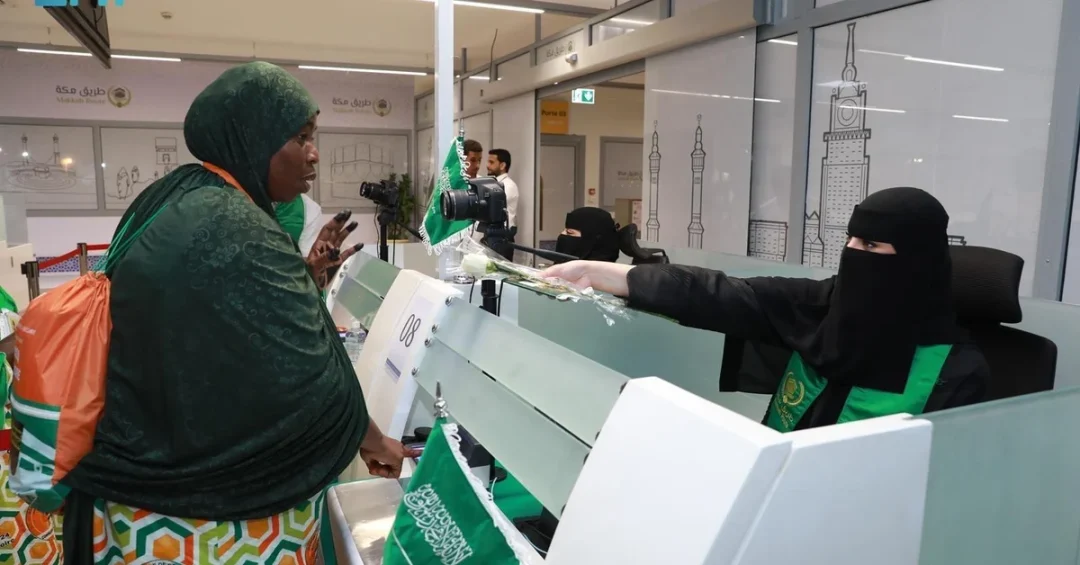
Saudi Arabia has deployed advanced artificial intelligence technology to streamline Hajj procedures for pilgrims departing from Abidjan Airport in Côte d’Ivoire, as part of the Kingdom’s ongoing efforts to enhance the pilgrimage experience through the Makkah Route Initiative. The initiative, overseen by the Ministry of Interior’s General Directorate of Passports, reflects Saudi Arabia’s commitment to leveraging cutting-edge solutions to serve pilgrims with greater efficiency and comfort.
Context and Background
The Makkah Route Initiative is a flagship program under the Pilgrim Experience Program, a key component of Saudi Arabia’s Vision 2030. It aims to facilitate the journey of pilgrims from their home countries by completing immigration and customs procedures at departure airports, allowing them to bypass lengthy queues upon arrival in the Kingdom. The initiative has been implemented in several countries, including Côte d’Ivoire, where it has now been operational for two consecutive years.
This year, the initiative at Abidjan Airport features AI-powered counters designed to expedite the processing of pilgrims. According to Captain Muammar Al-Otaibi, supervisor of the Makkah Route Initiative lounge at the airport, the technology captures vital data and provides necessary information swiftly after Hajj visas are issued. This integration of AI demonstrates Saudi Arabia’s broader strategy to incorporate digital innovation into public services, particularly those related to the annual pilgrimage that draws millions of Muslims worldwide.
Key Details
The AI system at Abidjan Airport streamlines multiple steps of the pre-departure process. Once a pilgrim’s Hajj visa is issued, the system efficiently completes procedures such as biometric data capture and dissemination of essential travel information. Captain Al-Otaibi emphasized that the initiative has achieved high accuracy and swift processing, contributing to a smoother experience for Ivorian pilgrims traveling to Saudi Arabia.
The lounge at Abidjan Airport is equipped with state-of-the-art counters that utilize artificial intelligence to reduce waiting times and minimize human error. This approach aligns with the Ministry of Interior’s goal of ensuring the comfort and well-being of pilgrims, a priority that has been consistently highlighted by Saudi leadership. The successful implementation for the second year running underscores the reliability and effectiveness of the system.
Implications and Impact
The use of advanced technology in the Makkah Route Initiative has significant implications for international pilgrims and for Saudi Arabia’s global standing. By streamlining procedures at departure points, the Kingdom reduces congestion at Saudi airports and enhances the overall pilgrimage journey. This not only improves the experience for pilgrims but also showcases Saudi Arabia’s technological capabilities and its commitment to hosting Hajj in a well-organized manner.
For Côte d’Ivoire, the initiative strengthens bilateral ties with Saudi Arabia and demonstrates the Kingdom’s outreach to Muslim communities in Africa. It also serves as a model for other nations, potentially encouraging more countries to join the initiative. The positive feedback from pilgrims and officials alike highlights the tangible benefits of such technological investments.
Vision 2030 Alignment
The Makkah Route Initiative is a direct reflection of Saudi Arabia’s Vision 2030, which seeks to diversify the economy, enhance public services, and improve the quality of life for citizens and visitors. Under the Pilgrim Experience Program, the Kingdom aims to increase the number of pilgrims and enhance their spiritual journey through innovative solutions. By integrating AI and other modern technologies, Saudi Arabia not only facilitates Hajj but also reinforces its role as a global leader in serving Islam’s holiest sites.
As the Kingdom continues to invest in digital transformation, initiatives like this demonstrate how Vision 2030 is being realized on the ground, benefiting pilgrims from around the world and strengthening Saudi Arabia’s position as a hub for religious tourism and technological innovation.
20 Questions
Q1. What is the Makkah Route Initiative?
A1. The Makkah Route Initiative is a program under Saudi Arabia’s Pilgrim Experience Program that streamlines Hajj procedures by completing immigration and customs at departure airports, allowing pilgrims to bypass queues upon arrival in the Kingdom.
Q2. Which country’s pilgrims are benefiting from this initiative at Abidjan Airport?
A2. Pilgrims from Côte d’Ivoire are benefiting from the initiative at Abidjan Airport, where Saudi Arabia has implemented advanced technology to expedite their Hajj journey.
Q3. What technology is used at the Abidjan Airport lounge?
A3. The lounge features counters equipped with artificial intelligence (AI) technology to streamline the travel process, including capturing vital data and providing necessary information after Hajj visas are issued.
Q4. Who is Captain Muammar Al-Otaibi?
A4. Captain Muammar Al-Otaibi is the supervisor of the Makkah Route Initiative lounge at Abidjan Airport. He emphasized Saudi Arabia’s commitment to ensuring the comfort and well-being of pilgrims.
Q5. How long has the initiative been running in Côte d’Ivoire?
A5. The initiative has been successful for the second year running in Côte d’Ivoire, demonstrating its reliability and effectiveness in facilitating pilgrim travel.
Q6. What are the benefits of the AI system for pilgrims?
A6. The AI system efficiently completes pilgrim procedures, including capturing vital data and providing necessary information, leading to high accuracy, swift processing, and reduced waiting times for travelers.
Q7. Which Saudi ministry oversees the Makkah Route Initiative?
A7. The Ministry of Interior’s General Directorate of Passports oversees the Makkah Route Initiative, ensuring its smooth operation and technological integration.
Q8. What is the Pilgrim Experience Program?
A8. The Pilgrim Experience Program is a cornerstone of Saudi Arabia’s Vision 2030, aimed at enhancing the spiritual journey of pilgrims through innovative services and infrastructure improvements.
Q9. How does the initiative align with Vision 2030?
A9. The initiative aligns with Vision 2030 by leveraging technology to improve public services, enhance the pilgrimage experience, and showcase Saudi Arabia’s leadership in serving Islam’s holiest sites.
Q10. What happens after a pilgrim’s Hajj visa is issued?
A10. After the Hajj visa is issued, the AI system at Abidjan Airport efficiently completes procedures such as capturing biometric data and providing essential travel information to the pilgrim.
Q11. Why is the initiative important for Côte d’Ivoire?
A11. The initiative strengthens bilateral ties between Côte d’Ivoire and Saudi Arabia, demonstrating the Kingdom’s outreach to Muslim communities in Africa and facilitating easier travel for Ivorian pilgrims.
Q12. How does the initiative reduce congestion at Saudi airports?
A12. By completing immigration and customs procedures at the departure airport, pilgrims bypass these steps upon arrival in Saudi Arabia, significantly reducing congestion and waiting times at Saudi airports.
Q13. What role does technology play in the initiative?
A13. Technology, particularly AI, plays a central role by automating data capture, verifying information, and streamlining processes, resulting in faster and more accurate handling of pilgrims.
Q14. Has the initiative been successful in other countries?
A14. Yes, the Makkah Route Initiative has been implemented in several countries, including Pakistan, Indonesia, Malaysia, and others, with positive feedback and improved pilgrim experiences.
Q15. What is the significance of the initiative for Saudi Arabia’s global image?
A15. The initiative enhances Saudi Arabia’s global image as a technologically advanced and caring nation, committed to serving pilgrims and promoting Islam’s values of hospitality and efficiency.
Q16. How does the initiative reflect Saudi Arabia’s commitment to pilgrims?
A16. It reflects the Kingdom’s commitment by investing in advanced technology and infrastructure to ensure pilgrims’ comfort, safety, and well-being throughout their spiritual journey.
Q17. What are the future plans for the Makkah Route Initiative?
A17. Saudi Arabia aims to expand the initiative to more countries and continuously upgrade its technology to further improve the pilgrimage experience, in line with Vision 2030 goals.
Q18. How does the initiative benefit Saudi Arabia’s economy?
A18. By facilitating more pilgrims, the initiative supports Saudi Arabia’s economic diversification efforts, boosting sectors such as tourism, hospitality, and retail, as part of Vision 2030.
Q19. What feedback have pilgrims given about the initiative?
A19. Pilgrims have expressed satisfaction with the streamlined procedures and reduced waiting times, praising Saudi Arabia’s efforts to make their journey smoother and more comfortable.
Q20. What does the initiative signify for Saudi Arabia’s leadership in the Muslim world?
A20. It signifies Saudi Arabia’s leadership and dedication to serving Muslims globally, reinforcing its role as the custodian of the Two Holy Mosques and a pioneer in innovative pilgrimage management.
Reader Feedback
We value your thoughts. Please share your feedback on this article.
Your feedback helps us improve our coverage.