


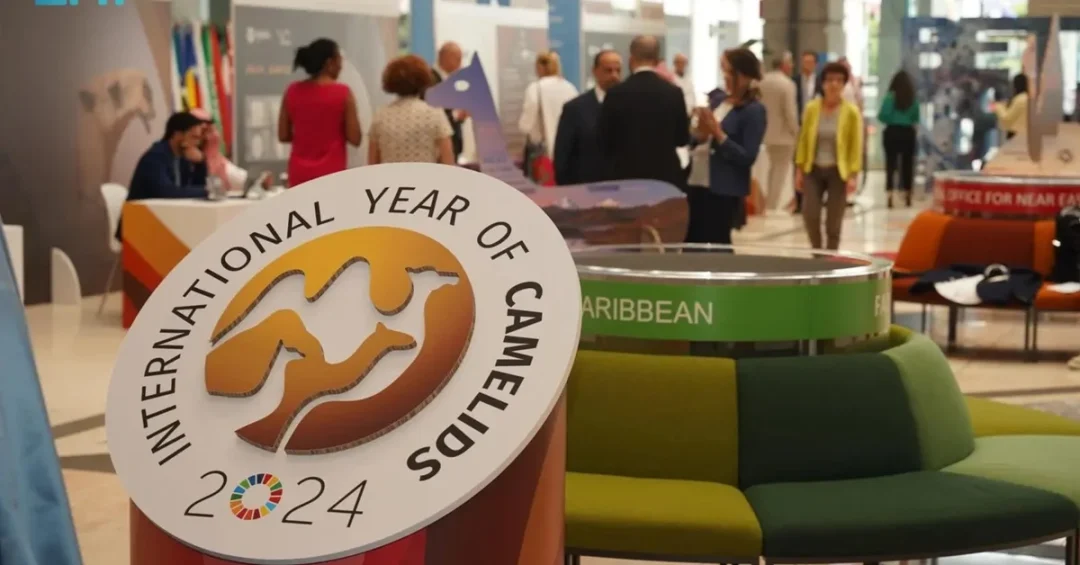
Saudi Arabia’s exhibition at the International Year of Camelids (IYC) 2024 in Rome has drawn widespread admiration from international visitors, showcasing a diverse range of products that celebrate the Kingdom’s rich camel heritage. Held alongside the United Nations Food and Agriculture Organization (FAO) Council session from June 10 to 14, the exhibition highlights the cultural, economic, and nutritional significance of camels, reinforcing Saudi Arabia’s leadership in the global camel sector.
Context and Background
The United Nations declared 2024 as the International Year of Camelids to recognize the vital role these animals play in food security, nutrition, and livelihoods worldwide. Saudi Arabia, home to a deep-rooted camel culture, has taken a leading role in the IYC through a partnership with the Group of Latin American and Caribbean States (GRULAC), represented by Bolivia. This collaboration underscores the Kingdom’s commitment to preserving and promoting camel heritage on a global stage.
The exhibition, organized alongside the FAO Council session, serves as a platform to display the best of Saudi camel-related products and to share knowledge about the animal’s contributions to sustainable development. It also reflects Saudi Arabia’s ongoing efforts to modernize and expand its camel industry in line with international quality standards.
Key Details
Visitors to the Saudi pavilion were captivated by a wide array of products derived from camels. Food industries featuring camel milk, meat, and other edibles received acclaim for their adherence to the highest international quality standards. Medical and cosmetic products, known for their natural and unique qualities, attracted many who were eager to purchase them. Informative displays demonstrated the significant status of camels as a symbol within local communities, and folk heritage exhibits showcasing camels garnered admiration from attendees worldwide.
The exhibition also highlighted the remarkable leap the Kingdom’s camel products industry has made in terms of quality, quantity, marketing, and consumer demand. By presenting these advancements, Saudi Arabia aims to raise awareness about the cultural, economic, and social importance of camels, while also promoting food security through sustainable practices.
Implications and Impact
Saudi Arabia’s participation in the IYC 2024 extends beyond cultural showcase; it signals the Kingdom’s growing influence in global agricultural and heritage discussions. The exhibition fosters international cooperation and opens doors for trade and knowledge exchange, particularly with Latin American and Caribbean nations. As the demand for camel products rises worldwide, Saudi Arabia’s leadership in this niche sector positions it as a key player in the global market for halal and natural products.
Moreover, the event underscores the importance of camels in achieving food security—a critical priority for many nations. By sharing its expertise and products, Saudi Arabia contributes to global efforts to diversify food sources and enhance nutritional outcomes, particularly in arid regions where camels thrive.
Vision 2030 Alignment
This exhibition aligns seamlessly with Saudi Vision 2030, which seeks to diversify the economy, promote cultural heritage, and enhance the Kingdom’s global engagement. By investing in the camel sector, Saudi Arabia not only preserves a treasured tradition but also creates economic opportunities, supports rural communities, and strengthens its position as a leader in sustainable development. The IYC 2024 serves as a testament to the Kingdom’s forward-looking vision, where heritage and innovation go hand in hand.
20 Questions
Q1. What is the International Year of Camelids 2024?
A1. The United Nations declared 2024 as the International Year of Camelids to highlight the importance of camels, llamas, alpacas, and other camelids for food security, livelihoods, and cultural heritage worldwide.
Q2. Where was the Saudi exhibition held?
A2. The Saudi exhibition was held in Rome, Italy, alongside the United Nations Food and Agriculture Organization (FAO) Council session from June 10 to 14, 2024.
Q3. What types of products were showcased?
A3. The exhibition featured food products like camel milk and meat, as well as medical and cosmetic items derived from camels, all adhering to high international quality standards.
Q4. How did visitors react to the exhibition?
A4. Visitors from various countries were captivated and showed great admiration for the displays, especially the folk heritage exhibits and the unique camel-derived products.
Q5. What is the significance of camels in Saudi culture?
A5. Camels are a symbol of authentic Saudi heritage, representing tradition, resilience, and hospitality. They play a central role in cultural identity and are celebrated in folklore and community life.
Q6. How has the camel products industry evolved in Saudi Arabia?
A6. The industry has experienced a remarkable leap in quality, quantity, marketing, and consumer demand, supported by modernization and adherence to international standards.
Q7. What role does Saudi Arabia play in the IYC?
A7. Saudi Arabia leads the IYC in collaboration with the Group of Latin American and Caribbean States (GRULAC), represented by Bolivia, highlighting its commitment to the camel sector.
Q8. Why is the exhibition important for food security?
A8. It showcases camel products as sustainable and nutritious food sources, contributing to global food security, especially in arid regions where camels are vital.
Q9. What are some medical benefits of camel products?
A9. Camel products are known for their natural and unique qualities, including potential health benefits in areas like nutrition and skincare, though specific claims require further study.
Q10. How does the exhibition promote Saudi heritage?
A10. By displaying folk heritage and traditional uses of camels, the exhibition educates international audiences about Saudi culture and preserves these traditions for future generations.
Q11. What international collaborations are involved?
A11. The exhibition is a joint effort with GRULAC, represented by Bolivia, and is held alongside the FAO Council session, fostering global cooperation.
Q12. What economic opportunities does the camel sector offer?
A12. It creates jobs in farming, processing, and marketing, and opens export markets for Saudi camel products, supporting economic diversification.
Q13. How does this align with Vision 2030?
A13. Vision 2030 aims to diversify the economy and promote cultural heritage. The camel sector’s development supports these goals by boosting non-oil revenues and preserving traditions.
Q14. What was the FAO Council session about?
A14. The FAO Council session addresses global food and agriculture issues, and the IYC exhibition ran alongside it to highlight the role of camelids in food security.
Q15. Who attended the exhibition?
A15. Visitors from various countries, including delegates, officials, and the public, attended the exhibition and showed keen interest in Saudi products and heritage.
Q16. What makes Saudi camel products unique?
A16. They combine traditional knowledge with modern quality standards, offering natural, high-quality food, cosmetics, and medical items that reflect Saudi heritage.
Q17. How does the exhibition raise awareness?
A17. Through informative pavilions and displays, it educates visitors about the cultural, economic, and social significance of camels in Saudi Arabia and beyond.
Q18. What is the Group of Latin American and Caribbean States (GRULAC)?
A18. GRULAC is a regional group within the United Nations that facilitates cooperation among Latin American and Caribbean countries. Bolivia represents it for the IYC.
Q19. What future steps can be expected for the camel sector?
A19. Continued innovation, expanded marketing, and international partnerships are expected, further integrating camel products into global markets and enhancing food security.
Q20. How does this exhibition reflect Saudi Arabia’s global role?
A20. It demonstrates Saudi Arabia’s proactive engagement in international forums, its leadership in niche agricultural sectors, and its commitment to sharing cultural heritage and sustainable practices globally.
Reader Feedback
We value your thoughts. Please share your feedback on this article.
Your feedback helps us improve our coverage.