


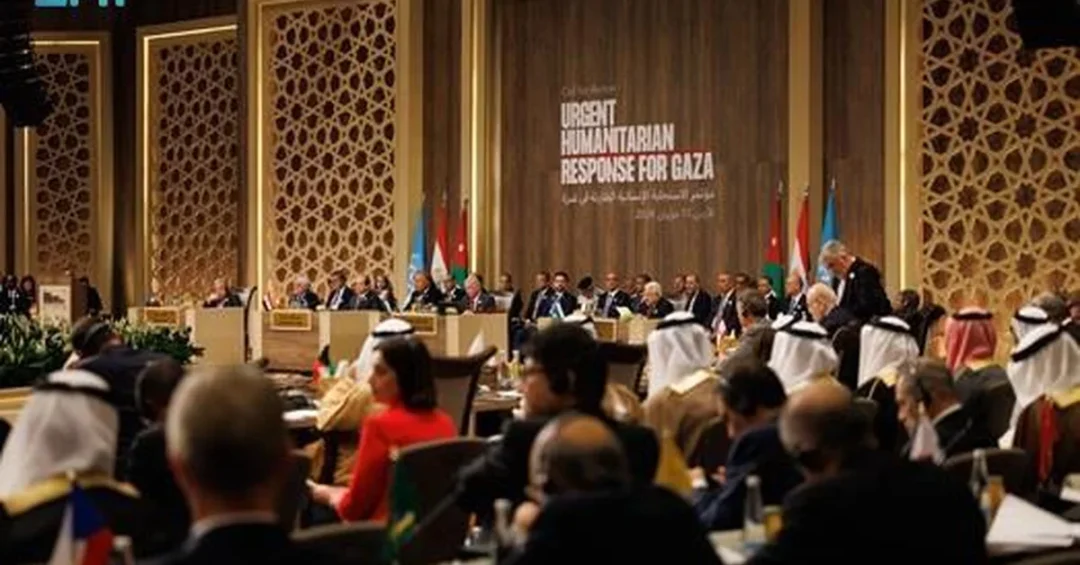
During the Urgent Humanitarian Response for Gaza Conference held in Amman, Jordan, on June 11, 2024, Gulf Cooperation Council (GCC) Secretary General Jasem Albudaiwi delivered a forceful address calling for immediate international action to address the severe humanitarian crisis in Gaza. The conference, convened to mobilize support for Palestinian civilians, brought together global leaders and organizations. Albudaiwi condemned the practices of Israeli occupation forces, highlighting their devastating impact on regional security and global stability.
Context and Background
The Urgent Humanitarian Response for Gaza Conference was organized in response to the escalating humanitarian emergency in Gaza, where civilians face dire conditions. The GCC, representing Bahrain, Kuwait, Oman, Qatar, Saudi Arabia, and the United Arab Emirates, has consistently advocated for Palestinian rights. This conference aligns with the GCC’s longstanding call for an international dialogue to resolve the Palestinian issue, as reaffirmed during its Forty-Fourth Extraordinary Session of the Ministerial Council.
During his speech, Albudaiwi emphasized that the conference reflects the GCC’s commitment to ending the Israeli occupation and establishing an independent Palestinian state with East Jerusalem as its capital, in accordance with United Nations resolutions and the Arab Peace Initiative. He praised the historical positions of GCC states and the efforts of the Ministerial Committee mandated by the joint Arab-Islamic Summit to address Israeli aggression and promote a two-state solution.
Key Details
Albudaiwi strongly condemned the displacement of civilians and the targeting of hospitals, places of worship, and UN facilities, describing these actions as irresponsible and inhumane. He reiterated the GCC’s demand for an immediate halt to Israeli military operations that disregard humanitarian and legal boundaries.
He commended European countries that have recently recognized the State of Palestine and urged others to follow suit, stressing the importance of respecting international laws and promoting human rights. Furthermore, he welcomed the UN Secretary-General’s decision to include Israel on the blacklist of countries that harm children, viewing it as a significant step toward accountability.
Albudaiwi reaffirmed the unwavering support of the GCC for the rights of the Palestinian people and called for a unified international response to the crisis.
Implications and Impact
Albudaiwi’s remarks underscore the GCC’s active role in regional diplomacy and its dedication to humanitarian causes. By condemning the actions of Israeli forces and advocating for international legal accountability, the GCC reinforces its position as a mediator and advocate for peace. The conference’s outcomes could influence global perceptions and pressure parties to adhere to international norms.
The GCC’s support for a two-state solution and its praise for European recognition of Palestine signal a growing momentum toward a negotiated settlement. This stance also aligns with broader Arab and Islamic efforts to address the Palestinian issue through multilateral forums.
Vision 2030 Alignment
Saudi Arabia’s Vision 2030 emphasizes the Kingdom’s commitment to global stability, humanitarian aid, and diplomatic leadership. Under the guidance of Custodian of the Two Holy Mosques King Salman bin Abdulaziz Al Saud and Crown Prince Mohammed bin Salman, Saudi Arabia continues to play a pivotal role in fostering peace and supporting Palestinian rights. The GCC’s efforts at the Amman conference reflect these principles, reinforcing Saudi Arabia’s dedication to a just and lasting resolution in the region.
20 Questions
Q1. What was the main purpose of the Urgent Humanitarian Response for Gaza Conference?
A1. The conference aimed to mobilize international support and resources to address the severe humanitarian crisis in Gaza, focusing on alleviating the suffering of Palestinian civilians and promoting a coordinated global response.
Q2. Who represented the GCC at the conference?
A2. GCC Secretary General Jasem Albudaiwi represented the Gulf Cooperation Council, delivering a speech that outlined the council’s stance on the Gaza crisis and called for immediate action.
Q3. What did Albudaiwi condemn in his speech?
A3. He condemned the irresponsible and inhumane practices of Israeli occupation forces, including the displacement of civilians and the targeting of hospitals, places of worship, and UN facilities.
Q4. What solution did Albudaiwi propose for the Palestinian issue?
A4. He called for ending the Israeli occupation and establishing an independent Palestinian state with East Jerusalem as its capital, in line with UN resolutions and the Arab Peace Initiative.
Q5. Why is this conference significant for the GCC?
A5. It reflects the GCC’s ongoing commitment to Palestinian rights and regional stability, aligning with its call for an international conference to resolve the Palestinian issue through multilateral dialogue.
Q6. How did Albudaiwi address the humanitarian situation in Gaza?
A6. He highlighted the challenging circumstances faced by Palestinians and demanded an immediate halt to Israeli military operations that disregard humanitarian and legal boundaries.
Q7. What role did the GCC’s Forty-Fourth Extraordinary Session play?
A7. It reaffirmed the GCC’s call for an international conference involving all relevant parties to address the Palestinian issue and achieve a just solution based on UN resolutions.
Q8. What did Albudaiwi say about European recognition of Palestine?
A8. He commended European countries that have recently recognized the State of Palestine and urged others to follow suit, emphasizing respect for international laws and human rights.
Q9. How did Albudaiwi react to the UN blacklist decision?
A9. He welcomed the UN Secretary General’s decision to include Israel on the blacklist of countries that harm children, considering it a significant step toward accountability for violations against Palestinians.
Q10. What is the GCC’s stance on the two-state solution?
A10. The GCC supports the two-state solution as the path to lasting peace, with an independent Palestinian state based on the 1967 borders and East Jerusalem as its capital.
Q11. How does the conference align with Saudi Arabia’s Vision 2030?
A11. It aligns with Vision 2030’s focus on global stability, humanitarian aid, and diplomatic leadership, showcasing Saudi Arabia’s commitment to peace and support for Palestinian rights.
Q12. What impact could the conference have on regional security?
A12. By fostering international dialogue and pressuring parties to adhere to international norms, the conference could contribute to de-escalation and long-term stability in the region.
Q13. Which countries are members of the GCC?
A13. The GCC comprises Bahrain, Kuwait, Oman, Qatar, Saudi Arabia, and the United Arab Emirates, working together on political, economic, and security issues.
Q14. What did Albudaiwi say about the targeting of UN facilities?
A14. He strongly condemned the targeting of UN facilities, highlighting it as a violation of international law and a threat to humanitarian operations.
Q15. How does the GCC support the Palestinian people?
A15. The GCC provides political, financial, and humanitarian support to the Palestinian people, advocating for their rights and a just resolution to the conflict.
Q16. What is the Arab Peace Initiative?
A16. The Arab Peace Initiative, endorsed by the Arab League in 2002, calls for Israel to withdraw from occupied territories in exchange for peace and normal relations with Arab states.
Q17. Why did Albudaiwi emphasize international law?
A17. He stressed that respecting international law is essential for promoting human rights and achieving a peaceful resolution to the Palestinian issue.
Q18. What role did the Ministerial Committee play?
A18. The Ministerial Committee, mandated by the joint Arab-Islamic Summit, works to address Israeli aggression and promote the implementation of the two-state solution.
Q19. How might the conference influence global public opinion?
A19. By amplifying the call for humanitarian action and accountability, the conference can raise global awareness and encourage more countries to support Palestinian rights.
Q20. What is the GCC’s vision for peace in the Middle East?
A20. The GCC envisions a just and comprehensive peace based on the two-state solution, with a sovereign Palestinian state and normalized relations between Israel and Arab states.
Reader Feedback
We value your thoughts. Please share your feedback on this article.
Your feedback helps us improve our coverage.