


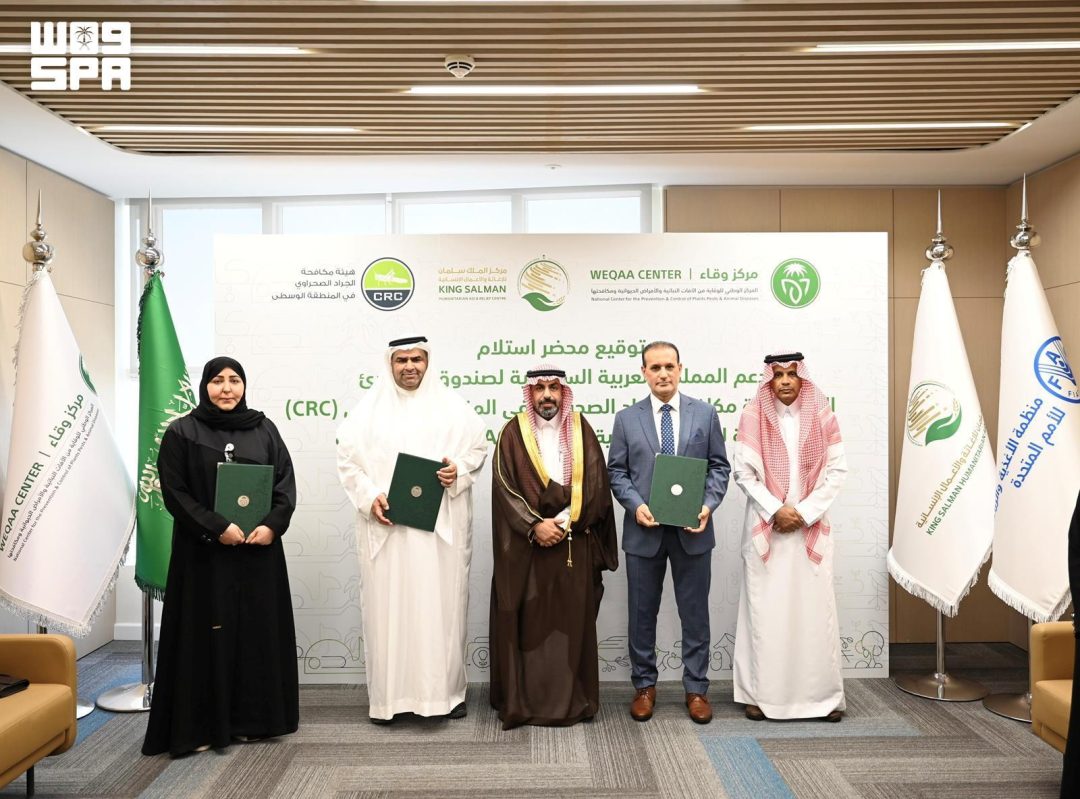
Forty modern devices and pieces of equipment, 8,250 safety items, and 100 tons of essential pest-control materials were provided as logistical support to the Food and Agriculture Organization of the United Nations (FAO) Commission for Controlling the Desert Locust in the Central Region.
According to SPA, the handover record was signed by the National Center for the Prevention and Control of Plants Pests and Animal Diseases (Weqaa Center), the King Salman Humanitarian Aid and Relief Center (KSrelief), and the FAO commission. The event was attended by Weqaa Center CEO Aymen Al-Ghamdi.
The support is intended to assist the commission’s efforts to combat desert locusts across the region to protect food security and plant resources. Weqaa Center stated that the initiative aims to enhance rapid-response capabilities and ensure safety standards for personnel during control operations in member countries.
The center added that these efforts support regional and international initiatives to mitigate the impact of cross-border pests and disasters through technical and logistical solutions. This approach is intended to protect agricultural resources and strengthen partnerships with international organizations for the early control of plant pests.
What specific materials and equipment were included in the Saudi logistical support? The logistical support provided to the FAO Commission for Controlling the Desert Locust in the Central Region included 100 tons of essential pest-control materials. Additionally, the support consisted of 40 modern and advanced pieces of equipment and devices, along with 8,250 safety items intended to ensure high safety standards for personnel during control operations.
Which organizations were involved in signing the handover record? The handover record for the logistical support was signed by three entities: the National Center for the Prevention and Control of Plants Pests and Animal Diseases (Weqaa Center), the King Salman Humanitarian Aid and Relief Center (KSrelief), and the Food and Agriculture Organization of the United Nations (FAO) Commission for Controlling the Desert Locust in the Central Region.
What are the primary goals of providing this support to the commission? The support aims to assist the commission’s efforts in combating desert locusts across the region to protect food security and plant resources. According to the Weqaa Center, the initiative is designed to enhance rapid-response capabilities and help member countries prepare for challenges related to desert locusts while safeguarding environmental gains.