


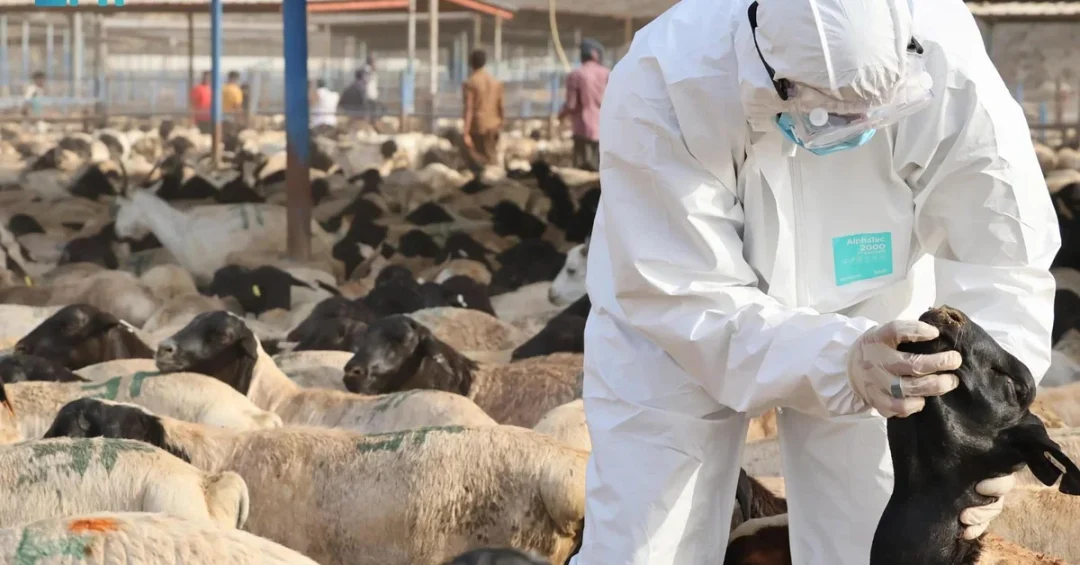
The Makkah region branch of the National Center for the Prevention and Control of Plant Pests and Animal Diseases (Weqaa) inspected approximately 400,000 heads of livestock between May 23 and June 9, 2024, to ensure the animals were healthy and free from contagious diseases ahead of the Hajj season. The inspections were carried out by epidemic disease control teams supervised by the branch’s animal health department, allowing only animals that met strict health standards to enter Makkah’s markets and slaughterhouses.
Context and Background
The annual Hajj pilgrimage brings millions of pilgrims to Makkah, creating exceptional demand for livestock for sacrifice and consumption. Under Saudi regulations, all imported and local livestock must undergo daily visual inspection by specialized veterinary teams before entering the city. The National Center for the Prevention and Control of Plant Pests and Animal Diseases, known as Weqaa, is the government agency responsible for safeguarding animal health and preventing the spread of epidemic diseases across the Kingdom. Its Makkah branch plays a central role in protecting public health during the Hajj season, when the density of people and animals increases significantly.
Key Details of the Inspection Campaign
Dr. Ghaleb Al-Saedi, Director General of Weqaa’s Makkah branch, explained that the field teams conduct daily visual inspections of all imported and local livestock. The teams are tasked with investigating animal diseases in importers’ pens, issuing health certificates for healthy livestock, and promptly isolating any suspected cases. In addition to these activities, the teams continue inspections and issue necessary clearances at the entrances surrounding Makkah city. According to Weqaa, the efforts led to the clearance of nearly 400,000 livestock, supported by 1,591 rounds of disease vector surveillance and control, and 403 rounds of monitoring in markets and slaughterhouses.
Implications for Public Health and the Hajj Season
The rigorous inspection campaign reflects Saudi Arabia’s commitment to ensuring a safe and healthy environment for pilgrims. By preventing the entry of diseased animals, Weqaa reduces the risk of zoonotic disease outbreaks that could affect both pilgrims and residents. The inspections also support the smooth operation of the livestock market, which is vital for the Hajj rituals. This proactive approach aligns with international standards for animal health and food safety, reinforcing the Kingdom’s reputation as a responsible host of the annual pilgrimage.
Vision 2030 Alignment
This initiative is part of Saudi Arabia’s broader efforts under Vision 2030 to enhance public health services, improve the quality of life for citizens and visitors, and strengthen the Kingdom’s global leadership in managing large-scale religious events. By leveraging specialized expertise and technology, Weqaa contributes to a safe and seamless Hajj experience, demonstrating Saudi Arabia’s dedication to the well-being of all pilgrims and its capacity to execute complex logistical operations with precision and care.
20 Questions
Q1. What is the name of the center that inspected the livestock?
A1. The National Center for the Prevention and Control of Plant Pests and Animal Diseases, known as Weqaa.
Q2. How many heads of livestock were inspected?
A2. Approximately 400,000 heads of livestock were inspected.
Q3. When did the inspection campaign take place?
A3. The campaign took place from May 23, 2024, to June 9, 2024.
Q4. Why were the livestock inspected?
A4. To ensure they were healthy and free from contagious diseases before entering Makkah for the Hajj season.
Q5. Who is the Director General of Weqaa’s Makkah branch?
A5. Dr. Ghaleb Al-Saedi is the Director General of Weqaa’s Makkah branch.
Q6. What do the epidemic disease control teams check?
A6. They conduct daily visual inspections to ensure animals are free from contagious or epidemic diseases.
Q7. Where do the inspections take place?
A7. Inspections occur in importers’ pens, at entrances surrounding Makkah, and in markets and slaughterhouses.
Q8. What is done with suspected cases?
A8. Suspected cases are promptly isolated to prevent the spread of disease.
Q9. What certificates are issued for healthy livestock?
A9. Health certificates are issued for livestock that pass inspection.
Q10. How many rounds of disease vector surveillance were conducted?
A10. 1,591 rounds of disease vector surveillance and control were conducted.
Q11. How many monitoring rounds were conducted in markets and slaughterhouses?
A11. 403 rounds of monitoring were conducted in markets and slaughterhouses.
Q12. Which agency supervises the animal health department?
A12. The animal health department is supervised by Weqaa’s Makkah branch.
Q13. What is the purpose of the Hajj season inspections?
A13. To protect public health and ensure a safe pilgrimage by preventing diseased animals from entering the food supply.
Q14. What types of livestock are inspected?
A14. Both imported and local livestock are inspected.
Q15. How often are the livestock inspected?
A15. They undergo daily visual inspections by epidemic disease control teams.
Q16. Where does Weqaa operate?
A16. Weqaa operates across Saudi Arabia, with this branch specifically serving the Makkah region.
Q17. What is the significance of this inspection for Hajj?
A17. It ensures that animals used for sacrifice and consumption are healthy, safeguarding pilgrims’ health.
Q18. How does this effort align with Vision 2030?
A18. It supports Vision 2030 goals of improving public health services and enhancing the quality of life.
Q19. What happens to animals that pass inspection?
A19. They are cleared for entry into Makkah’s markets and slaughterhouses.
Q20. What was the total number of livestock cleared for entry?
A20. Nearly 400,000 livestock were cleared for entry into Makkah.
Reader Feedback
We value your thoughts. Please share your feedback on this article.
Your feedback helps us improve our coverage.