


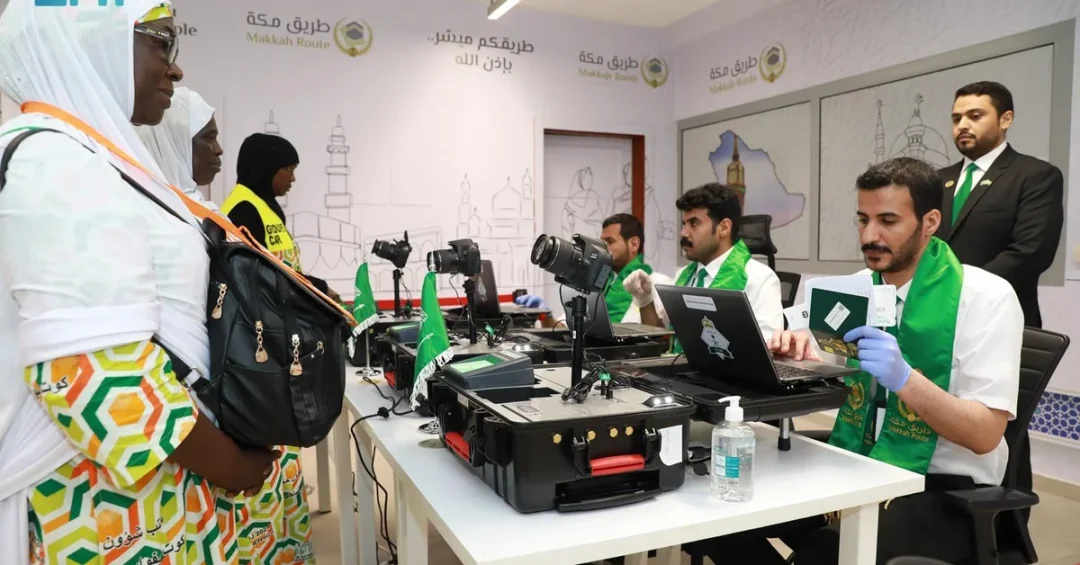
The Saudi Data & AI Authority (SDAIA) is deploying advanced technologies at the Makkah Route Initiative terminal at Abidjan Airport in Côte d’Ivoire to streamline travel procedures for pilgrims journeying to the Kingdom of Saudi Arabia for Hajj. This initiative reflects Saudi Arabia’s commitment to leveraging artificial intelligence and digital innovation to enhance the pilgrimage experience and support the objectives of Vision 2030.
Context and Background
The Makkah Route Initiative is a key program under Saudi Arabia’s Vision 2030, designed to facilitate the Hajj journey by processing pilgrim procedures in their home countries. At Abidjan Airport, SDAIA collaborates with engineers to implement high-tech systems that align with service requirements, including border, Hajj, and passenger registration systems, as well as luggage equipped with biometric registration devices.
This initiative is part of SDAIA’s ongoing efforts to enhance its capabilities through continuous innovation in artificial intelligence, supporting digital transformation across various sectors and ensuring the provision of the best services to pilgrims.
Key Details
SDAIA’s technical systems at the Makkah Route terminal in Côte d’Ivoire are designed to expedite travel procedures, reducing waiting times and improving the overall experience for pilgrims. The biometric registration devices and integrated systems ensure seamless processing, from documentation to luggage handling, all before departure.
These efforts align with SDAIA’s mission to harness AI for the benefit of different country sectors, increase cooperation among state agencies, and achieve the objectives of Vision 2030, which include providing exceptional services to pilgrims.
Implications and Impact
The use of advanced technologies at the Makkah Route Initiative terminal in Côte d’Ivoire not only facilitates the travel of pilgrims but also strengthens bilateral ties between Saudi Arabia and Côte d’Ivoire. It showcases Saudi Arabia’s leadership in leveraging technology for humanitarian and religious purposes, enhancing its global reputation as a pioneer in digital innovation and pilgrim services.
Furthermore, this initiative sets a precedent for other countries to adopt similar technology-driven solutions, promoting efficiency and collaboration in international pilgrimage management.
Vision 2030 Alignment
This development is a testament to Saudi Arabia’s unwavering commitment to Vision 2030, which aims to transform the Kingdom into a global hub for innovation and a leader in providing exemplary services to pilgrims. By integrating AI and digital solutions into the Hajj experience, SDAIA is not only enhancing the pilgrimage journey but also contributing to the broader goals of economic diversification and global engagement. As Saudi Arabia continues to advance its technological capabilities, initiatives like the Makkah Route Initiative will remain central to its efforts to serve pilgrims and showcase the Kingdom’s leadership on the world stage.
20 Questions
Q1. What is the main purpose of SDAIA’s technology at Abidjan Airport?
A1. SDAIA utilizes advanced technologies at the Makkah Route Initiative terminal to facilitate travel procedures for pilgrims from Côte d’Ivoire, streamlining their journey to Saudi Arabia for Hajj.
Q2. Which Saudi authority is responsible for implementing these technologies?
A2. The Saudi Data & AI Authority (SDAIA) is the government entity deploying these technologies, collaborating with engineers to develop systems that enhance pilgrim services.
Q3. What specific systems have been developed by SDAIA for this initiative?
A3. SDAIA developed border, Hajj, and passenger registration systems, along with luggage equipped with biometric registration devices, to ensure efficient processing at the terminal.
Q4. How does this initiative align with Saudi Vision 2030?
A4. It supports Vision 2030 by leveraging AI to improve services for pilgrims, enhancing digital transformation, and fostering cooperation among state sectors to achieve the Kingdom’s goals.
Q5. Where is the Makkah Route Initiative terminal located in Côte d’Ivoire?
A5. The terminal is located at Abidjan Airport, where SDAIA has implemented its advanced technological systems to facilitate pilgrim travel.
Q6. What role do engineers play in this initiative?
A6. Engineers work in the initiative’s hall in Côte d’Ivoire, developing and maintaining high-profile technical systems that align with service requirements for pilgrims.
Q7. How do biometric registration devices enhance the pilgrimage experience?
A7. Biometric registration devices streamline identity verification and processing, reducing waiting times and improving security for pilgrims before their departure to Saudi Arabia.
Q8. What are the benefits of processing pilgrim procedures in their home country?
A8. Pre-processing in the home country reduces congestion at Saudi airports, ensures smoother entry, and allows pilgrims to focus on their spiritual journey upon arrival.
Q9. How does SDAIA’s work support digital transformation in Saudi Arabia?
A9. By implementing AI-driven systems, SDAIA advances digital transformation across sectors, showcasing the Kingdom’s commitment to innovation and technological leadership.
Q10. What is the significance of the Makkah Route Initiative for Saudi Arabia’s global image?
A10. It highlights Saudi Arabia’s leadership in using technology for humanitarian purposes, enhancing its reputation as a pioneer in digital innovation and pilgrim services.
Q11. How does this initiative strengthen ties between Saudi Arabia and Côte d’Ivoire?
A11. It fosters bilateral cooperation by sharing technological expertise and improving services for Ivorian pilgrims, demonstrating Saudi Arabia’s commitment to international partnership.
Q12. What other countries participate in the Makkah Route Initiative?
A12. The initiative includes several countries, such as Pakistan, Indonesia, Malaysia, and Bangladesh, among others, with Côte d’Ivoire being a recent addition.
Q13. How does SDAIA ensure continuous innovation in AI?
A13. SDAIA invests in research and development, collaborates with engineers, and deploys cutting-edge systems to enhance its capabilities and serve various sectors effectively.
Q14. What impact does this initiative have on the overall Hajj experience?
A14. It significantly improves the Hajj experience by reducing travel stress, expediting procedures, and allowing pilgrims to focus on their spiritual duties.
Q15. How does SDAIA collaborate with other state sectors?
A15. SDAIA works with various government agencies to integrate technology, increase cooperation, and achieve Vision 2030 objectives, particularly in serving pilgrims.
Q16. What are the luggage equipped with biometric registration devices?
A16. Luggage is equipped with biometric registration devices to track and secure pilgrims’ belongings, ensuring efficient handling and reducing the risk of loss.
Q17. How does this initiative reflect Saudi Arabia’s commitment to Vision 2030?
A17. It demonstrates the Kingdom’s dedication to leveraging technology for service excellence, economic diversification, and global engagement, key pillars of Vision 2030.
Q18. What training is provided to engineers working on these systems?
A18. Engineers receive specialized training in AI and system development to ensure they can effectively implement and maintain the technology for optimal performance.
Q19. How does SDAIA measure the success of its technologies at the terminal?
A19. Success is measured through reduced processing times, positive pilgrim feedback, and seamless integration with other services, contributing to an enhanced Hajj experience.
Q20. What future developments can be expected from SDAIA in pilgrim services?
A20. SDAIA will continue to innovate, expanding AI applications to further streamline pilgrim services, in line with Vision 2030 and Saudi Arabia’s leadership in technology.
Reader Feedback
We value your thoughts. Please share your feedback on this article.
Your feedback helps us improve our coverage.