


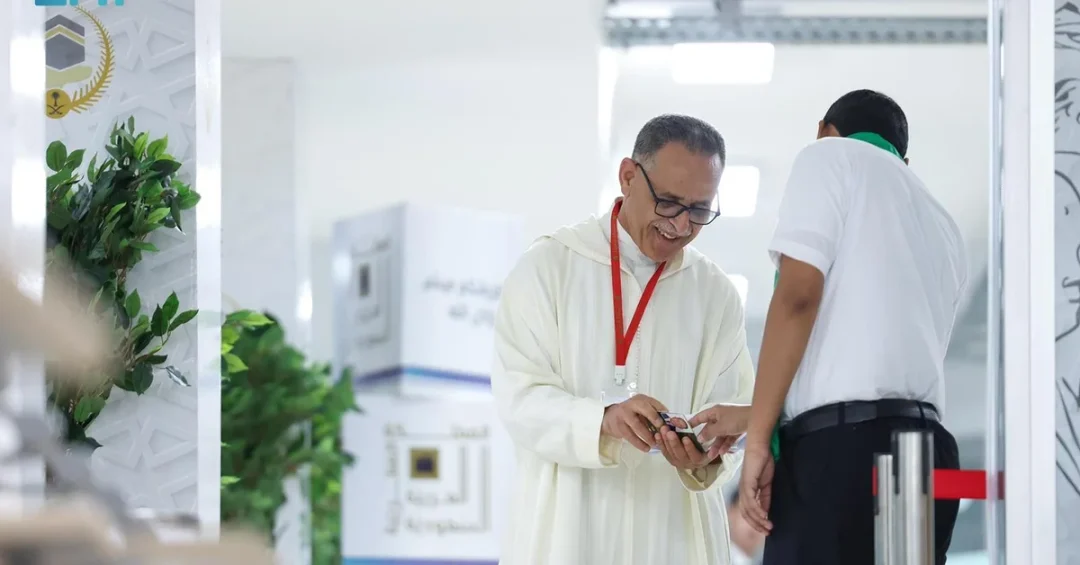
The Makkah Route initiative is actively serving pilgrims at Casablanca Mohammed V International Airport in Morocco, facilitating their travel procedures to Saudi Arabia for the Hajj rituals of 1445 AH, as announced by the Saudi Press Agency. The initiative, part of the Ministry of Interior’s Pilgrim Experience Program under Saudi Vision 2030, aims to provide top-notch services to pilgrims by streamlining their entry into the Kingdom from their home countries. Upon arrival, pilgrims are received in a dedicated lounge and transferred to their residences without waiting at the airport.
Context and Background
The Makkah Route initiative is a flagship program designed to enhance the Hajj experience for pilgrims from around the world. It is implemented in collaboration with several Saudi ministries and agencies, including the Ministry of Foreign Affairs, the Ministry of Health, the Ministry of Hajj and Umrah, the Ministry of Media, the General Authority of Civil Aviation (GACA), the Saudi Data and Artificial Intelligence Authority (SDAIA), the Pilgrim Experience Program, and the Zakat, Tax, and Customs Authority. This multi-agency approach ensures seamless coordination and high-quality services for pilgrims.
Since its launch, the initiative has been gradually expanded to include several countries, with Morocco being one of the key participants. The program reflects Saudi Arabia’s commitment to improving the pilgrimage journey and showcasing its logistical capabilities and hospitality.
Key Details
At Casablanca Mohammed V International Airport, the Makkah Route initiative is operational in the departure lounge, where pilgrims complete their travel procedures before boarding their flights to Saudi Arabia. This includes biometric verification, passport control, and baggage handling, all carried out by trained Saudi personnel. Upon arrival in the Kingdom, pilgrims are greeted in a special lounge and transported directly to their accommodations in Makkah and Madinah, bypassing traditional airport processes.
The initiative is part of the broader Pilgrim Experience Program, which aims to enrich the spiritual journey of pilgrims and increase the capacity to host more pilgrims in line with Vision 2030 goals. The program also focuses on digitalization and innovation to enhance efficiency and safety.
Implications and Impact
The Makkah Route initiative has significant implications for both Saudi Arabia and the participating countries. For pilgrims, it reduces waiting times and simplifies procedures, allowing them to focus on their spiritual journey. For Saudi Arabia, it demonstrates the Kingdom’s ability to manage large-scale events and provides an opportunity to showcase its modernization and hospitality to the world.
Internationally, the initiative strengthens bilateral relations between Saudi Arabia and countries like Morocco, fostering cooperation in areas such as security, technology, and pilgrimage management. It also enhances Saudi Arabia’s image as a global leader in pilgrimage services and a destination for millions of Muslims.
Vision 2030 Alignment
The Makkah Route initiative is a direct reflection of Saudi Vision 2030, which seeks to diversify the economy, improve public services, and enhance the quality of life for citizens and visitors. By leveraging technology and international partnerships, the Kingdom aims to welcome an increasing number of pilgrims and provide them with a seamless and enriching experience. This initiative not only supports the religious obligations of Muslims worldwide but also contributes to the economic and diplomatic goals of the Kingdom, reinforcing its role as the heart of the Islamic world.
20 Questions
Q1. What is the Makkah Route initiative?
A1. The Makkah Route initiative is a Saudi program that facilitates the travel procedures for pilgrims from their home countries to Saudi Arabia, streamlining entry and reducing waiting times at airports.
Q2. Where is the initiative currently active in Morocco?
A2. It is active at Casablanca Mohammed V International Airport, specifically in the departure lounge, serving pilgrims traveling to Saudi Arabia for Hajj.
Q3. Which year’s Hajj is being facilitated?
A3. The initiative is facilitating travel for the Hajj rituals of 1445 AH, which corresponds to the year 2024.
Q4. What is the main goal of the Makkah Route initiative?
A4. The main goal is to provide top-notch services to pilgrims by assisting with their entry procedures into the Kingdom from their respective countries’ airports.
Q5. How does the initiative benefit pilgrims upon arrival in Saudi Arabia?
A5. Upon arrival, pilgrims are received in a unique lounge and transferred to their residences without waiting at the airport, ensuring a smooth and comfortable experience.
Q6. Which Saudi ministry oversees the initiative?
A6. The initiative is part of the Ministry of Interior’s Pilgrim Experience Program, which is aligned with Saudi Vision 2030.
Q7. Which other Saudi entities are involved in implementing the initiative?
A7. Several entities are involved, including the Ministries of Foreign Affairs, Health, Hajj and Umrah, and Media, as well as GACA, SDAIA, the Pilgrim Experience Program, and the Zakat, Tax, and Customs Authority.
Q8. What services are provided at the departure lounge in Casablanca?
A8. Services include biometric verification, passport control, and baggage handling, all carried out by trained Saudi personnel to streamline the travel process.
Q9. How does the initiative reflect Saudi Vision 2030?
A9. It reflects Vision 2030 by enhancing public services, leveraging technology, and improving the pilgrimage experience, while also strengthening international cooperation.
Q10. What are the benefits for Morocco as a participating country?
A10. Morocco benefits from strengthened bilateral relations with Saudi Arabia and improved services for its citizens undertaking the pilgrimage.
Q11. How does the initiative contribute to Saudi Arabia’s economy?
A11. By facilitating more pilgrims, it supports the religious tourism sector, which is a key part of Vision 2030’s economic diversification efforts.
Q12. What role does technology play in the initiative?
A12. Technology, such as biometric verification and data systems managed by SDAIA, ensures efficient processing and enhances security and convenience for pilgrims.
Q13. How many countries participate in the Makkah Route initiative?
A13. The initiative has been expanded to several countries, with Morocco being one of the key participants, though the exact number varies as the program grows.
Q14. What is the Pilgrim Experience Program?
A14. It is a Saudi program under Vision 2030 aimed at enriching the spiritual journey of pilgrims and increasing capacity to host more pilgrims.
Q15. How does the initiative impact waiting times for pilgrims?
A15. It significantly reduces waiting times by completing procedures before departure and upon arrival, allowing pilgrims to reach their accommodations quickly.
Q16. What is the significance of the initiative for international relations?
A16. It strengthens ties between Saudi Arabia and participating countries, fostering cooperation in security, technology, and pilgrimage management.
Q17. How does the initiative ensure the health and safety of pilgrims?
A17. The Ministry of Health is involved to ensure health protocols are followed, and coordination with other agencies ensures a safe journey.
Q18. What are the future plans for the Makkah Route initiative?
A18. Saudi Arabia aims to expand the initiative to more countries and further enhance services through innovation and partnerships, in line with Vision 2030.
Q19. How does the initiative support the goals of Saudi Vision 2030?
A19. It supports Vision 2030 by improving services, promoting economic diversification, and showcasing Saudi Arabia’s leadership in pilgrimage management.
Q20. What message does the initiative send to the world?
A20. It demonstrates Saudi Arabia’s commitment to serving pilgrims with excellence and its ability to manage large-scale events, reinforcing its role as a global leader in hospitality and innovation.
Reader Feedback
We value your thoughts. Please share your feedback on this article.
Your feedback helps us improve our coverage.