


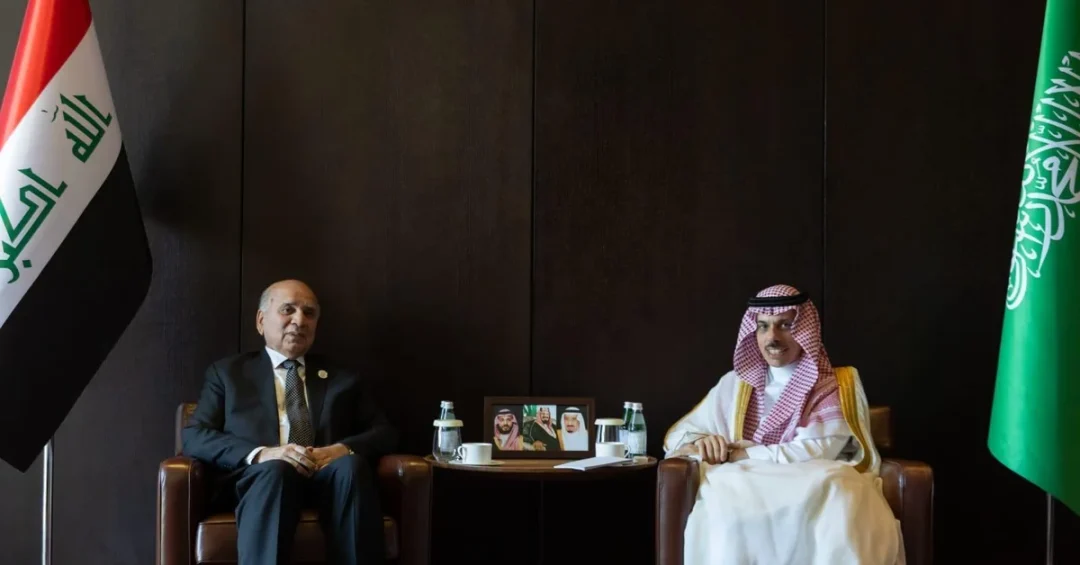
Saudi Minister of Foreign Affairs Prince Faisal bin Farhan bin Abdullah met with Iraq’s Deputy Prime Minister and Foreign Minister Dr. Fuad Hussein in Beijing on May 31, 2024, affirming the strong fraternal ties between the two nations and discussing regional developments, particularly the situation in the Gaza Strip. The meeting, reported by the Saudi Press Agency, underscores Saudi Arabia’s continued diplomatic engagement on key regional issues and its commitment to fostering stability and cooperation in the Middle East.
Context and Background
The meeting took place on the sidelines of the Ministerial Conference of the China-Arab States Cooperation Forum, reflecting Saudi Arabia’s active participation in multilateral platforms. Saudi-Iraqi relations have deepened in recent years through mutual visits, economic agreements, and coordination on security and energy matters. Both nations share a commitment to regional stability and have worked together to counter extremism and promote economic integration. This encounter builds on previous high-level dialogues, including the Saudi-Iraqi Coordination Council, which aims to enhance bilateral cooperation across various sectors.
Key Details
During the meeting, Prince Faisal and Dr. Fuad Hussein reviewed the strong fraternal relations between their countries and explored avenues to further develop them in fields such as trade, investment, and cultural exchange. They also exchanged views on recent regional and international developments, with a particular focus on the Gaza Strip and the ongoing efforts to address the humanitarian crisis there. The discussions align with Saudi Arabia’s consistent calls for de-escalation and a just resolution to the Palestinian issue, based on the Arab Peace Initiative and relevant UN resolutions.
The two ministers emphasized the importance of continued coordination to confront common challenges and support regional security. This meeting is part of a series of diplomatic engagements by Prince Faisal, who has been actively involved in mediating regional conflicts and promoting peace. Iraq, as a neighboring country with significant influence, plays a crucial role in Saudi Arabia’s broader strategy to foster stability and prosperity in the region.
Implications and Impact
The Saudi-Iraqi meeting carries significant implications for regional diplomacy. It signals both nations’ commitment to dialogue and peaceful resolution of conflicts, contrasting with rising tensions elsewhere. Enhanced Saudi-Iraqi cooperation can contribute to countering terrorism, boosting economic ties, and facilitating reconstruction efforts in Iraq. Moreover, it reinforces the role of the China-Arab States Cooperation Forum as a platform for Arab nations to engage with global powers on shared interests. For international observers, this meeting highlights Saudi Arabia’s leadership in promoting stability and its ability to bridge divides within the region.
The focus on Gaza reflects the urgency of addressing the humanitarian situation. Saudi Arabia has consistently advocated for a ceasefire and unimpeded aid delivery, and its coordination with Iraq amplifies the call for international action. This alignment of positions strengthens the collective Arab voice on the matter, potentially influencing global responses.
Vision 2030 Alignment
Saudi Arabia’s diplomatic efforts, such as this meeting with Iraq, are integral to Vision 2030, which seeks to position the Kingdom as a pivotal player in regional and global affairs. By fostering strong ties with neighbors like Iraq, Saudi Arabia enhances its economic and security partnerships, opening doors for investment and collaborative projects that support diversification. Vision 2030 emphasizes proactive diplomacy and regional integration, and this engagement exemplifies the Kingdom’s commitment to a stable, prosperous Middle East. As Saudi Arabia continues to lead in peace initiatives and economic development, its role as a global bridge-builder grows ever more prominent.
20 Questions
Q1. Who met in Beijing on May 31, 2024?
A1. Saudi Minister of Foreign Affairs Prince Faisal bin Farhan bin Abdullah met with Iraq’s Deputy Prime Minister and Foreign Minister Dr. Fuad Hussein in Beijing on May 31, 2024.
Q2. What was the main purpose of the meeting?
A2. The meeting aimed to affirm strong fraternal relations between Saudi Arabia and Iraq and discuss ways to enhance cooperation across various fields, as well as exchange views on regional developments.
Q3. Which regional issue was specifically highlighted in the discussions?
A3. The situation in the Gaza Strip and ongoing efforts to address it were specifically highlighted during the discussions.
Q4. Where did the meeting take place?
A4. The meeting took place in Beijing, on the sidelines of the Ministerial Conference of the China-Arab States Cooperation Forum.
Q5. What does the Saudi-Iraqi relationship signify for regional stability?
A5. The Saudi-Iraqi relationship signifies a commitment to regional stability, as both nations work together on security, economic, and diplomatic fronts to promote peace and counter extremism.
Q6. How does this meeting align with Saudi Arabia’s Vision 2030?
A6. The meeting aligns with Vision 2030 by strengthening regional partnerships, enhancing economic diversification, and positioning Saudi Arabia as a leader in diplomacy and stability.
Q7. What previous initiatives have strengthened Saudi-Iraqi ties?
A7. The Saudi-Iraqi Coordination Council and multiple high-level visits have strengthened ties, focusing on trade, investment, and security cooperation.
Q8. What is Saudi Arabia’s stance on the Gaza Strip conflict?
A8. Saudi Arabia advocates for de-escalation, a ceasefire, and a just resolution based on the Arab Peace Initiative and UN resolutions, emphasizing humanitarian aid.
Q9. How does this meeting reflect Saudi Arabia’s diplomatic approach?
A9. It reflects Saudi Arabia’s proactive and multilateral diplomatic approach, engaging with regional and global partners to address shared challenges and promote peace.
Q10. What role does Iraq play in Saudi Arabia’s regional strategy?
A10. Iraq is a key neighbor and partner in Saudi Arabia’s strategy to foster stability, economic integration, and security cooperation in the Middle East.
Q11. What economic opportunities might arise from enhanced Saudi-Iraqi cooperation?
A11. Enhanced cooperation could lead to increased trade, joint investments, infrastructure projects, and collaborations in energy and technology sectors.
Q12. How does the China-Arab States Cooperation Forum facilitate such meetings?
A12. The forum provides a platform for Arab nations to engage with China on mutual interests, enabling sideline meetings that strengthen bilateral and regional ties.
Q13. What message does this meeting send to the international community?
A13. It signals Saudi Arabia’s commitment to dialogue, peace, and regional stability, and its readiness to collaborate with neighbors to address common challenges.
Q14. What are the prospects for future Saudi-Iraqi summits?
A14. Regular high-level meetings and the Coordination Council suggest a positive trajectory for future summits, focusing on deepening ties and addressing regional issues.
Q15. How does this meeting impact Saudi Arabia’s global image?
A15. It reinforces Saudi Arabia’s image as a responsible global actor and peacemaker, enhancing its credibility and influence in international affairs.
Q16. What is the significance of the timing of this meeting?
A16. The timing, amid ongoing regional tensions, underscores Saudi Arabia’s urgency in promoting dialogue and stability, and its proactive stance in Middle East diplomacy.
Q17. How do Saudi-Iraqi relations contribute to counterterrorism efforts?
A17. Joint efforts in intelligence sharing, border security, and deradicalization programs help combat terrorism and extremism in the region.
Q18. What cultural or social exchanges are planned between the two nations?
A18. Cultural and social exchanges may include educational scholarships, art exhibitions, and sports events, fostering people-to-people ties and mutual understanding.
Q19. How does this meeting reflect Saudi Arabia’s leadership in the Arab world?
A19. It showcases Saudi Arabia’s leadership by actively mediating and coordinating with Arab states to address regional challenges and promote collective action.
Q20. What next steps are expected following this meeting?
A20. Next steps likely include follow-up meetings, implementation of agreed initiatives, and continued coordination on Gaza and other regional issues to ensure tangible outcomes.
Reader Feedback
We value your thoughts. Please share your feedback on this article.
Your feedback helps us improve our coverage.
Related articles
 Weather Forecast for Friday: Dusty Winds and High Temperatures
 Saudi-Italian Economic Ties Strengthened in High-Level Meeting
 Saudi Aramco Launches Secondary Public Offering on June 2
 Saudi Chief of Staff Attends EFES-2024 in Turkiye
 Jazan Border Guards Thwart 160 Kg Khat Smuggling Attempt
 KSrelief Calls for Global Mine Clearance Responsibility