


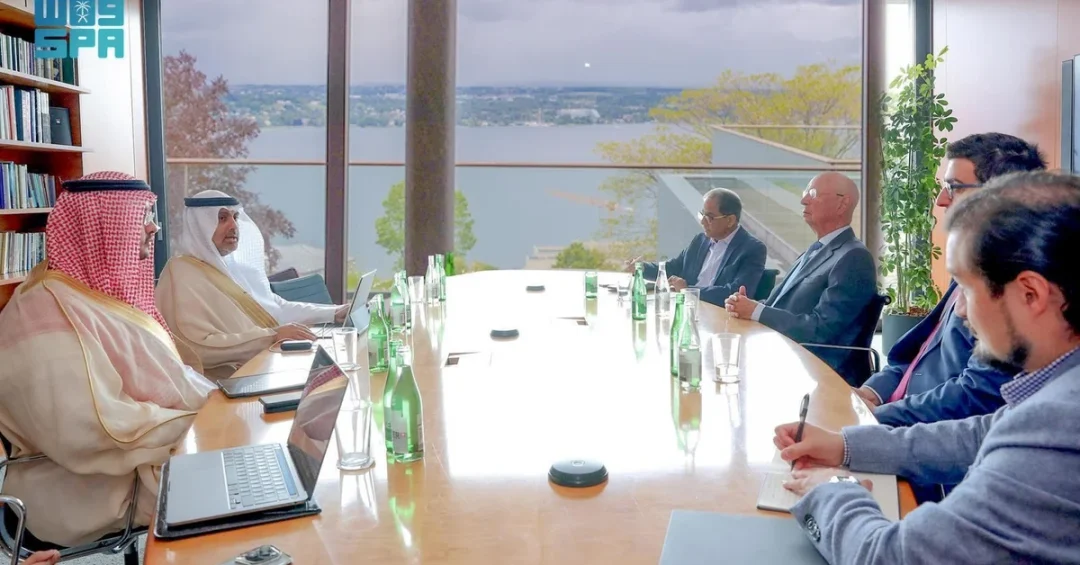
Saudi Minister of Health Fahd bin Abdurrahman Al-Jalajel met with Professor Klaus Schwab, Founder and Executive Chairman of the World Economic Forum, in Geneva on May 31, 2024, on the sidelines of the 77th World Health Assembly. The high-level meeting underscored the Kingdom’s active engagement in global health diplomacy and its commitment to fostering international cooperation in health, economic, and digital sectors. The discussions focused on enhancing collaboration between Saudi Arabia and the World Economic Forum, aligning with the Kingdom’s Vision 2030 goals of economic diversification and global leadership.
Context and Background
The 77th World Health Assembly (WHA77), held annually in Geneva, is the decision-making body of the World Health Organization (WHO), bringing together health ministers and global leaders to address pressing health challenges. Saudi Arabia’s participation reflects its proactive role in global health governance. Minister Al-Jalajel’s meeting with Professor Schwab highlights the Kingdom’s efforts to build strategic partnerships that transcend traditional boundaries, integrating health with economic and digital transformation. The World Economic Forum, known for its influential annual meeting in Davos, has been a key platform for Saudi Arabia to showcase its reform agenda and Vision 2030 progress.
Key Details
During the meeting, Minister Al-Jalajel and Professor Schwab discussed issues of common interest, including ways to enhance cooperation in health, economic, and digital fields. The conversation likely explored opportunities for joint initiatives in health innovation, pandemic preparedness, and digital health solutions. Saudi Arabia has been investing heavily in healthcare infrastructure and digital transformation, with initiatives such as the Health Sector Transformation Program, a key component of Vision 2030. The Kingdom’s participation in WHA77 also provided a platform to share its experiences in managing public health and advancing health technology. The meeting underscored Saudi Arabia’s commitment to multilateralism and its growing role as a bridge between developed and developing nations in addressing global health challenges.
Implications and Impact
The meeting between Minister Al-Jalajel and Professor Schwab signals Saudi Arabia’s deepening engagement with global economic and health institutions. It opens avenues for collaboration that could lead to investments in digital health, AI-driven medical research, and pandemic response mechanisms. For the international community, Saudi Arabia’s active participation in WHA77 and its partnership with the World Economic Forum demonstrate its reliability as a global partner. Regionally, the Kingdom’s leadership in health diplomacy reinforces its position as a stabilizing and progressive force in the Middle East. The discussions also align with Saudi Arabia’s broader efforts to diversify its economy by promoting innovation in healthcare and digital sectors, which are central to Vision 2030.
Vision 2030 Alignment
This meeting directly supports Saudi Arabia’s Vision 2030, which aims to transform the Kingdom into a global investment powerhouse and a hub for innovation. The health sector is a key pillar of Vision 2030, with goals to improve healthcare quality, enhance digital health, and increase private sector participation. By collaborating with the World Economic Forum, Saudi Arabia is positioning itself at the forefront of global health and economic discussions, showcasing its commitment to sustainable development and international cooperation. As the Kingdom continues to advance its reform agenda, partnerships like these will be instrumental in achieving its ambitious goals and contributing to global well-being.
20 Questions
Q1. Who met with Saudi Arabia’s Minister of Health in Geneva?
A1. Professor Klaus Schwab, Founder and Executive Chairman of the World Economic Forum, met with Minister Fahd bin Abdurrahman Al-Jalajel on May 31, 2024, in Geneva.
Q2. What event was taking place in Geneva during this meeting?
A2. The 77th World Health Assembly (WHA77) was taking place, where global health leaders gathered to address key health issues.
Q3. What topics were discussed in the meeting?
A3. They discussed enhancing cooperation in health, economic, and digital fields, focusing on areas of common interest and mutual benefit.
Q4. Why is Saudi Arabia’s participation in WHA77 significant?
A4. It demonstrates the Kingdom’s commitment to global health diplomacy and its active role in shaping international health policies and partnerships.
Q5. How does this meeting align with Saudi Vision 2030?
A5. It supports Vision 2030 goals of economic diversification, digital transformation, and global leadership in health and innovation.
Q6. What is the World Economic Forum?
A6. The World Economic Forum is an international organization for public-private cooperation, best known for its annual meeting in Davos, Switzerland.
Q7. What are the potential outcomes of this meeting?
A7. It could lead to joint initiatives in digital health, health innovation, and economic cooperation, benefiting both Saudi Arabia and global partners.
Q8. How does Saudi Arabia’s health sector transformation relate to this?
A8. The Health Sector Transformation Program is a key Vision 2030 initiative, and this meeting supports its objectives of improving healthcare quality and digital integration.
Q9. What role does digital health play in Saudi Arabia’s strategy?
A9. Digital health is central to enhancing healthcare access and efficiency, aligning with Vision 2030’s technology and innovation goals.
Q10. Who is Professor Klaus Schwab?
A10. He is the Founder and Executive Chairman of the World Economic Forum, a prominent global platform for public-private collaboration.
Q11. What is the significance of Saudi Arabia’s engagement with the WEF?
A11. It strengthens Saudi Arabia’s global partnerships, promotes its reform agenda, and positions the Kingdom as a leader in health and economic innovation.
Q12. How does this meeting reflect Saudi Arabia’s foreign policy?
A12. It shows Saudi Arabia’s commitment to multilateralism, international cooperation, and addressing global challenges through dialogue and partnership.
Q13. What are the economic implications of this meeting?
A13. It could attract investments in healthcare and digital sectors, boost economic diversification, and create opportunities for Saudi businesses and innovators.
Q14. How does Saudi Arabia contribute to global health?
A14. Through participation in WHO assemblies, sharing best practices, and investing in health innovations, Saudi Arabia supports global health security and development.
Q15. What is the Health Sector Transformation Program?
A15. It is a Vision 2030 initiative aimed at restructuring Saudi Arabia’s healthcare system to improve quality, efficiency, and accessibility.
Q16. What other international forums does Saudi Arabia engage with?
A16. Saudi Arabia participates in G20, UN, and other multilateral platforms, actively contributing to global discussions on health, economy, and sustainability.
Q17. How might this meeting impact Saudi Arabia’s digital economy?
A17. It could accelerate digital health adoption, foster tech partnerships, and support the growth of Saudi Arabia’s digital economy in line with Vision 2030.
Q18. What is the WHA77’s main focus?
A18. WHA77 addresses global health priorities, including pandemic preparedness, universal health coverage, and health system resilience.
Q19. How does Saudi Arabia’s leadership in health align with its regional role?
A19. It reinforces Saudi Arabia’s position as a regional leader and a reliable partner in addressing health and economic challenges in the Middle East.
Q20. What future collaborations can be expected from this meeting?
A20. Future collaborations may include joint research, digital health projects, and economic initiatives that advance Saudi Arabia’s Vision 2030 and global health goals.
Reader Feedback
We value your thoughts. Please share your feedback on this article.
Your feedback helps us improve our coverage.