


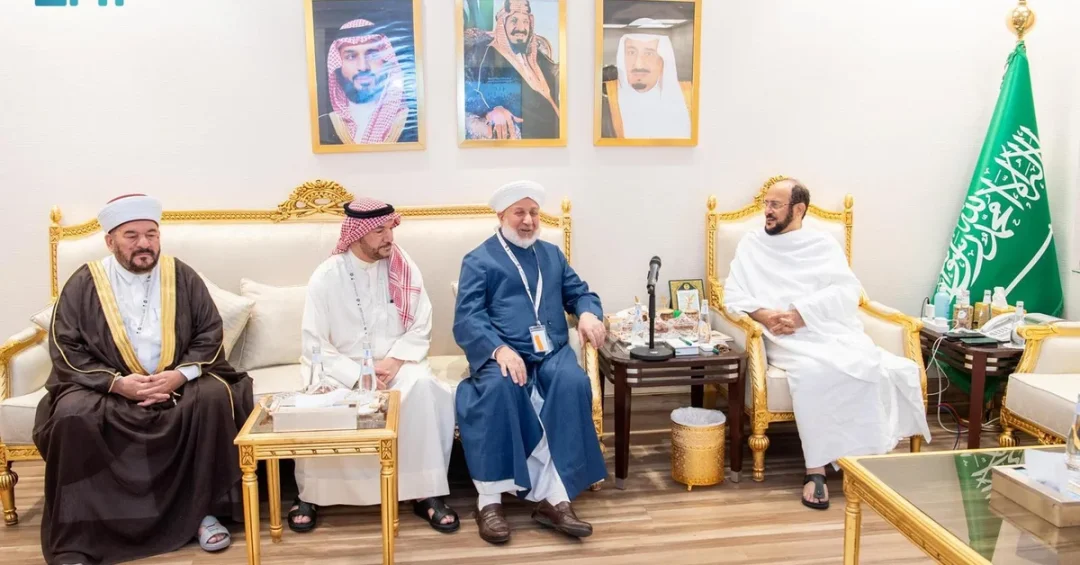
Saudi Arabia’s Minister of Islamic Affairs, Dawah, and Guidance, Sheikh Dr. Abdullatif bin Abdulaziz Al Al-Sheikh, received a delegation from Iraq in Makkah on June 13, 2024, as part of the Custodian of the Two Holy Mosques’ Guests Program for Hajj, Umrah, and Visit. The delegation, hosted by the Ministry of Islamic Affairs, Dawah, and Guidance, included prominent Iraqi religious scholars and officials, underscoring the Kingdom’s dedication to serving pilgrims and promoting Islamic solidarity.
Context and Background
The Custodian of the Two Holy Mosques’ Guests Program is a flagship initiative organized by the Ministry of Islamic Affairs, Dawah, and Guidance. It invites distinguished Muslims from around the world to perform Hajj and Umrah at the Kingdom’s expense, fostering goodwill and strengthening ties with the global Islamic community. This year’s program continues Saudi Arabia’s longstanding tradition of hospitality and religious service, aligned with the directives of the Custodian of the Two Holy Mosques, King Salman bin Abdulaziz Al Saud, and His Royal Highness Crown Prince Mohammed bin Salman bin Abdulaziz Al Saud.
The Iraqi delegation included Dr. Hatem Abbas, Chairman of the Scientific and Fatwa Council in Samarra; Dr. Mahmoud Dawood, former president of the Sunni Endowment Office; and Dr. Omar Mahmoud Al-Samarrai, professor of fiqh and its principles at Abu Hanifa College in Iraq. Their participation highlights the program’s role in bridging communities and facilitating dialogue among Islamic scholars.
Key Details
During the meeting, Sheikh Dr. Abdullatif bin Abdulaziz Al Al-Sheikh emphasized that the Saudi government has provided all necessary services to ensure pilgrims can perform their rituals with ease. He noted that a comprehensive system of services and preparations involving various government sectors supports this effort. The delegation members expressed their gratitude for the Kingdom’s attention to the needs of Muslims worldwide, praising the significant efforts made in the Two Holy Mosques and the holy sites. They also commended the extensive human resources dedicated to the comfort and service of pilgrims, and prayed for the Kingdom’s continued prosperity, stability, and success.
Implications and Impact
This reception reflects Saudi Arabia’s pivotal role in uniting Muslims and facilitating the Hajj pilgrimage, one of the Five Pillars of Islam. By hosting influential Iraqi scholars, the Kingdom reinforces its commitment to Islamic cooperation and dialogue. The program also demonstrates Saudi Arabia’s logistical capabilities in managing the annual Hajj, which attracts millions of pilgrims. The positive sentiments expressed by the Iraqi delegation underscore the success of Saudi efforts in enhancing the pilgrimage experience and promoting peace and understanding among Islamic nations.
Vision 2030 Alignment
The Custodian of the Two Holy Mosques’ Guests Program aligns with Vision 2030’s goals of strengthening Saudi Arabia’s global leadership, enhancing religious tourism, and promoting cultural exchange. Through such initiatives, the Kingdom continues to invest in infrastructure and services that support the Hajj and Umrah sectors, creating economic opportunities and showcasing Saudi Arabia’s capacity for hosting large-scale religious events. This commitment not only serves pilgrims but also reinforces the Kingdom’s position as a global hub for Islamic affairs and a beacon of moderation and tolerance.
20 Questions
Q1. Who received the Iraqi delegation in Makkah?
A1. Sheikh Dr. Abdullatif bin Abdulaziz Al Al-Sheikh, Minister of Islamic Affairs, Dawah, and Guidance, received the delegation on June 13, 2024, in Makkah.
Q2. What is the Custodian of the Two Holy Mosques’ Guests Program?
A2. It is an initiative by the Ministry of Islamic Affairs, Dawah, and Guidance that hosts distinguished Muslims worldwide to perform Hajj and Umrah at the Kingdom’s expense.
Q3. Which Iraqi officials were part of the delegation?
A3. The delegation included Dr. Hatem Abbas, Dr. Mahmoud Dawood, and Dr. Omar Mahmoud Al-Samarrai, all prominent religious scholars and officials from Iraq.
Q4. What did Sheikh Dr. Al Al-Sheikh stress during the meeting?
A4. He stressed that the Saudi government has provided all necessary services to ensure pilgrims can perform their rituals with ease, supported by a comprehensive system involving various sectors.
Q5. How did the Iraqi delegation express their gratitude?
A5. They expressed gratitude for the Kingdom’s attention to Muslims worldwide, praising the efforts in the Two Holy Mosques and the holy sites.
Q6. What did the delegation commend about Saudi Arabia?
A6. They commended the substantial development in the Two Holy Mosques and holy sites, and the extensive human resources dedicated to serving pilgrims.
Q7. What did the delegation pray for?
A7. They prayed for the Kingdom’s continued prosperity, stability, and success.
Q8. When did this reception take place?
A8. The reception took place on June 13, 2024, in Makkah.
Q9. What is the significance of this program for Saudi Arabia?
A9. It demonstrates Saudi Arabia’s commitment to serving Islam and Muslims, enhancing its global leadership, and promoting Islamic solidarity.
Q10. Who organizes the Guests Program?
A10. The Ministry of Islamic Affairs, Dawah, and Guidance organizes the program under the directives of the Saudi leadership.
Q11. How does this program align with Vision 2030?
A11. It supports Vision 2030 by enhancing religious tourism, showcasing Saudi capabilities, and fostering cultural exchange and global engagement.
Q12. What role does the Ministry of Islamic Affairs play in Hajj?
A12. The ministry oversees religious affairs, organizes the Guests Program, and coordinates with other sectors to ensure a seamless pilgrimage experience.
Q13. Why is the Iraqi delegation’s visit important?
A13. It strengthens ties between Saudi Arabia and Iraq, promotes dialogue among scholars, and highlights the Kingdom’s role in uniting Muslims.
Q14. What services are provided to pilgrims under this program?
A14. Pilgrims receive comprehensive services including accommodation, transportation, and guidance to perform their rituals with ease and comfort.
Q15. How does Saudi Arabia ensure the comfort of pilgrims?
A15. Through a sophisticated system involving multiple government sectors, advanced infrastructure, and dedicated human resources at the Two Holy Mosques and holy sites.
Q16. What recent developments have occurred in the Two Holy Mosques?
A16. The Kingdom has undertaken significant expansions and upgrades to accommodate more pilgrims and enhance their spiritual experience.
Q17. What is the broader impact of such programs on the Islamic world?
A17. They foster unity, understanding, and goodwill among Muslims globally, and reinforce Saudi Arabia’s leadership in Islamic affairs.
Q18. How many pilgrims benefit from the Guests Program annually?
A18. Thousands of distinguished Muslims from various countries are hosted each year, performing Hajj and Umrah at the Kingdom’s expense.
Q19. What message does this send to the international community?
A19. It conveys Saudi Arabia’s dedication to peace, moderation, and service to humanity, aligning with its Vision 2030 goals.
Q20. What did the Iraqi scholars say about Saudi efforts?
A20. They praised the substantial development in the Two Holy Mosques, the extensive services, and the Kingdom’s commitment to meeting the needs of Muslims worldwide.
Reader Feedback
We value your thoughts. Please share your feedback on this article.
Your feedback helps us improve our coverage.