


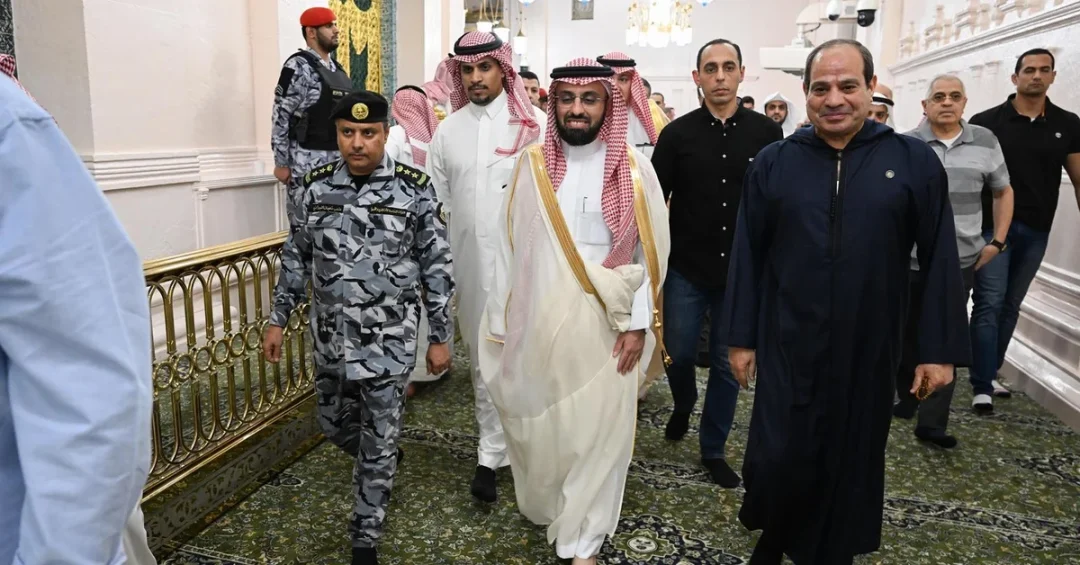
Egyptian President Abdel Fattah El-Sisi visited the Prophet’s Mosque in Madinah on Thursday, performing prayers and extending greetings to Prophet Muhammad (peace be upon him) and his two companions, Abu Bakr and Umar. The visit, reported by the Saudi Press Agency (SPA), underscores the enduring spiritual significance of the holy site and the strong fraternal ties between the Kingdom of Saudi Arabia and the Arab Republic of Egypt.
Context and Background
The Prophet’s Mosque, known as Al-Masjid an-Nabawi, is the second holiest site in Islam and holds profound religious significance for Muslims worldwide. It serves as a major destination for pilgrims and dignitaries visiting the Kingdom. President El-Sisi’s visit reflects the deep historical and cultural connections between Saudi Arabia and Egypt, two pivotal nations in the Arab and Islamic world. Such visits are often part of official state visits, highlighting the mutual respect and cooperation between their leaderships.
Key Details
Upon his arrival, President El-Sisi was received by several officials, including Nabil Al-Luhaidan, the general supervisor of works at the mosque, Mutaib Al-Badrani, the commander of the mosque’s security force, and Ibrahim bin Abdullah Berri, Director General of the Royal Protocol Office in Madinah. The Egyptian leader performed prayers at the mosque and had the privilege of sending greetings to Prophet Muhammad (peace be upon him) and his two companions, Abu Bakr and Umar. This act is a customary practice for Muslim leaders and reflects personal piety and respect for Islamic heritage.
Implications and Impact
The visit carries significant diplomatic and symbolic weight. It reinforces the strong bilateral relations between Saudi Arabia and Egypt, which have been characterized by close cooperation in political, economic, and security domains. It also highlights Saudi Arabia’s role as the custodian of Islam’s holiest sites and its commitment to facilitating visits by leaders from around the world. Such engagements promote unity within the Islamic world and showcase the Kingdom’s hospitality and organizational excellence.
Vision 2030 Alignment
This visit aligns seamlessly with Saudi Arabia’s Vision 2030, which aims to enhance the Kingdom’s global standing and promote religious tourism. By welcoming high-profile leaders like President El-Sisi, Saudi Arabia demonstrates its capacity to host significant diplomatic and religious events, further solidifying its position as a leading destination for pilgrims and dignitaries. The successful facilitation of this visit reflects the Kingdom’s ongoing efforts to improve infrastructure and services around holy sites, contributing to the overall goals of Vision 2030 to diversify the economy and foster international partnerships.
20 Questions
Q1. Who visited the Prophet’s Mosque on Thursday?
A1. Egyptian President Abdel Fattah El-Sisi visited the Prophet’s Mosque in Madinah on Thursday, as reported by the Saudi Press Agency.
Q2. What did President El-Sisi do at the Prophet’s Mosque?
A2. He performed prayers and sent greetings to Prophet Muhammad (peace be upon him) and his two companions, Abu Bakr and Umar.
Q3. Who received President El-Sisi upon his arrival?
A3. He was received by officials including Nabil Al-Luhaidan, Mutaib Al-Badrani, and Ibrahim bin Abdullah Berri.
Q4. What is the significance of the Prophet’s Mosque?
A4. It is the second holiest site in Islam, attracting millions of pilgrims annually and serving as a key destination for Muslim dignitaries.
Q5. How does this visit reflect Saudi-Egyptian relations?
A5. It underscores the strong fraternal ties and close cooperation between the two nations across various fields.
Q6. What role does the Royal Protocol Office play in such visits?
A6. It ensures the smooth coordination and reception of dignitaries, reflecting Saudi Arabia’s organizational excellence.
Q7. How does this visit align with Vision 2030?
A7. It supports religious tourism and enhances Saudi Arabia’s global standing as a host of significant events.
Q8. What message does this visit send to the Islamic world?
A8. It promotes unity and showcases Saudi Arabia’s commitment to facilitating spiritual journeys for leaders and pilgrims.
Q9. How often do foreign leaders visit the Prophet’s Mosque?
A9. Such visits are common during official state visits, reflecting the mosque’s importance and Saudi Arabia’s hospitality.
Q10. What security measures are in place for such visits?
A10. The mosque’s security force, led by Commander Mutaib Al-Badrani, ensures the safety and smooth operation of the visit.
Q11. What is the historical connection between Saudi Arabia and Egypt?
A11. The two countries share deep historical, cultural, and religious ties, with cooperation spanning decades.
Q12. How does this visit impact regional diplomacy?
A12. It strengthens bilateral relations and promotes stability and cooperation in the region.
Q13. What economic benefits might arise from such visits?
A13. They can boost tourism and investment opportunities, aligning with Vision 2030’s economic diversification goals.
Q14. Who is Nabil Al-Luhaidan?
A14. He is the general supervisor of works at the Prophet’s Mosque, responsible for its maintenance and operations.
Q15. What is the role of the mosque’s security force?
A15. It ensures the safety of visitors and maintains order, especially during high-profile visits.
Q16. How does Saudi Arabia facilitate visits by foreign dignitaries?
A16. Through meticulous planning, protocol arrangements, and infrastructure that supports large-scale religious tourism.
Q17. What is the significance of sending greetings to the Prophet?
A17. It is a deeply spiritual act performed by Muslims, reflecting reverence and connection to Islamic tradition.
Q18. How does this visit reflect Saudi Arabia’s leadership in the Islamic world?
A18. It demonstrates the Kingdom’s role as custodian of holy sites and its ability to host global leaders.
Q19. What other initiatives support religious tourism in Saudi Arabia?
A19. Vision 2030 includes expansions of holy sites, improved transportation, and enhanced visitor services.
Q20. What future collaborations might result from this visit?
A20. It could lead to further diplomatic, economic, and cultural exchanges between Saudi Arabia and Egypt.
Reader Feedback
We value your thoughts. Please share your feedback on this article.
Your feedback helps us improve our coverage.