


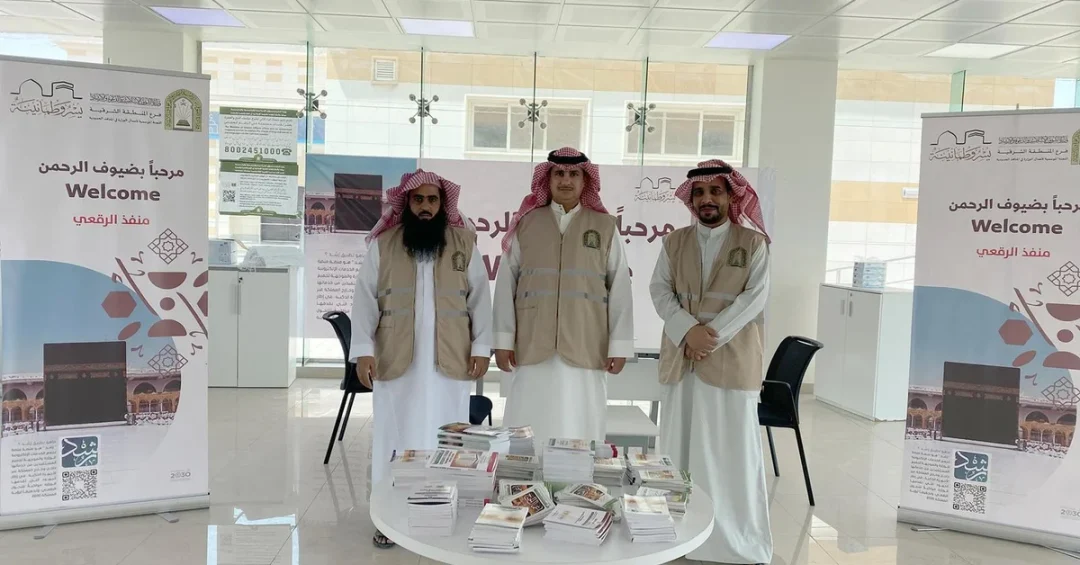
The Ministry of Islamic Affairs, Dawah, and Guidance has completed all preparations to receive pilgrim convoys arriving from the State of Kuwait through Al Raqa’I Port, demonstrating Saudi Arabia’s unwavering commitment to facilitating a smooth and spiritually enriching Hajj experience for all pilgrims. The announcement, made on May 30, 2024, via the Saudi Press Agency (SPA), underscores the Kingdom’s dedication to providing comprehensive services and guidance to those embarking on the sacred journey.
Context and Background
Al Raqa’I Port, located in the Eastern Region, serves as a vital entry point for pilgrims traveling from Kuwait. In line with the directives of the Custodian of the Two Holy Mosques and His Royal Highness the Crown Prince, the Ministry of Islamic Affairs, Dawah, and Guidance, through its Eastern Region branch, has mobilized resources to ensure that pilgrims receive the necessary support from the moment they arrive. This initiative is part of Saudi Arabia’s broader efforts to enhance the Hajj experience, reflecting the Kingdom’s role as the custodian of Islam’s holiest sites.
Key Details
The Ministry has allocated dedicated guidance facilities at the border crossing, staffed by specialized administrative teams tasked with assisting pilgrims before they enter the Kingdom. Preachers will be on hand to educate pilgrims, deliver lectures, and provide scientific lessons at both the border-crossing mosque and the travelers’ mosque. These sessions aim to familiarize pilgrims with the rituals of Hajj and their timings, ensuring they can perform their religious duties correctly and with peace of mind. Additionally, an “Answering the Inquirer” service has been established to address any inquiries related to religious matters and Hajj rituals.
Furthermore, the Ministry’s corner at the border crossing has been equipped with all necessary facilities to serve pilgrims efficiently. This includes support and information about the “Rushd” application, a digital tool that offers multiple services, such as an electronic library that supports 52 different languages. This multilingual approach ensures that pilgrims from diverse backgrounds can access essential information and guidance, further enhancing their journey.
Implications and Impact
The completion of these preparations at Al Raqa’I Port highlights Saudi Arabia’s proactive approach to managing the annual influx of pilgrims. By providing robust support at entry points, the Kingdom not only facilitates a seamless arrival process but also reinforces its commitment to the safety and well-being of all visitors. This initiative also strengthens bilateral ties with Kuwait, as both nations collaborate to ensure the smooth passage of pilgrims. The efforts align with Saudi Arabia’s Vision 2030, which aims to enhance the quality of services provided to Hajj and Umrah pilgrims, thereby enriching their spiritual experience and showcasing the Kingdom’s organizational excellence on a global stage.
Vision 2030 Alignment
This initiative is a clear reflection of Saudi Arabia’s Vision 2030, which seeks to elevate the pilgrimage experience through improved infrastructure, technology, and services. By investing in digital solutions like the Rushd application and deploying knowledgeable personnel, the Kingdom is not only fulfilling its religious duty but also positioning itself as a leader in innovative pilgrimage management. As Saudi Arabia continues to welcome millions of pilgrims annually, such preparations underscore its dedication to ensuring that every pilgrim’s journey is safe, comfortable, and spiritually fulfilling.
20 Questions
Q1. What preparations has the Ministry of Islamic Affairs completed for pilgrims arriving through Al Raqa’I Port?
A1. The Ministry has allocated guidance facilities, deployed specialized administrative teams, and equipped a corner at the border crossing to assist pilgrims with information and support.
Q2. Where is Al Raqa’I Port located?
A2. Al Raqa’I Port is located in the Eastern Region of Saudi Arabia, serving as a key entry point for pilgrims traveling from Kuwait.
Q3. Which ministry is responsible for these preparations?
A3. The Ministry of Islamic Affairs, Dawah, and Guidance, through its Eastern Region branch, is responsible for the preparations.
Q4. What services will be provided at the border-crossing mosque?
A4. Preachers will give lectures and scientific lessons to educate pilgrims about Hajj rituals and timings, ensuring they perform their duties correctly.
Q5. What is the “Answering the Inquirer” service?
A5. It is a service that addresses pilgrims’ inquiries related to religious matters and Hajj rituals, providing clarity and guidance.
Q6. What is the Rushd application?
A6. The Rushd application is a digital tool that offers multiple services, including an electronic library supporting 52 languages, to assist pilgrims.
Q7. How does the Rushd application help pilgrims?
A7. It provides access to a multilingual electronic library and other resources, helping pilgrims understand Hajj rituals and requirements.
Q8. Why is the Ministry focusing on Al Raqa’I Port?
A8. Al Raqa’I Port is a major entry point for Kuwaiti pilgrims, and the Ministry aims to ensure a smooth and spiritually fulfilling experience from arrival.
Q9. What role do preachers play at the border crossing?
A9. Preachers educate pilgrims through lectures and lessons, familiarizing them with Hajj rituals and their proper timings.
Q10. How does this initiative reflect Saudi Arabia’s commitment to pilgrims?
A10. It demonstrates the Kingdom’s dedication to providing comprehensive services and guidance, ensuring pilgrims can perform Hajj with ease and comfort.
Q11. What is the significance of the electronic library supporting 52 languages?
A11. It ensures that pilgrims from diverse linguistic backgrounds can access essential information in their native languages, enhancing understanding and inclusivity.
Q12. When did the Ministry complete these preparations?
A12. The preparations were completed on May 30, 2024, as announced by the Saudi Press Agency.
Q13. How does this initiative strengthen Saudi-Kuwait relations?
A13. It reflects collaboration between the two nations to facilitate the passage of pilgrims, reinforcing bilateral ties and mutual cooperation.
Q14. What facilities are available at the Ministry’s corner at the border crossing?
A14. The corner is equipped to provide support, information about the Rushd application, and other necessary services to assist pilgrims.
Q15. How does this align with Vision 2030?
A15. It aligns with Vision 2030 by enhancing pilgrimage services through technology and improved infrastructure, enriching the spiritual experience for pilgrims.
Q16. What are the timings for Hajj rituals that pilgrims need to know?
A16. Preachers at the border crossing will educate pilgrims on the specific timings and sequence of Hajj rituals to ensure proper performance.
Q17. Who benefits from these preparations?
A17. Pilgrims arriving from Kuwait through Al Raqa’I Port benefit from the guidance, facilities, and services provided by the Ministry.
Q18. What is the role of the Eastern Region branch of the Ministry?
A18. The branch oversees and implements the preparations, ensuring that all services are in place to receive and assist pilgrims.
Q19. How does the Ministry ensure that pilgrims’ inquiries are answered?
A19. Through the “Answering the Inquirer” service, dedicated personnel address religious and Hajj-related questions promptly and accurately.
Q20. What message does this send about Saudi Arabia’s hospitality?
A20. It showcases the Kingdom’s warm hospitality and commitment to serving pilgrims, reflecting its role as the custodian of the Two Holy Mosques.
Reader Feedback
We value your thoughts. Please share your feedback on this article.
Your feedback helps us improve our coverage.