


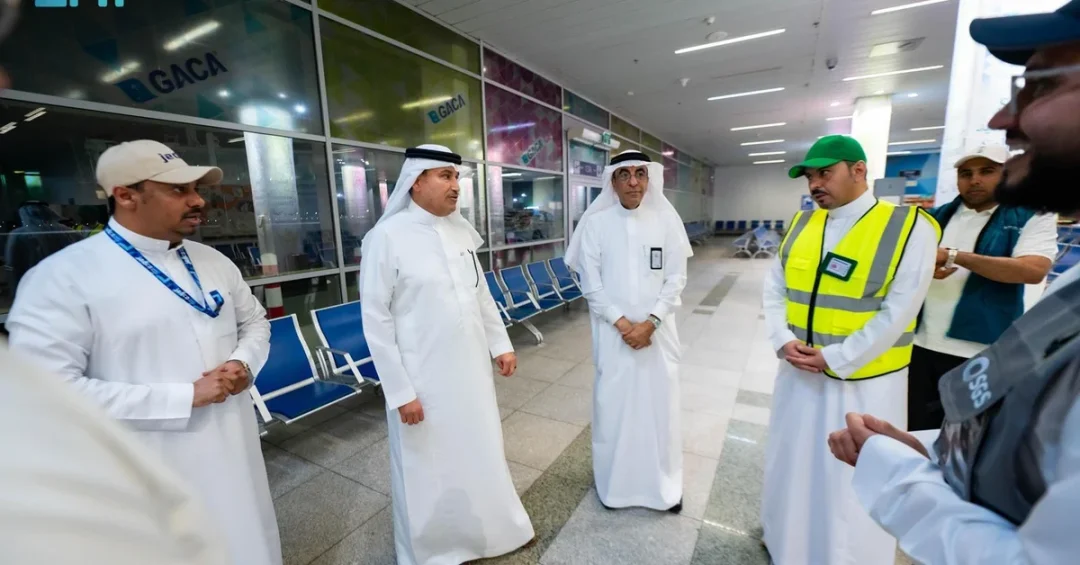
Saudi Minister of Transport and Logistic Services Eng. Saleh Al-Jasser conducted an inspection visit to King Abdulaziz International Airport in Jeddah to oversee the efficiency of operations during the departure of pilgrims following the completion of Hajj 1445H. The visit, reported by the Saudi Press Agency (SPA), underscores the Kingdom’s commitment to providing exceptional services to the guests of God as they conclude their spiritual journey.
Context and Background
The Hajj pilgrimage, one of the five pillars of Islam, draws millions of Muslims from around the world to the holy city of Mecca each year. The massive logistical operation required to facilitate their arrival, stay, and departure is managed by multiple Saudi government agencies under the direct guidance of the Custodian of the Two Holy Mosques, King Salman bin Abdulaziz Al Saud, and His Royal Highness Crown Prince Mohammed bin Salman bin Abdulaziz Al Saud. The transport sector plays a pivotal role in this endeavor, ensuring smooth movement across air, land, and rail networks.
King Abdulaziz International Airport in Jeddah serves as the primary gateway for pilgrims, handling a significant portion of inbound and outbound traffic during the Hajj season. The airport’s Hajj and Umrah terminals are specially designed to accommodate large volumes of passengers, reflecting Saudi Arabia’s dedication to enhancing the pilgrimage experience.
Key Details
During his visit, Eng. Al-Jasser inspected various airport facilities and operations, emphasizing the need to maintain high standards of service for departing pilgrims. He was briefed on the workflow and the measures in place to ensure a seamless departure process. The transport sector has allocated 3.4 million seats for pilgrims on 7,000 flights arriving at and departing from six airports: King Abdulaziz International Airport in Jeddah, Prince Mohammed bin Abdulaziz International Airport in Madinah, Taif International Airport, King Khalid International Airport in Riyadh, Prince Abdul Mohsen International Airport in Yanbu, and King Fahd International Airport in Dammam.
This comprehensive air bridge demonstrates the Kingdom’s logistical capabilities and its commitment to fulfilling the needs of pilgrims. The minister’s visit is part of a series of inspections aimed at ensuring that all stakeholders are aligned in their efforts to provide top-tier services.
Implications and Impact
The successful management of pilgrim departures has far-reaching implications. It not only ensures the comfort and safety of the guests of God but also enhances Saudi Arabia’s reputation as a capable and hospitable host. The efficient handling of such a massive influx of travelers showcases the Kingdom’s advanced infrastructure and operational expertise, which are key components of its Vision 2030 goals. Furthermore, the positive experience of pilgrims contributes to the promotion of religious tourism and strengthens cultural ties between Saudi Arabia and the international community.
The transport sector’s coordinated efforts, involving various airports and airlines, highlight the importance of strategic planning and collaboration among different entities. By prioritizing the well-being of pilgrims, Saudi Arabia reinforces its role as the guardian of the Two Holy Mosques and a leader in global pilgrimage management.
Vision 2030 Alignment
This initiative aligns seamlessly with Saudi Vision 2030, which aims to diversify the economy and enhance the quality of services in key sectors such as tourism and transportation. Under the visionary leadership of Crown Prince Mohammed bin Salman, the Kingdom is investing in world-class infrastructure and smart technologies to improve the pilgrimage experience. The ongoing upgrades at airports and the expansion of capacity are part of a broader strategy to accommodate an increasing number of pilgrims in the coming years, in line with the goals of Vision 2030 to welcome 30 million Umrah pilgrims by 2030. The dedication of the Ministry of Transport and Logistic Services, under Eng. Al-Jasser, exemplifies the Kingdom’s unwavering commitment to serving Islam and Muslims worldwide.
20 Questions
Q1. Who visited King Abdulaziz International Airport to oversee pilgrim departures?
A1. Eng. Saleh Al-Jasser, the Saudi Minister of Transport and Logistic Services, conducted the inspection visit to monitor the efficiency of operations during pilgrim departures after Hajj.
Q2. Why was the visit conducted?
A2. The visit was conducted to ensure that departing pilgrims receive exceptional services and that airport operations run smoothly following the completion of Hajj.
Q3. How many seats have been allocated for pilgrims on flights?
A3. The transport sector has allocated 3.4 million seats for pilgrims on 7,000 flights arriving at and departing from six airports across Saudi Arabia.
Q4. Which airports are involved in the pilgrim departure operation?
A4. The airports are King Abdulaziz International in Jeddah, Prince Mohammed bin Abdulaziz International in Madinah, Taif International, King Khalid International in Riyadh, Prince Abdul Mohsen International in Yanbu, and King Fahd International in Dammam.
Q5. What did Minister Al-Jasser emphasize during his visit?
A5. He stressed the need to provide exceptional services to departing pilgrims and inspected the workflow to ensure efficiency.
Q6. What is the significance of King Abdulaziz International Airport in Hajj operations?
A6. It is the primary gateway for pilgrims, handling a large volume of arrivals and departures during Hajj, with dedicated terminals for Hajj and Umrah.
Q7. How does this initiative align with Saudi Vision 2030?
A7. It aligns with Vision 2030 by enhancing infrastructure, improving pilgrimage services, and supporting the goal to accommodate more pilgrims in the future.
Q8. What role does the Ministry of Transport and Logistic Services play?
A8. The ministry oversees and coordinates all transportation aspects to ensure the smooth movement of pilgrims and efficient operations at airports.
Q9. What is the expected impact of this operation on Saudi Arabia’s reputation?
A9. It enhances Saudi Arabia’s image as a capable and hospitable host, demonstrating its logistical expertise in managing large-scale events.
Q10. How many flights are dedicated to pilgrim transport?
A10. There are 7,000 flights allocated specifically for pilgrim arrivals and departures during the Hajj season.
Q11. Who benefits from the services mentioned?
A11. Pilgrims who have completed Hajj benefit from the improved services and efficient departure procedures.
Q12. When did the visit take place?
A12. The visit took place on June 17, 2024, as reported by the Saudi Press Agency on June 18, 2024.
Q13. What other airports are involved besides Jeddah?
A13. The other airports are in Madinah, Taif, Riyadh, Yanbu, and Dammam, covering key regions across the Kingdom.
Q14. How does the transport sector ensure smooth operations?
A14. Through careful planning, coordination among agencies, and the allocation of significant resources, including seats and flights.
Q15. What is the total number of seats allocated?
A15. A total of 3.4 million seats have been allocated for pilgrims on various flights.
Q16. What did the minister inspect at the airport?
A16. He inspected the work processes and facilities to ensure they meet the required standards for pilgrim departures.
Q17. How does this reflect Saudi Arabia’s commitment to pilgrims?
A17. It shows the Kingdom’s dedication to serving the guests of God by providing top-quality services and facilities.
Q18. What are the future goals for pilgrim numbers?
A18. Under Vision 2030, Saudi Arabia aims to increase the capacity to welcome 30 million Umrah pilgrims by 2030.
Q19. What is the role of the Saudi Press Agency in this context?
A19. SPA is the official news agency that reported the minister’s visit and details of the pilgrim departure operations.
Q20. How does this operation contribute to the local economy?
A20. It supports economic diversification by boosting tourism and demonstrating the Kingdom’s ability to manage large-scale religious tourism efficiently.
Reader Feedback
We value your thoughts. Please share your feedback on this article.
Your feedback helps us improve our coverage.