


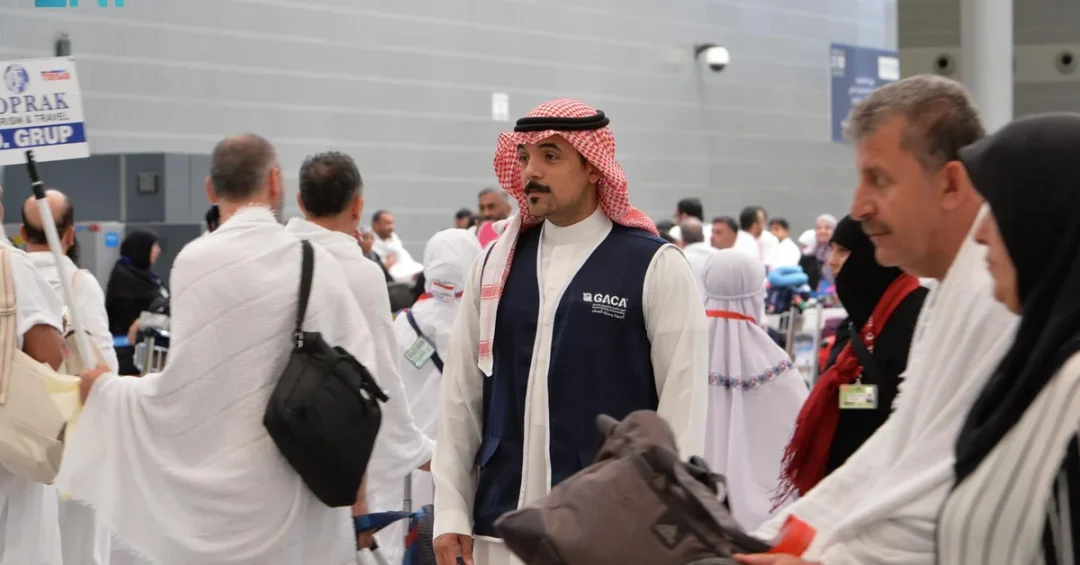
The General Authority of Civil Aviation (GACA) is conducting round-the-clock inspection tours at airports across Saudi Arabia to ensure that performance standards and service quality for Hajj pilgrims meet the highest levels, in partnership with airport operating companies. The initiative, carried out during the Hajj season 1445 AH, reflects the Kingdom’s commitment to providing a seamless and spiritually fulfilling experience for the millions of pilgrims traveling through its airports.
Context and Background
Hajj, the annual Islamic pilgrimage to Mecca, is one of the largest mass gatherings in the world, drawing over two million pilgrims from more than 180 countries. Saudi Arabia’s airports, particularly King Abdulaziz International Airport in Jeddah and Prince Mohammad bin Abdulaziz International Airport in Medina, serve as the primary gateways for these pilgrims. Ensuring smooth operations and high-quality services at these facilities is a monumental logistical task that requires meticulous planning and coordination among various government agencies and private sector partners.
The General Authority of Civil Aviation (GACA), led by its president Abdulaziz bin Abdullah Al-Duailej, is the regulatory body responsible for overseeing civil aviation in the Kingdom. Its role extends beyond safety and security to encompass passenger satisfaction and service excellence, aligning with the broader objectives of Saudi Vision 2030 to enhance the quality of life and host increasing numbers of pilgrims.
Key Details
GACA’s inspection teams are deployed around the clock to assess airport performance and the quality of services provided to pilgrims. These inspections cover all aspects of the pilgrim journey, from arrival to departure, including baggage handling, immigration procedures, transportation, and hospitality services. The authority verifies that service providers and carriers comply with established standards and performance indicators.
In its efforts to improve the Hajj experience, GACA not only supervises services but also involves beneficiaries and stakeholders in the improvement process. This includes measuring traveler satisfaction through surveys and feedback mechanisms, ensuring that the voices of pilgrims are heard and acted upon. By doing so, GACA aims to raise satisfaction levels and continuously enhance service delivery.
The partnership with airport operating companies, such as Jeddah Airports Company and TAV Airports, is crucial for the success of these efforts. These companies implement on-the-ground services and work closely with GACA to address any shortcomings promptly. The collaborative approach ensures that all parties are aligned in their commitment to excellence.
Implications and Impact
The rigorous monitoring by GACA has significant implications for the pilgrim experience and Saudi Arabia’s international standing. A smooth and welcoming airport experience sets a positive tone for the entire pilgrimage, allowing pilgrims to focus on their spiritual journey. It also showcases the Kingdom’s organizational capabilities and hospitality, reinforcing its reputation as a reliable and caring host.
Furthermore, the data and insights gathered from these inspections and satisfaction surveys inform future improvements and strategic planning. They help identify best practices and areas for investment, contributing to the ongoing development of airport infrastructure and services. This is particularly important as Saudi Arabia prepares to welcome even larger numbers of pilgrims in the coming years, in line with Vision 2030 goals.
Internationally, the successful management of Hajj operations enhances Saudi Arabia’s soft power and demonstrates its leadership in handling large-scale events. It also supports the growth of religious tourism, a key pillar of the Kingdom’s economic diversification strategy.
Vision 2030 Alignment
The GACA’s efforts during Hajj season 1445 AH are a clear manifestation of Saudi Vision 2030, which seeks to elevate the Kingdom’s global stature and improve the quality of life for citizens, residents, and visitors. By ensuring high standards of service at airports, GACA contributes to the vision’s objective of enhancing the pilgrim experience and increasing the capacity to host more Umrah and Hajj performers. This aligns with the broader goals of economic diversification, infrastructure development, and international engagement. As Saudi Arabia continues to invest in its aviation sector and pilgrimage infrastructure, it reinforces its role as a leading global destination for religious tourism and a model of excellence in service provision.
20 Questions
Q1. What is the main focus of GACA’s inspection tours during Hajj season?
A1. GACA’s inspection tours focus on assessing airport performance and the quality of services provided to pilgrims, ensuring compliance with required standards and measuring satisfaction to enhance the Hajj experience.
Q2. When did GACA conduct these inspections?
A2. The inspections were conducted during the Hajj season 1445 AH, which corresponds to the annual pilgrimage in 2024, with tours running around the clock.
Q3. Which airports are primarily involved in serving Hajj pilgrims?
A3. The primary airports are King Abdulaziz International Airport in Jeddah and Prince Mohammad bin Abdulaziz International Airport in Medina, along with other regional airports.
Q4. Who partners with GACA to ensure service quality at airports?
A4. GACA partners with airport operating companies such as Jeddah Airports Company and TAV Airports, as well as other service providers and carriers operating at the airports.
Q5. How does GACA measure pilgrim satisfaction?
A5. GACA measures satisfaction through surveys and feedback mechanisms, involving beneficiaries and stakeholders to gather insights and improve services continuously.
Q6. What are the key areas checked during inspections?
A6. Inspections cover baggage handling, immigration procedures, transportation, hospitality services, and overall compliance with performance standards set for service providers and carriers.
Q7. Why is the Hajj season significant for Saudi Arabia?
A7. Hajj is one of the largest annual mass gatherings, drawing over two million pilgrims, and it showcases Saudi Arabia’s logistical capabilities and commitment to serving Islam’s holiest sites.
Q8. How does GACA’s work align with Saudi Vision 2030?
A8. GACA’s efforts align with Vision 2030 by enhancing the pilgrim experience, improving service quality, and supporting the goal of hosting more pilgrims while diversifying the economy.
Q9. What role does GACA play in civil aviation?
A9. GACA is the regulatory body overseeing civil aviation in Saudi Arabia, ensuring safety, security, and service excellence across all airports and carriers.
Q10. Who is the president of GACA?
A10. The president of GACA is Abdulaziz bin Abdullah Al-Duailej, who leads the authority in its mission to develop the aviation sector.
Q11. How do inspections benefit pilgrims?
A11. Inspections ensure that services are efficient and high-quality, leading to a smoother and more comfortable journey for pilgrims, allowing them to focus on their spiritual activities.
Q12. What happens if standards are not met?
A12. If standards are not met, GACA works with service providers to address shortcomings promptly, implementing corrective measures to maintain service quality.
Q13. How does GACA involve stakeholders in improving services?
A13. GACA involves stakeholders by seeking their feedback, conducting satisfaction surveys, and collaborating with them to identify areas for improvement and implement solutions.
Q14. What is the significance of round-the-clock inspections?
A14. Round-the-clock inspections ensure continuous oversight during the peak Hajj period, allowing for immediate response to any issues and maintaining consistent service levels.
Q15. How does GACA’s work impact Saudi Arabia’s international reputation?
A15. GACA’s diligent oversight enhances Saudi Arabia’s reputation as a capable and hospitable host, demonstrating its ability to manage large-scale events and provide excellent services.
Q16. What economic benefits does Hajj bring to Saudi Arabia?
A16. Hajj generates significant revenue through religious tourism, supporting local businesses and contributing to the Kingdom’s economic diversification efforts under Vision 2030.
Q17. How does GACA ensure compliance from carriers?
A17. GACA monitors carriers through inspections and performance metrics, ensuring they adhere to regulations and provide quality services to pilgrims.
Q18. What improvements have been made in recent years at airports for Hajj?
A18. Recent improvements include expanded terminals, advanced technology for faster processing, and enhanced hospitality services, all aimed at accommodating more pilgrims efficiently.
Q19. How does GACA handle feedback from pilgrims?
A19. GACA collects feedback through surveys and direct interactions, analyzes it to identify trends, and uses it to implement service enhancements for future Hajj seasons.
Q20. What is the ultimate goal of GACA’s efforts during Hajj?
A20. The ultimate goal is to provide pilgrims with a seamless, spiritual, and satisfying experience, reflecting Saudi Arabia’s dedication to serving guests and achieving Vision 2030 objectives.
Reader Feedback
We value your thoughts. Please share your feedback on this article.
Your feedback helps us improve our coverage.