


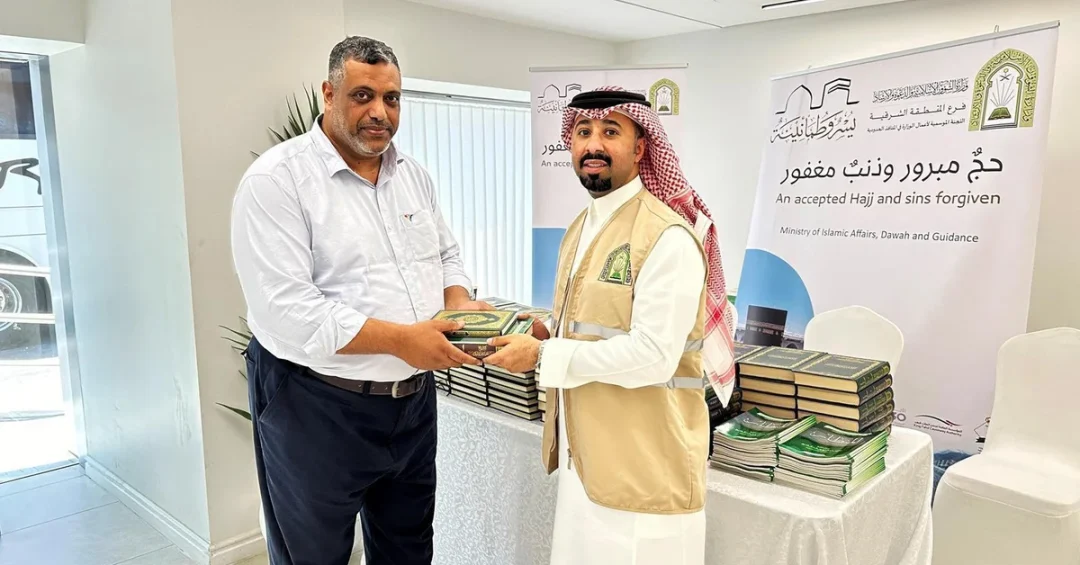
The Ministry of Islamic Affairs, Dawah, and Guidance in the Eastern Region began distributing copies of the Holy Quran on June 19, 2024, as a gift from the Custodian of the Two Holy Mosques, King Salman bin Abdulaziz Al Saud, to pilgrims departing through the region’s ports. The copies, printed at the King Fahd Glorious Quran Printing Complex in Madinah, are available in various sizes and translations in multiple international languages, reflecting the Kingdom’s commitment to serving pilgrims and spreading the message of Islam.
Context and Background
The distribution is part of Saudi Arabia’s longstanding tradition of honoring pilgrims and facilitating their spiritual journey. The Eastern Region, which shares borders with several Gulf countries, serves as a key departure point for many pilgrims returning home after completing the Hajj or Umrah. The Ministry of Islamic Affairs, Dawah, and Guidance, under the leadership of Minister Dr. Abdullatif bin Abdulaziz Al Al-Sheikh, oversees this initiative, ensuring that departing pilgrims receive a meaningful token of appreciation.
The King Fahd Glorious Quran Printing Complex, a renowned institution dedicated to the accurate reproduction of the Holy Quran, produces these copies with meticulous attention to detail. The complex has been instrumental in disseminating the Quran worldwide, furthering the Kingdom’s role as a custodian of Islamic heritage.
Key Details
The ministry stated that the distribution process includes five border crossings with Gulf countries: Kuwait, Bahrain, Qatar, the UAE, and Oman. The ministry’s branch in the Eastern Region will continue to bid farewell to pilgrims in the coming days, handing them the gift as they depart. The objective is to distribute more than 41,740 copies of the Holy Quran at the region’s ports.
The departing pilgrims have expressed their gratitude for the Kingdom’s efforts in serving them and prayed for Allah Almighty to bless the Kingdom and its endeavors. This initiative not only provides spiritual nourishment but also strengthens the bond between the Kingdom and the global Muslim community.
Implications and Impact
This distribution of the Holy Quran underscores Saudi Arabia’s unwavering commitment to serving pilgrims and promoting Islamic values. It enhances the Kingdom’s reputation as a leader in Islamic affairs and demonstrates its dedication to facilitating the spiritual needs of Muslims worldwide. The initiative also reinforces the strong ties between Saudi Arabia and its Gulf neighbors, as the border crossings serve as points of exchange and goodwill.
Furthermore, the availability of translations in multiple languages ensures that pilgrims from diverse backgrounds can access the teachings of the Quran, fostering greater understanding and unity among Muslims. This act of generosity aligns with the Kingdom’s broader efforts to promote moderation and tolerance, key principles of its Vision 2030 reform agenda.
Vision 2030 Alignment
The distribution of the Holy Quran to departing pilgrims is a testament to Saudi Arabia’s commitment to enhancing the pilgrimage experience, a core component of Vision 2030. By providing spiritual resources and facilitating smooth departures, the Kingdom continues to strengthen its role as a global leader in serving Islam and Muslims. This initiative not only honors the legacy of the Custodian of the Two Holy Mosques but also contributes to the Kingdom’s goals of cultural exchange, economic diversification, and international cooperation. As Saudi Arabia progresses towards a brighter future, such gestures of faith and generosity will remain central to its identity and global standing.
20 Questions
Q1. What is the purpose of distributing the Holy Quran to departing pilgrims?
A1. The purpose is to offer a spiritual gift from the Custodian of the Two Holy Mosques, helping pilgrims continue their religious journey and spreading the teachings of Islam.
Q2. Which region in Saudi Arabia is carrying out this distribution?
A2. The Eastern Region, through the Ministry of Islamic Affairs, Dawah, and Guidance, is distributing the copies at its border crossings with Gulf countries.
Q3. Where are the Holy Quran copies printed?
A3. They are printed at the King Fahd Glorious Quran Printing Complex in Madinah, which is known for its high-quality production of the Holy Quran.
Q4. How many copies are planned for distribution?
A4. The ministry aims to distribute more than 41,740 copies of the Holy Quran at the region’s ports.
Q5. Which countries border the Eastern Region where distribution occurs?
A5. The distribution includes five border crossings with Kuwait, Bahrain, Qatar, the UAE, and Oman.
Q6. Are the copies available in different languages?
A6. Yes, the copies come in various sizes and translations in multiple international languages to cater to the diverse needs of pilgrims.
Q7. Who is the gift from?
A7. The copies are a gift from the Custodian of the Two Holy Mosques, King Salman bin Abdulaziz Al Saud.
Q8. What did the departing pilgrims express?
A8. The pilgrims expressed gratitude for the Kingdom’s efforts in serving them and prayed for Allah to bless the Kingdom and its endeavors.
Q9. When did the distribution begin?
A9. The distribution began on June 19, 2024, as reported by the Saudi Press Agency.
Q10. Which ministry is responsible for this initiative?
A10. The Ministry of Islamic Affairs, Dawah, and Guidance, under Minister Dr. Abdullatif bin Abdulaziz Al Al-Sheikh, is responsible.
Q11. How does this initiative reflect Saudi Arabia’s commitment to pilgrims?
A11. It shows the Kingdom’s dedication to serving pilgrims beyond the holy sites, providing them with spiritual resources as they return home.
Q12. What is the significance of the King Fahd Glorious Quran Printing Complex?
A12. The complex is a leading institution for printing the Holy Quran, ensuring accuracy and wide dissemination of Islamic texts globally.
Q13. How does this initiative align with Vision 2030?
A13. It supports Vision 2030 by enhancing the pilgrimage experience, promoting cultural exchange, and strengthening Saudi Arabia’s role in serving Islam.
Q14. What impact does this have on Gulf relations?
A14. It reinforces ties with Gulf countries by facilitating pilgrims at border crossings and promoting goodwill and cooperation.
Q15. Are there any other similar initiatives by the ministry?
A15. The ministry regularly undertakes various programs to serve pilgrims and promote Islamic values, including Quran distribution and educational efforts.
Q16. How many border crossings are involved in the distribution?
A16. There are five border crossings: Kuwait, Bahrain, Qatar, the UAE, and Oman.
Q17. What is the role of the Eastern Region branch in this process?
A17. The branch oversees the distribution and bids farewell to pilgrims, ensuring they receive the gift before departure.
Q18. Why is it important to provide translations of the Quran?
A18. Translations help non-Arabic speaking pilgrims understand the Quran’s teachings, fostering greater understanding and unity among Muslims worldwide.
Q19. What message does this initiative convey to the international community?
A19. It conveys Saudi Arabia’s commitment to moderation, tolerance, and serving Muslims, enhancing its global leadership in Islamic affairs.
Q20. How can pilgrims benefit from these copies after returning home?
A20. Pilgrims can use the copies for personal study, share teachings with their communities, and continue their spiritual growth, spreading the message of Islam.
Reader Feedback
We value your thoughts. Please share your feedback on this article.
Your feedback helps us improve our coverage.