


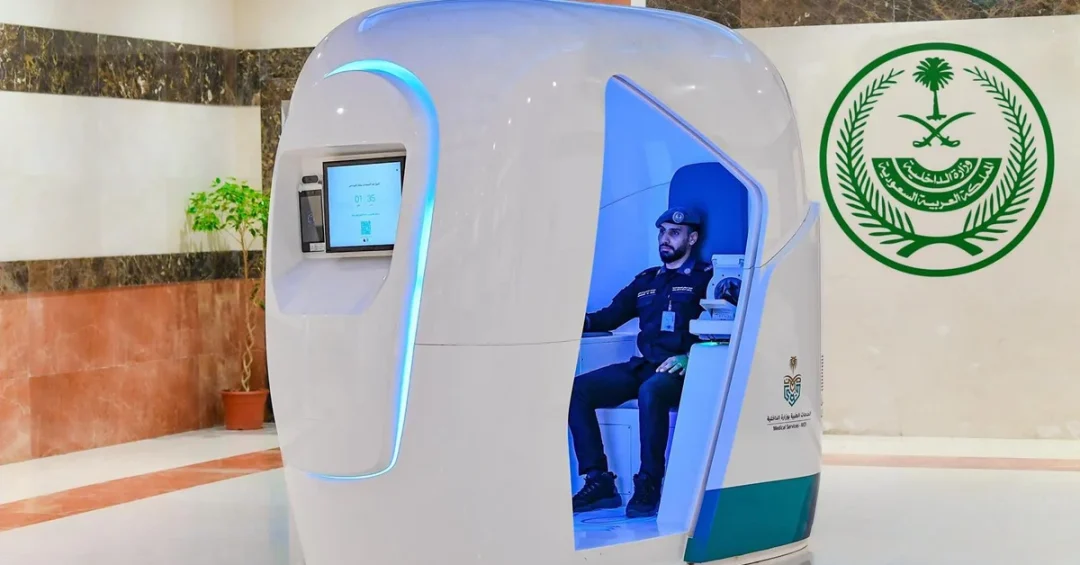
The Ministry of Interior’s General Department of Medical Services is deploying an advanced AI-powered medical capsule to provide comprehensive health screenings for security personnel during the Hajj season 1445 AH. The state-of-the-art capsule, which conducts full medical examinations in just six minutes, captures 26 key physiological measurements, including height, weight, body composition, vital signs, and oxygen saturation. This initiative underscores Saudi Arabia’s commitment to leveraging cutting-edge technology to ensure the well-being of those safeguarding the millions of pilgrims performing Hajj.
Context and Background
The Hajj pilgrimage draws millions of worshippers to the holy city of Makkah each year, requiring an enormous logistical and security operation. The Ministry of Interior, through its General Department of Medical Services, is responsible for maintaining the health and safety of the security personnel who work tirelessly to manage the crowds and ensure a smooth experience for all pilgrims. In recent years, the Kingdom has increasingly turned to artificial intelligence and digital health solutions to enhance service delivery and operational efficiency. The deployment of this AI-driven medical capsule during Hajj 1445 AH is a continuation of that trend, reflecting the broader national push toward innovation and smart healthcare under Saudi Vision 2030.
Key Details
The medical capsule is equipped with integrated AI that analyzes health data on the spot and facilitates remote consultations with qualified physicians. It also allows for medication registration, thereby reducing the need for hospital visits and providing a safe, private environment for on-site health screenings and consultations at workplaces across the Ministry of Interior and the Presidency of State Security. The capsule captures 26 physiological parameters in a single six-minute session, offering a comprehensive snapshot of an individual’s health status. This rapid, accurate screening capability is particularly valuable during the Hajj season, when security personnel operate under intense pressure and long hours. By bringing advanced diagnostics directly to their workplaces, the Ministry ensures that any potential health concerns are identified and addressed promptly, without disrupting security operations.
Implications and Impact
The introduction of AI-powered health screenings for security personnel has significant implications for both public health and security management during Hajj. It demonstrates how technology can be harnessed to support the well-being of frontline workers, potentially reducing absenteeism and enhancing overall performance. Furthermore, this initiative sets a precedent for the broader adoption of AI in healthcare across Saudi Arabia, aligning with the Kingdom’s efforts to build a resilient, technology-driven health system. On an international level, it showcases Saudi Arabia’s leadership in integrating advanced technologies into large-scale event management, offering a model that other nations could emulate for mass gatherings. The privacy and convenience of on-site screenings also reflect a person-centric approach to healthcare, which is a key pillar of Saudi Vision 2030’s Health Sector Transformation Program.
Vision 2030 Alignment
This initiative is a clear manifestation of Saudi Vision 2030’s objectives to modernize public services and enhance quality of life. By investing in AI and digital health infrastructure, the Kingdom is not only improving the efficiency of its security operations during Hajj but also paving the way for a future where technology and healthcare converge to serve both citizens and visitors. As Saudi Arabia continues to welcome increasing numbers of pilgrims, such innovations will be essential in maintaining the highest standards of safety and care, further solidifying the Kingdom’s role as a global leader in smart pilgrimage management and technological advancement.
20 Questions
Q1. What is the purpose of the AI-powered medical capsule deployed by the Ministry of Interior?
A1. The capsule is designed to provide comprehensive health screenings for security personnel during the Hajj season, ensuring their well-being and operational readiness. It conducts full medical examinations in just six minutes, capturing 26 physiological measurements.
Q2. How long does a full medical examination take using the capsule?
A2. The examination takes only six minutes, allowing for rapid and efficient health assessments without disrupting security duties. This speed is crucial during the busy Hajj period when personnel are needed on the ground.
Q3. What physiological measurements does the capsule capture?
A3. It captures 26 key measurements, including height, weight, body composition, vital signs, and oxygen saturation. These provide a comprehensive overview of an individual’s health status for early detection of potential issues.
Q4. How does artificial intelligence enhance the capsule’s functionality?
A4. The integrated AI analyzes health data on the spot, facilitates remote consultations with doctors, and allows for medication registration. This reduces the need for hospital visits and enables immediate, informed decisions about care.
Q5. Who benefits from these health screenings?
A5. Security personnel from the Ministry of Interior and the Presidency of State Security benefit from on-site screenings at their workplaces. This ensures their health is monitored while they perform critical Hajj duties.
Q6. Where are the screenings conducted?
A6. Screenings are conducted at workplaces across the Ministry of Interior and the Presidency of State Security, providing a safe and private environment. This convenience minimizes downtime and maximizes participation.
Q7. Why is this initiative particularly important during Hajj?
A7. Hajj demands long hours and intense effort from security personnel, making health monitoring vital. Early detection of health issues helps maintain a fit and ready force throughout the pilgrimage.
Q8. How does the capsule reduce the need for hospital visits?
A8. By offering on-site screenings and remote consultations, the capsule eliminates the need for personnel to travel to hospitals. This saves time and reduces pressure on healthcare facilities during the busy Hajj season.
Q9. What role does the Ministry of Interior’s General Department of Medical Services play?
A9. The department is responsible for deploying and operating the medical capsule, ensuring that security personnel receive timely and advanced health screenings. It oversees the integration of AI technology into medical services.
Q10. How does this initiative reflect Saudi Vision 2030?
A10. It exemplifies Vision 2030’s goals of modernizing public services, enhancing quality of life, and leveraging technology for healthcare. The initiative showcases innovation in serving both citizens and pilgrims.
Q11. What are the key benefits of using AI in this medical capsule?
A11. AI enables rapid data analysis, remote consultations, and medication registration, leading to faster diagnoses and personalized care. It also ensures privacy and convenience for personnel.
Q12. How does the capsule ensure privacy for the individuals screened?
A12. The capsule provides a private, enclosed space for screenings and consultations, away from public view. This confidentiality encourages personnel to undergo regular health checks without concern.
Q13. Can the capsule be used outside of Hajj season?
A13. While currently deployed for Hajj, the technology can be adapted for year-round health monitoring of security personnel. Its mobile nature allows for flexible deployment across various locations.
Q14. What types of health conditions can be detected through the capsule?
A14. The capsule measures vital signs, body composition, and oxygen saturation, helping detect issues like hypertension, obesity, and respiratory problems. Early detection allows for timely intervention.
Q15. How does remote consultation work?
A15. The capsule connects with doctors remotely, allowing them to review health data and consult with personnel in real time. This ensures expert medical advice without the need for in-person visits.
Q16. What is medication registration and why is it important?
A16. Medication registration allows healthcare providers to record prescribed medications digitally, ensuring accurate tracking and preventing adverse interactions. It streamlines the treatment process for personnel.
Q17. How does this technology contribute to the overall success of Hajj?
A17. By keeping security personnel healthy and ready, the technology helps maintain order and safety for millions of pilgrims. A healthy workforce is essential for a smooth and secure Hajj experience.
Q18. Is this the first time such technology is used during Hajj?
A18. The Ministry of Interior has been progressively integrating AI into its Hajj operations, and this capsule represents the latest advancement. It builds on previous successful deployments of smart health solutions.
Q19. How does the capsule align with Saudi Arabia’s broader digital health strategy?
A19. It is part of the Kingdom’s digital health transformation, which aims to use AI and data to improve healthcare access and outcomes. This aligns with the Health Sector Transformation Program under Vision 2030.
Q20. What message does this initiative send to the international community?
A20. It demonstrates Saudi Arabia’s commitment to innovation and the well-being of all involved in Hajj, including security personnel. It positions the Kingdom as a leader in smart healthcare and event management.
Reader Feedback
We value your thoughts. Please share your feedback on this article.
Your feedback helps us improve our coverage.