


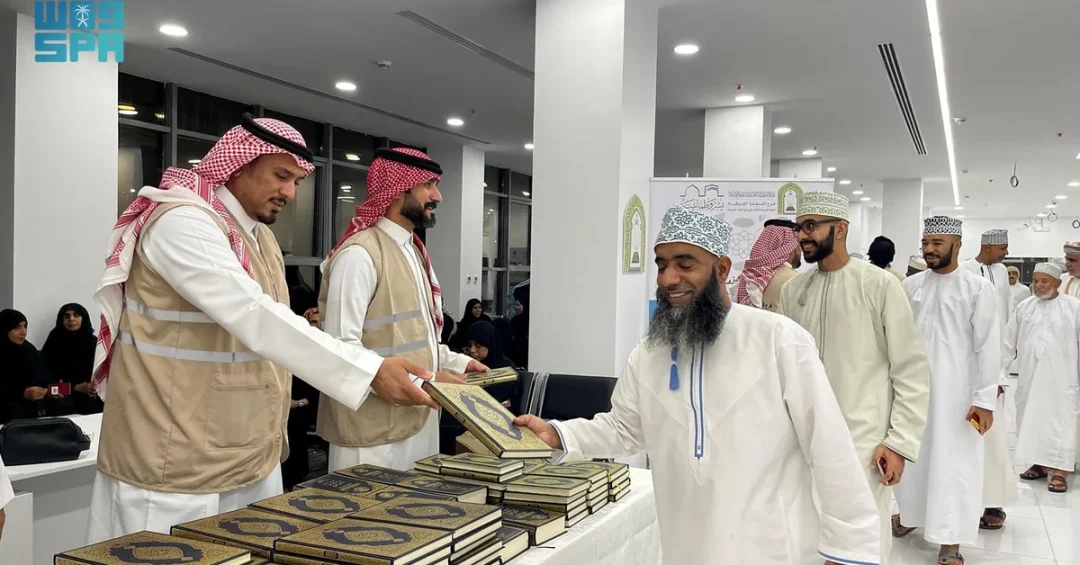
The Ministry of Islamic Affairs, Dawah, and Guidance branch in the Eastern Region has distributed more than 1,000 copies of the Holy Quran as a gift from Custodian of the Two Holy Mosques King Salman bin Abdulaziz Al Saud to pilgrims departing to their homelands through the Al-Batha border crossing with the United Arab Emirates. The distribution, announced on June 21, 2024, is part of a broader initiative to provide over 41,740 copies of the Quran at border crossings across the Eastern Region, reflecting the Kingdom’s commitment to serving pilgrims beyond the holy sites.
Context and Background
The distribution of the Holy Quran to departing pilgrims is a longstanding tradition upheld by the Kingdom of Saudi Arabia, underscoring its role as the custodian of the Two Holy Mosques. The Ministry of Islamic Affairs, Dawah, and Guidance, through its Eastern Region branch, oversees this effort as part of a comprehensive plan to extend hospitality to pilgrims even as they leave the country. The Al-Batha border crossing, a key exit point into the UAE, sees thousands of pilgrims each year, making it a strategic location for such distributions.
The gift includes various editions from the King Fahd Complex for the Printing of the Holy Quran, which is renowned for producing high-quality copies in multiple sizes and translations. This approach ensures that pilgrims from diverse linguistic backgrounds can access the Quran in a format that suits their preferences, enhancing their spiritual journey.
Key Details
According to the Saudi Press Agency (SPA), the Eastern Region branch distributed over 1,000 copies at Al-Batha, with the total planned distribution across all Eastern Region border crossings exceeding 41,740 copies. The copies are available in several languages, catering to the international pilgrim community. Pilgrims expressed gratitude for the gift, acknowledging the exceptional services provided throughout their Hajj journey.
The King Fahd Complex for the Printing of the Holy Quran, based in Madinah, is a leading global printer of Islamic texts, producing millions of copies annually. Its involvement highlights the Kingdom’s dedication to preserving and disseminating the Holy Quran worldwide.
Implications and Impact
This initiative reinforces Saudi Arabia’s position as a global leader in serving Islam and Muslims. By providing the Holy Quran to departing pilgrims, the Kingdom ensures that the spiritual benefits of Hajj continue to resonate as pilgrims return home. It also strengthens cultural and religious ties with neighboring Gulf countries, as many pilgrims transit through border crossings like Al-Batha.
Moreover, the distribution aligns with Saudi Arabia’s broader efforts to enhance the pilgrimage experience, which includes infrastructural improvements, digital services, and hospitality initiatives. These efforts are integral to Vision 2030’s goal of facilitating a seamless and enriching Hajj for millions of pilgrims annually.
Vision 2030 Alignment
The distribution of the Holy Quran to departing pilgrims reflects the Kingdom’s unwavering commitment to its religious responsibilities and Vision 2030’s objective of elevating the pilgrimage experience. By extending generosity beyond the holy sites, Saudi Arabia demonstrates its dedication to serving Islam and Muslims globally, fostering goodwill, and strengthening its role as a beacon of faith and hospitality.
20 Questions
Q1. What event prompted the distribution of the Holy Quran at Al-Batha border crossing?
A1. The Ministry of Islamic Affairs, Dawah, and Guidance distributed over 1,000 copies of the Holy Quran to departing pilgrims at Al-Batha border crossing as a gift from King Salman, part of a plan to distribute 41,740 copies across Eastern Region crossings.
Q2. Who ordered the distribution of the Holy Quran to pilgrims?
A2. The distribution is a gift from Custodian of the Two Holy Mosques King Salman bin Abdulaziz Al Saud, implemented by the Ministry of Islamic Affairs, Dawah, and Guidance branch in the Eastern Region.
Q3. When did the distribution take place?
A3. The distribution was announced on June 21, 2024, as pilgrims were departing to their homelands after completing Hajj.
Q4. Where exactly did the distribution occur?
A4. It took place at the Al-Batha border crossing, which connects Saudi Arabia’s Eastern Region with the United Arab Emirates.
Q5. How many copies of the Holy Quran were distributed at Al-Batha?
A5. More than 1,000 copies were distributed at the Al-Batha border crossing.
Q6. What is the total number of copies planned for distribution?
A6. The ministry plans to distribute over 41,740 copies of the Holy Quran across all Eastern Region border crossings.
Q7. What types of Quran editions were offered?
A7. A variety of editions from the King Fahd Complex for the Printing of the Holy Quran were offered, including different sizes and translations in several languages.
Q8. Why are translations in multiple languages important?
A8. Translations allow pilgrims from diverse linguistic backgrounds to understand the Quran’s message, enhancing their spiritual experience and catering to international preferences.
Q9. How did the pilgrims react to receiving the gift?
A9. Several pilgrims expressed gratitude for the gift, acknowledging the exceptional services they received throughout their Hajj journey.
Q10. What is the role of the King Fahd Complex?
A10. The King Fahd Complex for the Printing of the Holy Quran produces high-quality copies of the Quran in various sizes and languages, supporting global Islamic outreach.
Q11. Which government body oversees this initiative?
A11. The Ministry of Islamic Affairs, Dawah, and Guidance, specifically its Eastern Region branch, oversees the distribution of the Holy Quran to departing pilgrims.
Q12. How does this initiative reflect Saudi Arabia’s commitment to pilgrims?
A12. It demonstrates the Kingdom’s dedication to serving pilgrims beyond the holy sites, ensuring they receive spiritual gifts and support throughout their journey.
Q13. What border crossings are included in the distribution plan?
A13. The plan covers border crossings in the Eastern Region that connect Saudi Arabia with Gulf countries, including the Al-Batha crossing with the UAE.
Q14. Why is the Al-Batha border crossing significant?
A14. Al-Batha is a key exit point for pilgrims traveling to the UAE and other Gulf nations, making it a strategic location for distributing religious gifts.
Q15. How does this initiative align with Vision 2030?
A15. It supports Vision 2030’s goal of enhancing the pilgrimage experience by providing exceptional services and spiritual care to pilgrims, reinforcing Saudi Arabia’s role as a global Islamic leader.
Q16. What other services are provided to pilgrims at border crossings?
A16. Pilgrims receive various services including guidance, hospitality, and logistical support to ensure a smooth departure, with the Quran distribution being a key spiritual component.
Q17. How many languages are the Quran translations available in?
A17. The King Fahd Complex produces translations in many languages, though the exact number for this distribution was not specified; it aims to cover major languages of pilgrims.
Q18. What is the significance of giving the Quran as a gift?
A18. It is a spiritual gift that allows pilgrims to continue their religious study and reflection after Hajj, spreading the message of Islam and fostering goodwill.
Q19. How does this initiative impact Saudi Arabia’s international relations?
A19. It strengthens cultural and religious ties with Gulf countries and beyond, showcasing the Kingdom’s generosity and commitment to serving Muslims worldwide.
Q20. What is the broader impact of such Quran distributions?
A20. They reinforce Saudi Arabia’s leadership in the Islamic world, promote religious education, and enhance the spiritual journey of pilgrims, aligning with the Kingdom’s Vision 2030 objectives.
Reader Feedback
We value your thoughts. Please share your feedback on this article.
Your feedback helps us improve our coverage.