


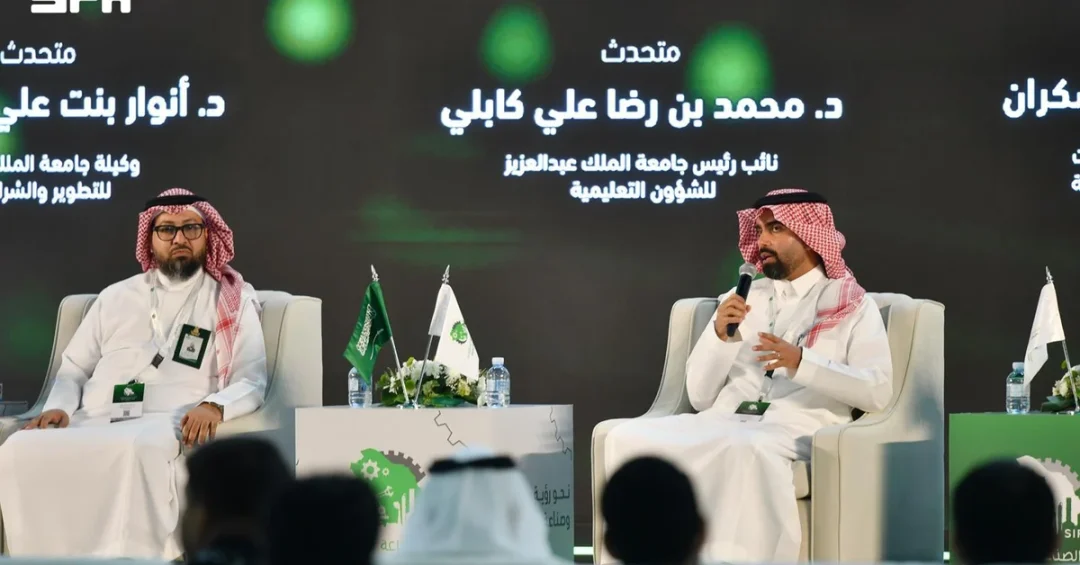
A high-level session at the second Saudi Industry Forum 2026 in Jeddah examined how digitalization and national talent development are strengthening the Kingdom’s advanced manufacturing competitiveness. The session, titled “Digitalization and National Talent: Enhancing Competitiveness in Advanced Manufacturing Environments,” brought together experts to discuss preparing Saudi professionals for future industries driven by automation and artificial intelligence.
Context and Background
The forum, organized under the auspices of the Ministry of Industry and Mineral Resources, underscores Saudi Arabia’s commitment to building a diversified, knowledge-based economy. As global manufacturing undergoes a digital transformation, the Kingdom is positioning itself to lead the region in advanced production technologies.
Central to this effort is the alignment of education and training outcomes with the evolving needs of the industrial sector. The session reviewed strategies to develop educational and career pathways that address future skills, emphasizing stronger partnerships among government entities, universities, and industrial establishments. These collaborations aim to narrow the gap between academic specializations and labor market demands.
Key Details
Participants highlighted several initiatives designed to build national capabilities. These include raising awareness of industry and industrial professions during general education, developing advanced industrial schools that combine general and specialized curricula in robotics and automation, and establishing apprenticeship programs. Cooperation with universities to create specialized fields and educational pathways aligned with sector needs was also discussed.
Such measures are intended to ensure that Saudi talent is equipped to lead the transition toward advanced manufacturing. The integration of digitalization, automation, and artificial intelligence into production processes demands a workforce that is not only technically proficient but also adaptable and innovative.
Implications and Impact
The outcomes of this session are expected to have far-reaching implications for Saudi Arabia’s industrial landscape. By fostering a skilled national workforce, the Kingdom can attract greater foreign investment, boost local content, and enhance its export competitiveness. Moreover, a robust advanced manufacturing sector supports economic diversification and job creation for Saudi citizens.
Regionally, Saudi Arabia’s efforts serve as a model for other nations seeking to navigate the Fourth Industrial Revolution. The forum’s emphasis on public-private-academic collaboration reflects a holistic approach that could drive sustainable industrial growth across the Middle East.
Vision 2030 Alignment
This initiative is directly aligned with Saudi Vision 2030, which seeks to transform the Kingdom into a global industrial powerhouse. By investing in human capital and embracing digital technologies, Saudi Arabia is not only enhancing its manufacturing competitiveness but also ensuring that its youth are prepared for the jobs of tomorrow. The session’s outcomes will contribute to the objectives of the National Industrial Development and Logistics Program (NIDLP), a key Vision 2030 realization program.
20 Questions
Q1. What was the main topic of the session at the Saudi Industry Forum 2026?
A1. The session focused on digitalization and national talent, exploring how to enhance competitiveness in advanced manufacturing environments by preparing Saudi professionals for future industries.
Q2. Where and when was the second Saudi Industry Forum 2026 held?
A2. The forum took place in Jeddah, Saudi Arabia, with the session held on September 16, 2026, as reported by the Saudi Press Agency.
Q3. What key challenges does the session aimed to address?
A3. It addressed the need to align education and training outcomes with industrial sector requirements, and to prepare the workforce for digitalization, automation, and artificial intelligence.
Q4. Which entities are partnering to develop future skills?
A4. Government entities, universities, and industrial establishments are collaborating to create educational and career pathways that meet labor market needs.
Q5. What are advanced industrial schools?
A5. These schools combine general and specialized curricula in robotics and automation, equipping students with practical skills for modern manufacturing careers.
Q6. How do apprenticeship programs contribute to workforce readiness?
A6. Apprenticeships provide hands-on training, enabling participants to gain real-world experience and seamlessly transition into industrial roles.
Q7. What role does general education play in raising industry awareness?
A7. General education introduces students to industrial professions early, helping them make informed career choices and fostering interest in manufacturing.
Q8. Why is narrowing the gap between academic specializations and labor market needs important?
A8. It ensures that graduates possess skills that are directly relevant to industry demands, reducing unemployment and boosting productivity.
Q9. How does digitalization impact advanced manufacturing?
A9. Digitalization integrates technologies like IoT and AI into production, increasing efficiency, reducing costs, and enabling smart factories.
Q10. What is the significance of national talent in achieving industrial competitiveness?
A10. Skilled national talent drives innovation, productivity, and adaptability, which are essential for competing in global advanced manufacturing markets.
Q11. How does the session align with Saudi Vision 2030?
A11. It supports Vision 2030 by developing human capital and promoting economic diversification through advanced manufacturing, a key pillar of the National Industrial Development and Logistics Program.
Q12. What are the expected economic benefits of enhancing advanced manufacturing?
A12. It can attract foreign investment, increase non-oil exports, create jobs, and contribute to sustainable GDP growth.
Q13. Which technologies are central to the transition toward advanced manufacturing?
A13. Automation, robotics, artificial intelligence, and the Internet of Things are pivotal technologies driving the transformation.
Q14. How can universities contribute to developing specialized fields?
A14. Universities can design curricula in emerging fields like mechatronics and data science, and collaborate with industry for research and training.
Q15. What is the role of the Ministry of Industry and Mineral Resources in this initiative?
A15. The ministry spearheads industrial development policies, facilitates partnerships, and supports programs that build a skilled workforce for advanced manufacturing.
Q16. How does the forum facilitate knowledge exchange?
A16. It brings together experts, policymakers, and industry leaders to share best practices, discuss challenges, and explore collaborative solutions.
Q17. What are the implications for Saudi youth?
A17. It opens up new career opportunities in high-tech industries, encouraging youth to pursue STEM education and contribute to the Kingdom’s progress.
Q18. How does this initiative compare with global trends?
A18. It aligns with worldwide efforts to integrate digital technologies into manufacturing, positioning Saudi Arabia as a regional leader in Industry 4.0.
Q19. What steps are being taken to ensure gender inclusivity in industrial professions?
A19. Initiatives promote awareness and training for all, including women, to participate in advanced manufacturing, supporting Vision 2030’s goal of increasing female workforce participation.
Q20. What is the long-term vision for Saudi Arabia’s manufacturing sector?
A20. The vision is to establish a diversified, innovation-driven industrial base that contributes significantly to the national economy and global supply chains.
Reader Feedback
We value your thoughts. Please share your feedback on this article.
Your feedback helps us improve our coverage.