


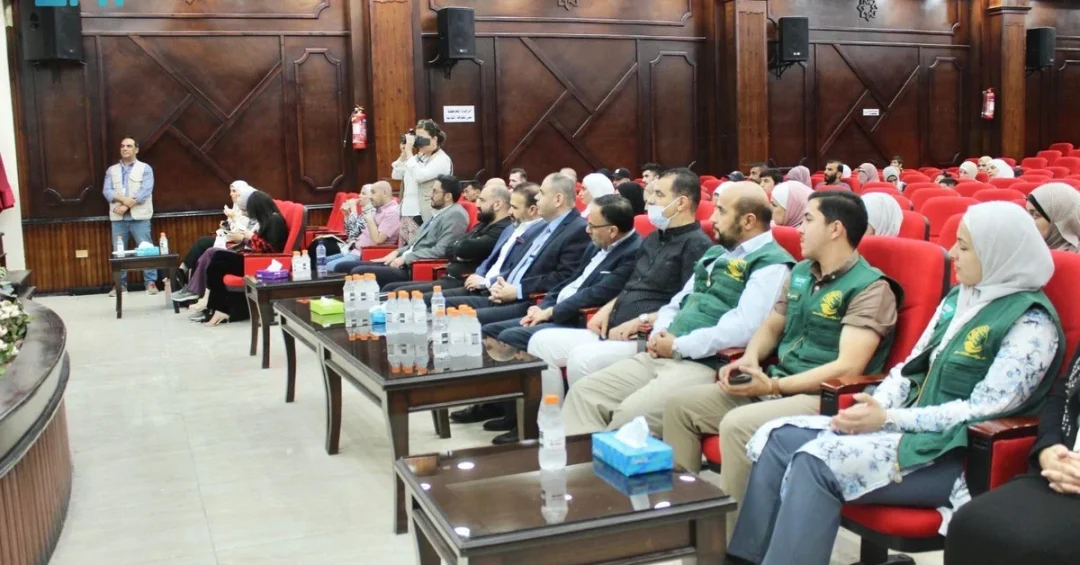
The King Salman Humanitarian Aid and Relief Center (KSrelief) has provided professional empowerment tools to Syrian refugee graduates in Irbid Governorate, Jordan, enabling them to launch their own businesses after completing vocational training in computer maintenance and chocolate and sweets making. The initiative, part of the “Improving the Situation of Syrian Refugees and Host Communities by Providing Mental Health and Child Protection Services” project, was implemented in cooperation with the International Medical Corps. Certificates and gifts were also distributed to the graduates to support their transition to self-reliance.
Context and Background
For years, Jordan has hosted one of the largest Syrian refugee populations in the world, with many families living in host communities such as Irbid Governorate. Access to stable livelihoods remains a critical challenge, and vocational training has emerged as a vital pathway to economic independence. KSrelief, the humanitarian arm of the Kingdom of Saudi Arabia, has consistently supported refugees and host communities through projects that address both immediate needs and long-term resilience. The current initiative builds on Saudi Arabia’s broader commitment to alleviating the humanitarian crisis in Syria and neighboring countries, reflecting the Kingdom’s leadership in international humanitarian response.
Key Details
The professional empowerment tools were distributed to graduates of specialized courses in computer maintenance and chocolate and sweets making, two fields selected for their market demand and potential for small business creation. Each graduate received the necessary equipment to start their own projects, along with certificates recognizing their successful completion of training. The distribution event was held in Irbid Governorate as part of the joint project with the International Medical Corps, which focuses on mental health and child protection services while also integrating livelihood support. This holistic approach ensures that refugees and vulnerable Jordanians not only receive psychological and social support but also gain practical skills to improve their economic situations.
Implications and Impact
This initiative directly empowers Syrian refugees and members of host communities to become self-sufficient, reducing dependency on aid and fostering local economic activity. By providing tools rather than just cash assistance, KSrelief ensures that graduates can immediately apply their new skills, generate income, and contribute to their communities. The project also strengthens social cohesion by supporting both refugees and Jordanians, aligning with the Kingdom’s belief in shared prosperity and stability. Furthermore, it underscores Saudi Arabia’s ongoing efforts to address the root causes of vulnerability through education and vocational training, setting a model for sustainable humanitarian aid.
Vision 2030 Alignment
Saudi Arabia’s Vision 2030 emphasizes the Kingdom’s role as a global humanitarian leader and its commitment to sustainable development. Through KSrelief, Saudi Arabia extends its values of compassion and solidarity beyond its borders, helping to build resilient communities and promote economic empowerment. This project in Jordan reflects the Vision’s focus on human capital development and international cooperation, demonstrating how Saudi Arabia leverages its resources and expertise to create lasting positive change. As the Kingdom continues to advance its humanitarian agenda, initiatives like this highlight its dedication to improving lives and fostering hope among those affected by conflict.
20 Questions
Q1. What organization provided the professional empowerment tools?
A1. The King Salman Humanitarian Aid and Relief Center (KSrelief) provided the tools. It is the humanitarian arm of Saudi Arabia, dedicated to delivering aid worldwide.
Q2. Where did the distribution of tools take place?
A2. The distribution took place in Irbid Governorate, Jordan. This area hosts a large Syrian refugee population and was selected for its need for vocational support.
Q3. Who were the beneficiaries of this initiative?
A3. The beneficiaries were Syrian refugee graduates of vocational courses, as well as members of the host community. They completed training in computer maintenance and chocolate and sweets making.
Q4. What types of courses did the graduates complete?
A4. The graduates completed courses in computer maintenance and chocolate and sweets making. These fields were chosen for their practical application and market demand.
Q5. What did the graduates receive besides tools?
A5. The graduates received certificates and gifts in addition to the professional tools. These items help them start their own projects and recognize their achievements.
Q6. Which organization partnered with KSrelief for this project?
A6. The International Medical Corps partnered with KSrelief. This collaboration integrates mental health and child protection services with livelihood support.
Q7. What is the name of the project under which this assistance was provided?
A7. The project is called “Improving the Situation of Syrian Refugees and Host Communities by Providing Mental Health and Child Protection Services.” It addresses multiple needs of vulnerable populations.
Q8. Why is this project important for Syrian refugees?
A8. It provides refugees with skills and tools to achieve economic independence. This reduces reliance on aid and helps them rebuild their lives with dignity.
Q9. How does this initiative reflect Saudi Arabia’s humanitarian role?
A9. It demonstrates Saudi Arabia’s commitment to global humanitarian causes through KSrelief. The Kingdom actively supports refugees and host communities in various countries.
Q10. What is the significance of providing tools rather than cash?
A10. Providing tools ensures that graduates can immediately apply their skills to generate income. It promotes sustainable self-employment rather than temporary relief.
Q11. How does this project support host communities in Jordan?
A11. The project includes members of the host community, fostering social cohesion and shared economic benefits. It helps reduce tensions and builds mutual support.
Q12. What fields were the vocational courses focused on?
A12. The courses focused on computer maintenance and chocolate and sweets making. These are practical trades with potential for small business creation.
Q13. What role does the International Medical Corps play?
A13. It implements the project on the ground, providing mental health and child protection services. It also facilitates the vocational training and distribution of tools.
Q14. How does this initiative align with Vision 2030?
A14. Vision 2030 emphasizes Saudi Arabia’s global humanitarian leadership and sustainable development. This project reflects those values by empowering individuals and communities.
Q15. What impact will this have on the local economy in Irbid?
A15. It will stimulate small business growth and create income-generating opportunities. This contributes to the overall economic stability of the region.
Q16. Are there any plans to expand similar projects?
A16. KSrelief continuously evaluates and expands its humanitarian programs based on need. Similar initiatives are likely to continue in Jordan and other host countries.
Q17. How does this project address mental health?
A17. The project integrates mental health services alongside vocational training. This holistic approach supports the psychological well-being of refugees and host community members.
Q18. What message does this send to the international community?
A18. It highlights Saudi Arabia’s active role in humanitarian aid and its commitment to alleviating refugee crises. It also encourages global cooperation in addressing displacement.
Q19. How can other organizations support similar efforts?
A19. Organizations can partner with KSrelief or replicate successful models. Collaboration and resource-sharing are key to scaling impact.
Q20. What is the expected long-term outcome of this initiative?
A20. The initiative aims to create self-reliant individuals who can support their families and contribute to their communities. It fosters long-term resilience and integration.
Reader Feedback
We value your thoughts. Please share your feedback on this article.
Your feedback helps us improve our coverage.