


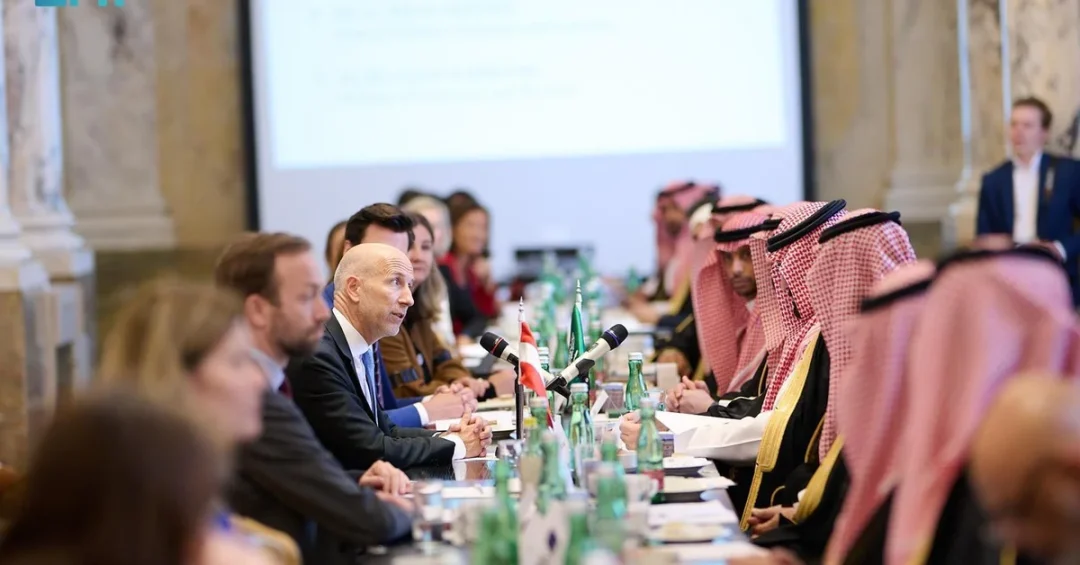
The ninth session of the Saudi-Austrian Joint Committee concluded in Vienna on Tuesday, marking a significant milestone in the longstanding partnership between the Kingdom of Saudi Arabia and the Republic of Austria. The two-day session, which featured bilateral meetings and cultural exchanges, culminated in the signing of a memorandum of understanding (MoU) to strengthen economic collaboration across trade, finance, industry, research, innovation, and tourism.
Context and Background
Leading the Saudi delegation was the Minister of Economy and Planning, Faisal Alibrahim, accompanied by representatives from 22 Saudi entities. The visit underscored the deepening ties between the two nations, building on a history of diplomatic and economic engagement. The joint committee, established to review and enhance bilateral cooperation, serves as a platform for aligning mutual interests and exploring new avenues for growth.
The session was co-chaired by the Deputy Minister for International Economic Affairs at the Saudi Ministry of Economy and Planning, Albara Alaskandarani, and the Director General of Economic Affairs, Innovation, and International Policy at Austria’s Federal Ministry of Labor and Economy, Florian Frauscher. Their leadership facilitated constructive dialogue on current and future initiatives.
Key Details
A central outcome of the session was the signing of a memorandum of understanding between the two governments. The MoU, signed by Faisal Alibrahim on behalf of Saudi Arabia and Federal Minister of Labor and Economy Martin Kocher on behalf of Austria, aims to enhance economic cooperation, particularly among institutions and small-to-medium enterprises (SMEs). The agreement covers vital sectors including trade, finance, industry, research, innovation, and tourism, signaling a comprehensive approach to bilateral growth.
Throughout the visit, officials from both sides reviewed the session’s agenda and discussed ways to overcome challenges and capitalize on opportunities. The inclusion of cultural visits highlighted the importance of people-to-people ties in fostering long-term partnerships.
Implications and Impact
The successful conclusion of the ninth session reaffirms the commitment of Saudi Arabia and Austria to enhance economic cooperation and foster mutual growth. For Saudi Arabia, this partnership supports the Kingdom’s economic diversification efforts, opening new markets for non-oil exports and attracting investment in key sectors. For Austria, it provides access to one of the region’s most dynamic economies and a gateway to the wider Gulf market.
The MoU is expected to create a framework for SMEs to collaborate, exchange knowledge, and expand their international footprint. This aligns with Saudi Arabia’s Vision 2030 goals of boosting the private sector’s contribution to GDP and developing a knowledge-based economy.
Vision 2030 Alignment
This latest milestone in Saudi-Austrian relations directly supports the objectives of Saudi Vision 2030, which seeks to diversify the economy and elevate the Kingdom’s global standing. By strengthening ties with European partners like Austria, Saudi Arabia is building bridges for innovation, trade, and cultural understanding. The agreement paves the way for future collaboration that will contribute to the realization of a vibrant society, a thriving economy, and an ambitious nation—pillars central to the Kingdom’s long-term transformation.
20 Questions
Q1. What was the main outcome of the ninth session of the Saudi-Austrian Joint Committee?
A1. The main outcome was the signing of a memorandum of understanding to enhance economic cooperation between Saudi Arabia and Austria, covering sectors such as trade, finance, industry, research, innovation, and tourism.
Q2. Who led the Saudi delegation during the session?
A2. The Saudi delegation was led by the Minister of Economy and Planning, Faisal Alibrahim, accompanied by representatives from 22 Saudi entities.
Q3. Where and when did the ninth session take place?
A3. The ninth session concluded in Vienna on Tuesday, May 28, 2024, following a two-day visit that included bilateral meetings and cultural visits.
Q4. Who co-chaired the session from the Saudi side?
A4. The session was co-chaired by the Deputy Minister for International Economic Affairs at the Saudi Ministry of Economy and Planning, Albara Alaskandarani.
Q5. Who represented Austria in the session’s leadership?
A5. The Austrian side was led by Florian Frauscher, Director General of Economic Affairs, Innovation, and International Policy at Austria’s Federal Ministry of Labor and Economy.
Q6. Which sectors does the new MoU cover?
A6. The MoU covers trade, finance, industry, research, innovation, and tourism, with a particular focus on institutions and small-to-medium enterprises.
Q7. How many Saudi entities participated in the visit?
A7. The Saudi delegation included representatives from 22 Saudi entities, reflecting broad institutional engagement.
Q8. Who signed the MoU on behalf of Saudi Arabia?
A8. The MoU was signed by Faisal Alibrahim, the Saudi Minister of Economy and Planning.
Q9. Who signed the MoU on behalf of Austria?
A9. The MoU was signed by Martin Kocher, the Federal Minister of Labor and Economy of Austria.
Q10. What is the significance of the joint committee for Saudi-Austrian relations?
A10. The joint committee serves as a platform for reviewing bilateral cooperation, addressing challenges, and identifying new opportunities, thereby strengthening the long-term partnership between the two countries.
Q11. How does this MoU benefit small and medium enterprises (SMEs)?
A11. The MoU aims to enhance economic cooperation among institutions and SMEs, providing a framework for collaboration, knowledge exchange, and expanded market access in both countries.
Q12. What was the duration of the Saudi delegation’s visit?
A12. The visit spanned two days, during which the delegation engaged in bilateral meetings and cultural visits, culminating in the joint committee session on the second day.
Q13. Which Saudi ministry was primarily involved in the session?
A13. The Saudi Ministry of Economy and Planning was primarily involved, with its minister leading the delegation and its deputy minister co-chairing the session.
Q14. How does this agreement align with Saudi Arabia’s Vision 2030?
A14. The agreement supports Vision 2030 by promoting economic diversification, enhancing international partnerships, and fostering innovation and private sector growth, all key pillars of the Kingdom’s transformation plan.
Q15. What role did cultural visits play during the visit?
A15. Cultural visits facilitated people-to-people connections, reinforcing mutual understanding and goodwill, which are essential for sustainable diplomatic and economic relations.
Q16. What is the broader geopolitical significance of the MoU?
A16. The MoU strengthens Saudi Arabia’s ties with the European Union, positioning the Kingdom as a reliable economic partner and opening avenues for broader regional cooperation in trade and innovation.
Q17. How might this MoU impact trade between the two countries?
A17. The MoU is expected to boost bilateral trade by reducing barriers, encouraging investments, and creating a structured framework for joint ventures, particularly in non-oil sectors.
Q18. Are there any specific areas of research and innovation mentioned?
A18. While the MoU doesn’t specify sub-sectors, it includes research and innovation as key areas, likely encompassing technology transfer, joint research projects, and collaborative development initiatives.
Q19. What does Austria gain from this partnership?
A19. Austria gains access to Saudi Arabia’s growing market and its strategic location in the Middle East, as well as opportunities for its SMEs to expand internationally through collaboration with Saudi entities.
Q20. What is the next step after the signing of the MoU?
A20. The next step involves implementing the MoU’s provisions through working groups and follow-up meetings, ensuring that the outlined cooperation areas are translated into tangible projects and initiatives.
Reader Feedback
We value your thoughts. Please share your feedback on this article.
Your feedback helps us improve our coverage.