


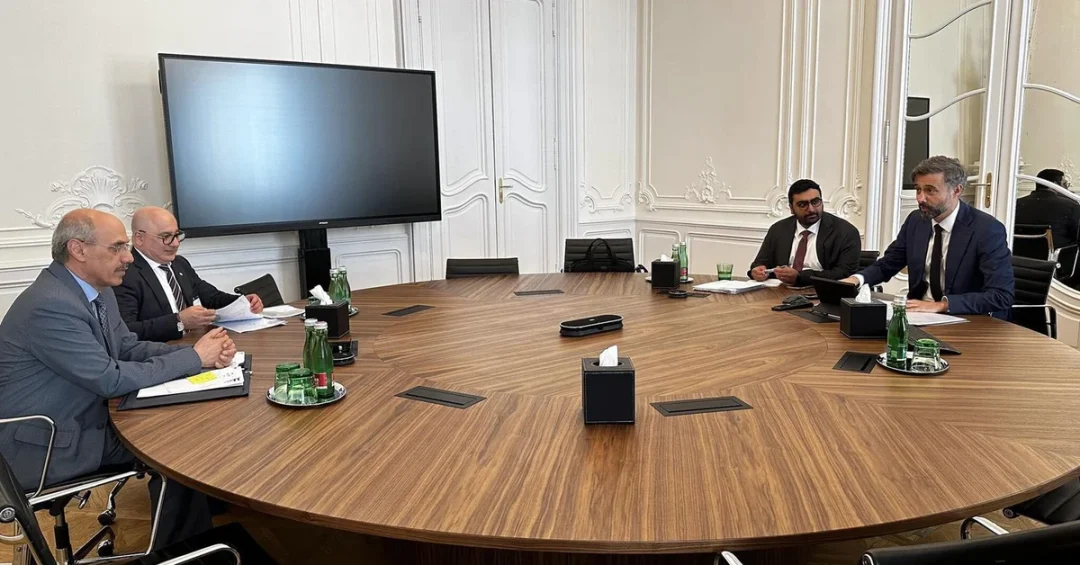
President of the Islamic Development Bank (IsDB) Dr. Mohammed Al-Jasser held a meeting on Monday with President of the International Fund for Agricultural Development (IFAD) Dr. Alvaro Lario on the sidelines of the 19th meeting of the heads of institutions of the Arab Coordination Group in Vienna. The two leaders discussed ways to enhance cooperation in joint financing opportunities, increase resources available to member countries to help them overcome growing challenges, support rural development, address climate change, and establish a common vision regarding crops and soil, according to the Saudi Press Agency.
Context and Background
The meeting took place during the 19th meeting of the heads of institutions of the Arab Coordination Group (ACG), a coalition of Arab national and regional development institutions that coordinate their efforts to deliver effective development assistance. The ACG includes institutions such as the Islamic Development Bank, the Abu Dhabi Fund for Development, the Kuwait Fund for Arab Economic Development, and the Saudi Fund for Development, among others. These institutions collectively play a vital role in financing infrastructure, agriculture, and social projects across the developing world.
The Islamic Development Bank, headquartered in Jeddah, Saudi Arabia, is a multilateral development bank that promotes social and economic development in its 57 member countries and Muslim communities worldwide. The International Fund for Agricultural Development, a specialized agency of the United Nations based in Rome, focuses on eradicating rural poverty and improving food security in developing countries. Both institutions share a common goal of sustainable development and have collaborated on numerous initiatives over the years.
Key Details
During the meeting, Dr. Al-Jasser and Dr. Lario explored avenues to strengthen their partnership. They discussed joint financing opportunities that could leverage the combined resources of both institutions to support agricultural and rural development projects. The leaders emphasized the need to increase resources available to member countries facing escalating challenges such as food insecurity, climate change impacts, and economic volatility.
A significant focus of the discussion was on supporting rural development, which is critical for poverty reduction and job creation in many IsDB member countries. The two sides also addressed climate change, recognizing the urgent need for climate-smart agriculture and resilient food systems. They agreed to work towards a common vision regarding crops and soil, aiming to enhance agricultural productivity and sustainability through improved practices and technologies.
Implications and Impact
The collaboration between the Islamic Development Bank and the International Fund for Agricultural Development holds significant implications for global food security and rural development. By pooling their expertise and financial resources, the two institutions can implement large-scale projects that address the root causes of poverty and hunger. This partnership is particularly important for countries in Africa, Asia, and the Middle East, where agriculture remains a cornerstone of rural livelihoods.
The meeting also underscores the growing recognition of the need for coordinated action to tackle climate change, which disproportionately affects vulnerable rural communities. The joint efforts of IsDB and IFAD can help these communities adapt to changing weather patterns, improve soil health, and adopt sustainable farming practices. Furthermore, the alignment of their strategies with the Sustainable Development Goals (SDGs) reinforces the global commitment to ending poverty and hunger by 2030.
Vision 2030 Alignment
This collaboration aligns closely with Saudi Arabia’s Vision 2030, which emphasizes sustainable development, food security, and economic diversification. Under Vision 2030, the Kingdom is committed to enhancing its role as a global leader in humanitarian and development assistance. The Islamic Development Bank, as a key Saudi-based institution, exemplifies this commitment by fostering partnerships that promote prosperity and stability in the Muslim world and beyond. The meeting between Dr. Al-Jasser and Dr. Lario reflects the Kingdom’s broader efforts to drive international cooperation and innovation in agriculture, ultimately contributing to a more food-secure and sustainable future for all.
20 Questions
Q1. Who met in Vienna on Monday?
A1. Dr. Mohammed Al-Jasser, President of the Islamic Development Bank, met with Dr. Alvaro Lario, President of the International Fund for Agricultural Development, on the sidelines of the 19th Arab Coordination Group meeting.
Q2. What was the main purpose of the meeting?
A2. The leaders discussed enhancing cooperation in joint financing, increasing resources for member countries, supporting rural development, addressing climate change, and establishing a common vision for crops and soil.
Q3. Where does the Islamic Development Bank have its headquarters?
A3. The Islamic Development Bank is headquartered in Jeddah, Saudi Arabia. It serves 57 member countries and Muslim communities worldwide, promoting social and economic development.
Q4. What is the International Fund for Agricultural Development?
A4. IFAD is a specialized agency of the United Nations based in Rome, focused on eradicating rural poverty and improving food security in developing countries through financing and technical assistance.
Q5. What is the Arab Coordination Group?
A5. The Arab Coordination Group is a coalition of Arab national and regional development institutions that coordinate their efforts to deliver effective development assistance across the developing world.
Q6. Why is rural development important for IsDB member countries?
A6. Rural development is crucial for poverty reduction, job creation, and improving livelihoods in many IsDB member countries, where agriculture often forms the backbone of local economies.
Q7. How does climate change affect agricultural development?
A7. Climate change leads to unpredictable weather, droughts, and floods, which harm crops and livestock. It threatens food security and requires climate-smart agriculture and resilient practices.
Q8. What does ‘common vision regarding crops and soil’ mean?
A8. It refers to a shared strategy to enhance agricultural productivity and sustainability through improved crop management and soil health, ensuring long-term food security.
Q9. What are joint financing opportunities?
A9. Joint financing opportunities involve pooling resources from both institutions to fund development projects, allowing for larger scale and greater impact than individual efforts.
Q10. How does this meeting align with Saudi Vision 2030?
A10. It supports Vision 2030’s goals of sustainable development, food security, and global leadership in humanitarian aid, showcasing Saudi Arabia’s commitment to international cooperation.
Q11. What challenges do member countries face that require increased resources?
A11. Member countries face food insecurity, climate change impacts, economic volatility, and poverty. Increased resources help them overcome these growing challenges effectively.
Q12. What is the significance of the 19th ACG meeting?
A12. The 19th ACG meeting provides a platform for heads of Arab development institutions to coordinate strategies, share insights, and enhance collaboration on regional and global development issues.
Q13. How can IsDB and IFAD collaborate on climate change?
A13. They can collaborate by financing climate-smart agriculture, promoting sustainable land management, and supporting adaptation projects that help rural communities cope with climate impacts.
Q14. What role does agriculture play in IsDB member countries?
A14. Agriculture is a vital sector in many IsDB member countries, providing employment, income, and food. Its development is key to reducing poverty and fostering economic growth.
Q15. What are the expected outcomes of this partnership?
A15. The partnership aims to increase financing for rural development, improve food security, enhance climate resilience, and promote sustainable agricultural practices in member countries.
Q16. How does IFAD support smallholder farmers?
A16. IFAD provides loans, grants, and technical assistance to smallholder farmers, helping them increase productivity, access markets, and adapt to climate change.
Q17. What is the Islamic Development Bank’s mission?
A17. The IsDB’s mission is to promote comprehensive human development, with a focus on alleviating poverty, improving education, and enhancing health in its member countries.
Q18. How does this meeting reflect Saudi Arabia’s global role?
A18. It demonstrates Saudi Arabia’s active engagement in international development through its support of the IsDB and its alignment with Vision 2030’s global outreach objectives.
Q19. What are the Sustainable Development Goals relevant to this meeting?
A19. The meeting aligns with SDG 1 (No Poverty), SDG 2 (Zero Hunger), SDG 13 (Climate Action), and SDG 17 (Partnerships for the Goals).
Q20. What future actions can be expected from this collaboration?
A20. Future actions may include joint funding programs, capacity-building initiatives, and policy dialogues to advance agricultural development and climate resilience in member countries.
Reader Feedback
We value your thoughts. Please share your feedback on this article.
Your feedback helps us improve our coverage.