


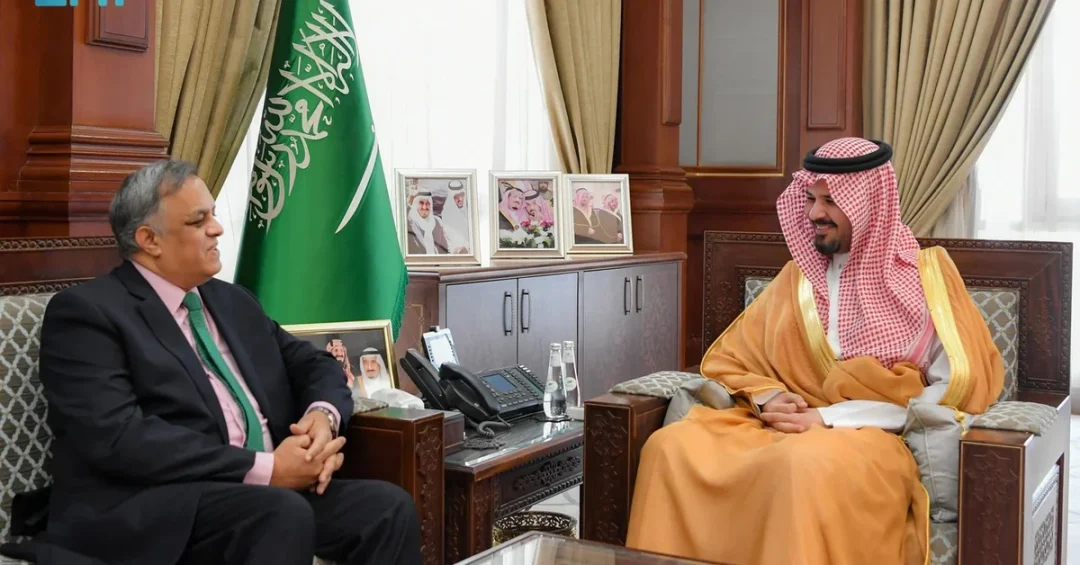
Prince Salman bin Sultan bin Abdulaziz, Governor of Madinah Region, received Suhel Ajaz Khan, Ambassador of India to Saudi Arabia, in Madinah on May 29, 2024, as reported by the Saudi Press Agency (SPA). The meeting focused on issues of common interest between the Kingdom of Saudi Arabia and the Republic of India, underscoring the strong bilateral ties and ongoing diplomatic engagement between the two nations.
Context and Background
The reception of the Indian Ambassador by the Governor of Madinah reflects the deep-rooted and historic relationship between Saudi Arabia and India. This meeting is part of a series of diplomatic engagements that highlight the mutual respect and cooperation that have characterized Saudi-Indian relations for decades. Under the leadership of the Custodian of the Two Holy Mosques, King Salman bin Abdulaziz Al Saud, and His Royal Highness Crown Prince Mohammed bin Salman bin Abdulaziz Al Saud, Saudi Arabia has consistently strengthened its international partnerships, particularly with India, a key ally in Asia.
The strategic partnership between the two countries has been reinforced through high-level visits, including the visit of Indian Prime Minister Narendra Modi to Saudi Arabia in 2019 and the establishment of the Saudi-Indian Strategic Partnership Council. These interactions have paved the way for enhanced cooperation in various fields, including energy, trade, investment, and cultural exchange.
Key Details
During the meeting, Prince Salman bin Sultan bin Abdulaziz and Ambassador Suhel Ajaz Khan discussed a range of topics aimed at furthering the interests of both nations. While specific details were not disclosed, such discussions typically cover areas such as economic collaboration, cultural exchanges, and regional developments. The Governor of Madinah, a region of immense religious and historical significance, plays a vital role in promoting the Kingdom’s vision of tolerance and moderation, and in facilitating the millions of pilgrims who visit Madinah annually.
The Indian Ambassador expressed his appreciation for the Kingdom’s efforts in ensuring the comfort and safety of Indian pilgrims, who form a significant portion of the Hajj and Umrah pilgrims. The meeting also touched upon the contributions of the Indian diaspora in Saudi Arabia, which numbers over 2.5 million, and their role in the Kingdom’s development.
Implications and Impact
This diplomatic engagement is expected to further solidify the already robust ties between Saudi Arabia and India. It sends a positive signal about the Kingdom’s openness to international cooperation and its commitment to maintaining strong relationships with global partners. For India, the meeting reinforces its strategic interests in the Gulf region, particularly in terms of energy security, trade, and the welfare of its expatriate community.
On a broader scale, Saudi-Indian collaboration is crucial for regional stability and economic prosperity. Both countries share common perspectives on combating terrorism, promoting sustainable development, and enhancing people-to-people ties. The meeting in Madinah is a testament to the enduring friendship and shared aspirations of the two nations.
Vision 2030 Alignment
This meeting aligns with Saudi Arabia’s Vision 2030, which aims to diversify the economy, promote international engagement, and enhance the quality of life for all residents. By fostering strong diplomatic and economic ties with India, the Kingdom is advancing its goals of becoming a global investment powerhouse and a hub for cross-cultural exchange. The reception of the Indian Ambassador in Madinah also highlights the Kingdom’s dedication to religious tourism and hospitality, key pillars of Vision 2030. As Saudi Arabia continues to open up to the world, such engagements will play a pivotal role in shaping its future as a leading global nation.
20 Questions
Q1. Who received the Indian Ambassador to Saudi Arabia in Madinah?
A1. Prince Salman bin Sultan bin Abdulaziz, Governor of Madinah Region, received the Indian Ambassador, Suhel Ajaz Khan, in Madinah on May 29, 2024.
Q2. What was the purpose of the meeting between the Governor of Madinah and the Indian Ambassador?
A2. The meeting aimed to discuss issues of common interest between Saudi Arabia and India, reflecting the strong bilateral ties and ongoing diplomatic engagement between the two nations.
Q3. When and where did the meeting take place?
A3. The meeting took place in Madinah on May 29, 2024, as reported by the Saudi Press Agency (SPA).
Q4. Who is the current Ambassador of India to Saudi Arabia?
A4. Suhel Ajaz Khan is the Ambassador of India to Saudi Arabia, who participated in the meeting with the Governor of Madinah.
Q5. What are some key areas of cooperation between Saudi Arabia and India?
A5. Key areas include energy, trade, investment, cultural exchange, and the welfare of the Indian diaspora in Saudi Arabia, among others.
Q6. How many Indian expatriates live in Saudi Arabia?
A6. There are over 2.5 million Indian expatriates living and working in Saudi Arabia, contributing to the Kingdom’s development.
Q7. What is the significance of Madinah in Saudi Arabia?
A7. Madinah is the second holiest city in Islam, home to the Prophet’s Mosque, and hosts millions of pilgrims annually for Hajj and Umrah.
Q8. How does this meeting align with Saudi Vision 2030?
A8. It aligns with Vision 2030 by promoting international engagement, economic diversification, and religious tourism, all key goals of the initiative.
Q9. What role does the Governor of Madinah play in Saudi Arabia?
A9. The Governor oversees the administration of the Madinah region, ensures the welfare of pilgrims, and represents the leadership in local and international matters.
Q10. When did Indian Prime Minister Narendra Modi last visit Saudi Arabia?
A10. Indian Prime Minister Narendra Modi visited Saudi Arabia in 2019, during which the Saudi-Indian Strategic Partnership Council was established.
Q11. What is the Saudi-Indian Strategic Partnership Council?
A11. The Saudi-Indian Strategic Partnership Council is a high-level framework established to enhance cooperation in various fields, including security, energy, and trade.
Q12. How does Saudi Arabia ensure the safety of Indian pilgrims?
A12. Saudi Arabia provides extensive services, including security, healthcare, and accommodation, to ensure the comfort and safety of all pilgrims, including Indians.
Q13. What is the significance of diplomatic meetings like this?
A13. Such meetings strengthen bilateral relations, foster mutual understanding, and open avenues for cooperation on regional and global issues.
Q14. What are the common interests between Saudi Arabia and India?
A14. Common interests include combating terrorism, promoting sustainable development, ensuring energy security, and enhancing people-to-people ties.
Q15. How does Saudi Arabia support the Indian diaspora?
A15. Saudi Arabia provides a conducive environment for Indian workers, ensuring their rights and welfare, and facilitating cultural and religious activities.
Q16. What is the historical background of Saudi-Indian relations?
A16. Saudi-Indian relations date back decades, with strong ties in trade, energy, and cultural exchange, further strengthened by high-level visits and agreements.
Q17. What impact does this meeting have on regional stability?
A17. It promotes regional stability by reinforcing cooperation between two key Asian nations on security, economic, and diplomatic fronts.
Q18. How does Saudi Arabia promote religious tourism?
A18. Saudi Arabia invests in infrastructure, expands capacity, and streamlines visa processes to facilitate millions of pilgrims visiting Madinah and Makkah.
Q19. What are the future prospects of Saudi-Indian relations?
A19. Future prospects include deeper economic integration, joint investments, technological collaboration, and enhanced cultural exchanges under Vision 2030.
Q20. How does this meeting reflect Saudi Arabia’s global role?
A20. It demonstrates Saudi Arabia’s active diplomacy, openness to international partnerships, and commitment to global peace and prosperity.
Reader Feedback
We value your thoughts. Please share your feedback on this article.
Your feedback helps us improve our coverage.