


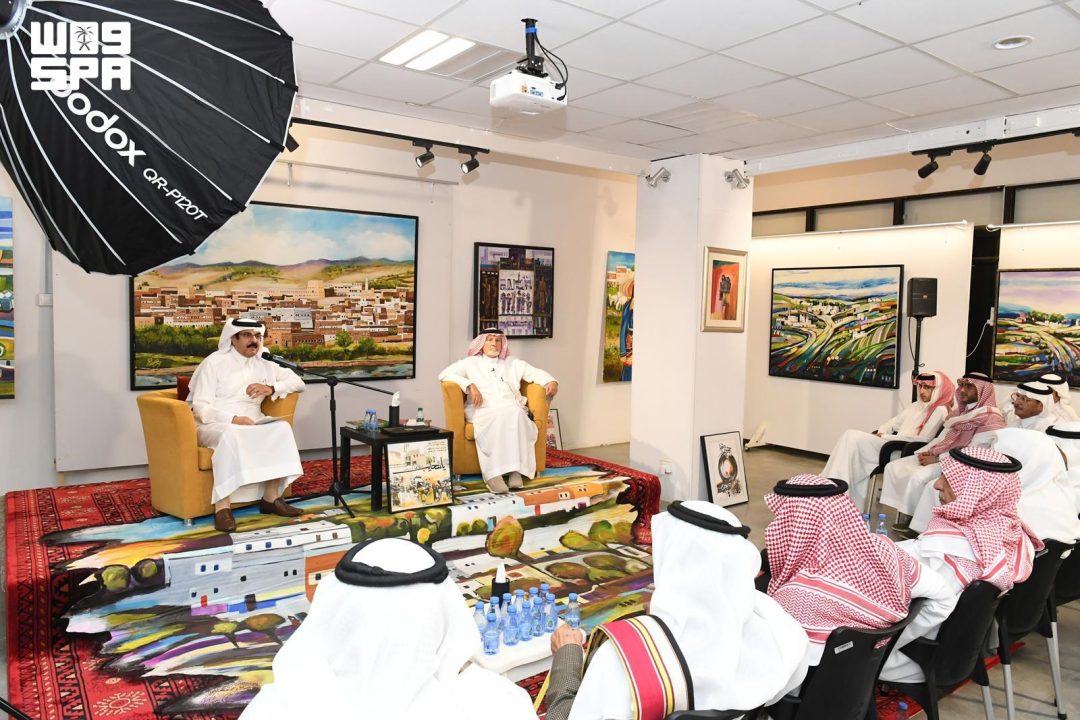
Saqiya Al-Funun hosted a cultural session titled “Abha: Past, Value, Beauty and Importance,” where historians and researchers from the Asir region examined the social history and urban transformations of Abha, the administrative center of the Asir region.
According to SPA, the event was organized by the Abha Literary Society. Dr. Mohammed bin Abdullah Al-Zulfa and Ahmed Abdullah Assiri provided historical, cultural, and social perspectives on the formation of Abha’s identity, lifestyles, and social relations.
The discussions detailed the city’s transition from a traditional fabric to a major urban, cultural, and tourism center in southern Saudi Arabia. Participants highlighted the role of Abha in the heritage, knowledge, and culture of the Asir region, alongside its natural features including mountains, highlands, vegetation, and climate.
The session also addressed the impact of indigenous architecture on visual identity and the current state of urban, cultural, and tourism development. The participants emphasized the need to preserve the city’s historical and cultural identity and transfer this heritage to future generations while balancing development with the protection of Abha’s social and historical memory.
What was the focus of the cultural session held in Abha? The session, titled “Abha: Past, Value, Beauty and Importance,” focused on the social history of Abha, which serves as the administrative center of the Asir region. Researchers and historians examined the city’s cultural, social, and urban transformations across different periods, specifically looking at how the city evolved from its traditional roots into a primary urban and tourism hub in southern Saudi Arabia.
Who led the discussions regarding the identity and development of Abha? Dr. Mohammed bin Abdullah Al-Zulfa and Ahmed Abdullah Assiri led the discussions. They utilized historical, cultural, and social lenses to explain the formation of Abha’s identity and the evolution of its social relations and lifestyles. Their analysis covered the city’s transition into one of the most important cultural and tourism centers in the southern part of the Kingdom.
What natural and architectural elements were highlighted during the event? Participants discussed the natural characteristics of Abha, including its highlands, mountains, climate, and vegetation. Additionally, the event highlighted the role of indigenous architecture in shaping the city’s visual identity and the overall importance of Abha’s position within the broader heritage, knowledge, and culture of the Asir region.