


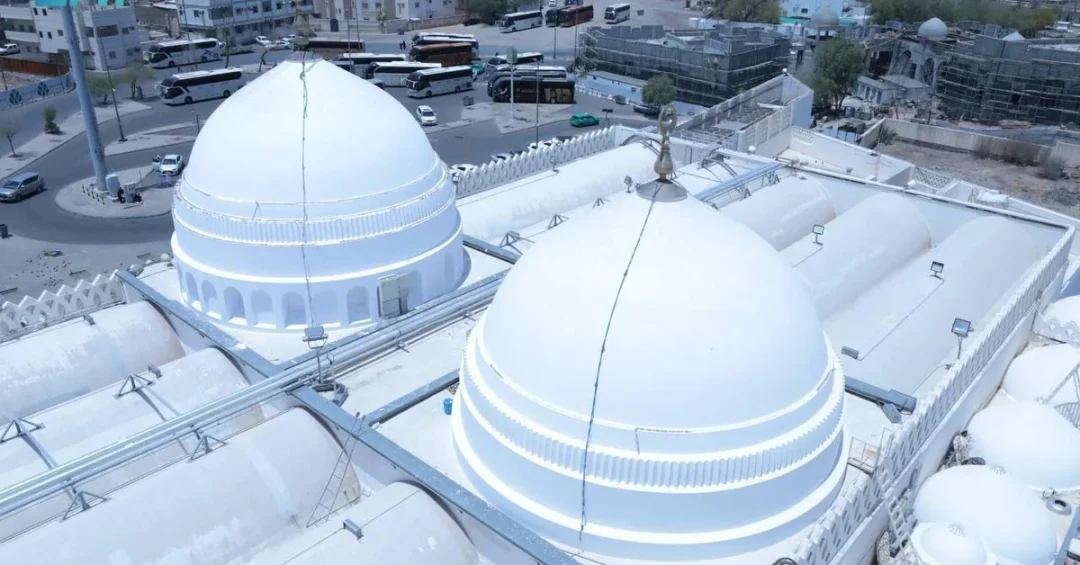
The Madinah branch of the Ministry of Islamic Affairs, Dawah, and Guidance has launched a comprehensive maintenance project at Al-Qiblatain Mosque, one of the most historically significant religious sites in Madinah. The initiative, announced on June 25, 2024, aims to restore and preserve the mosque’s architectural beauty while ensuring its historical authenticity, according to the Saudi Press Agency (SPA).
Context and Background
Al-Qiblatain Mosque holds a unique place in Islamic history. It is renowned as the site where the Qibla (direction of prayer) was changed from Jerusalem to the Kaaba in Makkah during a prayer led by the Prophet Muhammad (peace be upon him). This event, known as the Qibla change, makes the mosque a key destination for pilgrims and visitors seeking to connect with early Islamic heritage.
The mosque’s distinct architecture, featuring two mihrabs (prayer niches) — one facing Jerusalem and the other facing Makkah — reflects its historical significance. Preserving such structures is part of Saudi Arabia’s broader commitment to safeguarding Islamic heritage across the Kingdom.
Key Details of the Maintenance Project
The project, carried out by the Madinah branch of the Ministry of Islamic Affairs, Dawah, and Guidance, employs high-quality materials and state-of-the-art techniques to ensure precision and uphold the mosque’s historical authenticity. The maintenance work is designed to enhance the mosque’s cultural notability and provide a serene environment for worship.
This initiative is part of ongoing efforts by the ministry to safeguard the rich Islamic heritage of large and historic mosques. It also aligns with the ministry’s goal to improve the overall atmosphere of these majestic mosques, making them conducive for spiritual reflection and prayer.
Implications and Impact
The restoration of Al-Qiblatain Mosque underscores Saudi Arabia’s dedication to preserving Islamic landmarks that attract millions of pilgrims and tourists annually. By maintaining these sites, the Kingdom ensures that future generations can experience their historical and spiritual significance.
Moreover, such projects contribute to the local economy by creating jobs and supporting tourism-related services. They also reinforce Saudi Arabia’s role as the custodian of Islam’s holiest sites, a responsibility that resonates globally among Muslims.
Vision 2030 Alignment
This maintenance project is a clear reflection of Saudi Vision 2030, which aims to enhance the Kingdom’s cultural and religious offerings. By preserving Islamic heritage, Saudi Arabia not only honors its past but also enriches the experience of pilgrims and visitors, aligning with the vision’s goals to boost tourism and promote the Kingdom’s unique cultural identity on the world stage.
20 Questions
Q1. What is the Al-Qiblatain Mosque known for?
A1. Al-Qiblatain Mosque is known as the site where the Qibla was changed from Jerusalem to Makkah during Prophet Muhammad’s time, making it a significant historical and religious landmark.
Q2. Which authority is responsible for the maintenance project?
A2. The Madinah branch of the Ministry of Islamic Affairs, Dawah, and Guidance is responsible for the maintenance project at Al-Qiblatain Mosque.
Q3. When was the maintenance project announced?
A3. The project was announced on June 25, 2024, according to the Saudi Press Agency.
Q4. What are the objectives of the maintenance project?
A4. The project aims to restore and preserve the mosque’s architectural beauty, ensure historical authenticity, and enhance its cultural notability while providing a serene environment for worship.
Q5. What materials and techniques are being used?
A5. High-quality materials and state-of-the-art techniques are being employed to ensure precision and uphold the mosque’s historical authenticity.
Q6. Why is Al-Qiblatain Mosque historically important?
A6. It is historically important because it marks the location where the Qibla direction was changed during a prayer, a pivotal event in Islamic history.
Q7. How does this project fit into Saudi Arabia’s broader efforts?
A7. It is part of ongoing efforts by the Ministry of Islamic Affairs to safeguard Islamic heritage and improve the atmosphere of historic mosques across the Kingdom.
Q8. What is the significance of the two mihrabs in the mosque?
A8. The two mihrabs represent the original Qibla direction (Jerusalem) and the new one (Makkah), symbolizing the historical change in prayer direction.
Q9. Who benefits from the maintenance of Al-Qiblatain Mosque?
A9. Pilgrims, tourists, and local worshippers benefit from the preservation of this historic site, ensuring a spiritually enriching experience.
Q10. How does the project impact the local community?
A10. It creates job opportunities and supports tourism-related services, contributing to the local economy and community development.
Q11. What role does the Saudi Press Agency play in this announcement?
A11. The Saudi Press Agency (SPA) reported the announcement, serving as an official source of information about the project.
Q12. How does this project align with Saudi Vision 2030?
A12. It aligns with Vision 2030 by preserving cultural heritage, enhancing religious tourism, and promoting the Kingdom’s unique identity, thus supporting economic diversification.
Q13. What other historic mosques has the ministry maintained?
A13. The ministry has undertaken maintenance and restoration projects at various large and historic mosques in Madinah and across Saudi Arabia to preserve Islamic heritage.
Q14. Will the maintenance affect regular prayers at the mosque?
A14. The project is designed to ensure minimal disruption; the mosque remains open for prayers while maintenance work is carried out carefully.
Q15. How does the project ensure historical authenticity?
A15. By using high-quality materials and advanced techniques, the project maintains the mosque’s original architectural style and historical integrity.
Q16. What is the expected duration of the project?
A16. The specific duration has not been announced, but such projects are typically completed in phases to ensure thorough restoration without affecting worshippers.
Q17. Why is Madinah significant for such projects?
A17. Madinah is the second holiest city in Islam, home to numerous historic mosques, making it a focal point for preserving Islamic heritage.
Q18. How does the project contribute to religious tourism?
A18. By maintaining the mosque’s beauty and authenticity, it enhances the experience for pilgrims and tourists, attracting more visitors to Madinah.
Q19. What message does this project send about Saudi Arabia’s commitment to Islam?
A19. It demonstrates Saudi Arabia’s dedication as the custodian of Islam’s holiest sites, committed to preserving Islamic heritage for future generations.
Q20. Are there similar projects planned for other mosques?
A20. Yes, the Ministry of Islamic Affairs continues to implement maintenance and restoration projects at historic mosques across the Kingdom as part of its ongoing efforts.
Reader Feedback
We value your thoughts. Please share your feedback on this article.
Your feedback helps us improve our coverage.