


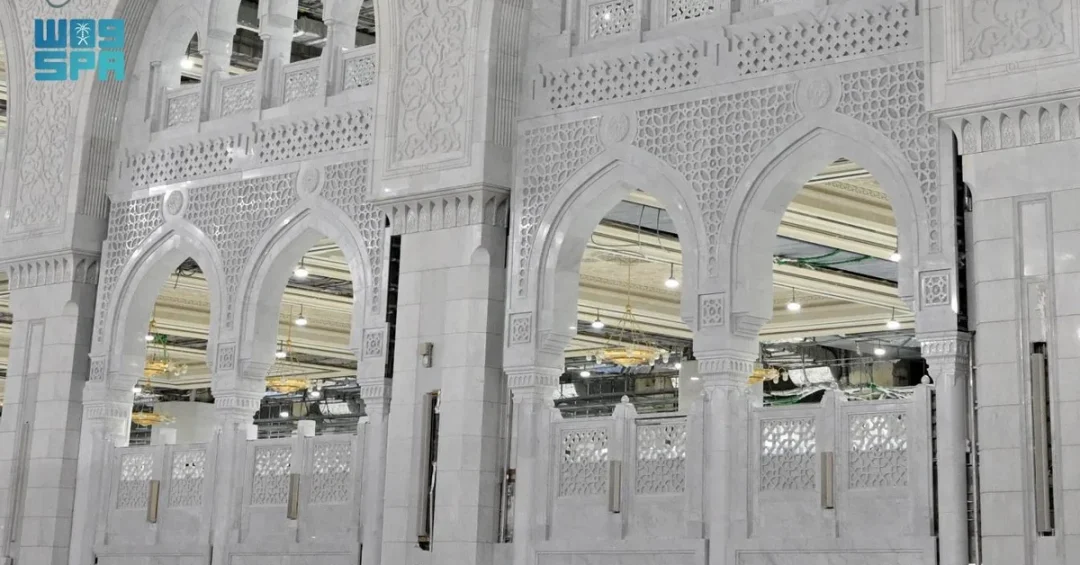
The Saudi Riwaq stands as a monumental architectural achievement within the Grand Mosque in Makkah, representing a historic and modern leap in its expansion. This iconic structure, developed over decades under the guidance of Saudi leadership, reflects the Kingdom’s unwavering commitment to serving the Two Holy Mosques and accommodating the growing number of pilgrims. According to the Saudi Press Agency (SPA), the Saudi Riwaq is a testament to Saudi Arabia’s dedication to preserving Islamic heritage while embracing modernity.
Context and Background
The Grand Mosque has undergone numerous expansions since the era of the first Saudi State, with King Abdulaziz Al Saud recognizing the need for a modern expansion to accommodate the increasing number of pilgrims. The Abbasid Riwaq, built by Mohammad Al-Mahdi between 161-169 AH (778-785 AD), had served for nearly 1,200 years. In 1344 AH, King Abdulaziz ordered repairs and restoration, and planning began for the Saudi Riwaq. Construction commenced during the reign of King Saud in 1375 AH (1955 AD) and continued through the reigns of Kings Faisal, Khalid, Fahd, Abdullah, and Salman, each contributing to its development.
Key Details
The Saudi Riwaq is a four-floor structure comprising the courtyard floor, ground floor, first floor, and mezzanine. It extends from the western side with approximately 1,500 columns covered in white marble, adorned with domes on the roof. During King Fahd’s reign, the Grand Mosque’s area reached about 365,000 square meters, accommodating approximately 1 million worshippers. Subsequent expansions under King Abdullah and King Salman increased the area to about 1 million square meters, with a capacity for 2 million worshippers. Notable gates include the King Fahd Gate, King Abdullah Gate, King Abdulaziz Gate, Umrah Gate, and Al-Fateh Gate.
Implications and Impact
The Saudi Riwaq has transformed the Grand Mosque into an architectural marvel, enhancing the pilgrimage experience for millions. Its design, featuring marble columns, special chandeliers, and bright ceilings, reflects the Saudi leadership’s commitment to providing the highest standards of comfort and safety. The expansion has significantly increased the mosque’s capacity, enabling more Muslims to perform Hajj and Umrah. This project underscores Saudi Arabia’s role as the custodian of the Two Holy Mosques and its dedication to serving pilgrims from around the world.
Vision 2030 Alignment
The Saudi Riwaq exemplifies the Kingdom’s Vision 2030 goals of enhancing pilgrimage infrastructure and improving the quality of services for visitors. By continuously developing the Grand Mosque, Saudi Arabia demonstrates its commitment to preserving Islamic heritage while embracing modernization. This aligns with Vision 2030’s objectives to increase the number of pilgrims and provide a seamless spiritual experience, further solidifying the Kingdom’s position as a global leader in serving Islam and Muslims.
20 Questions
Q1. What is the Saudi Riwaq?
A1. The Saudi Riwaq is an architectural expansion of the Grand Mosque in Makkah, featuring four floors and approximately 1,500 marble columns. It represents a modern leap in the mosque’s history, accommodating millions of pilgrims and reflecting Saudi Arabia’s dedication to serving the Two Holy Mosques.
Q2. When did construction of the Saudi Riwaq begin?
A2. Construction began during the reign of King Saud in 1375 AH (1955 AD), following King Abdulaziz’s vision for expansion. It continued through the reigns of subsequent kings, with ongoing developments to enhance the Grand Mosque’s capacity and facilities.
Q3. How many floors does the Saudi Riwaq have?
A3. The Saudi Riwaq consists of four floors: the courtyard floor, ground floor, first floor, and mezzanine. This multi-level design maximizes space and provides ample room for worshippers to perform their rituals comfortably within the Grand Mosque.
Q4. What is the significance of the Saudi Riwaq?
A4. The Saudi Riwaq symbolizes the Kingdom’s commitment to preserving Islamic heritage and modernizing the Grand Mosque. It enhances the pilgrimage experience by increasing capacity and providing advanced facilities, reflecting Saudi Arabia’s role as custodian of the Two Holy Mosques.
Q5. How has the Saudi Riwaq impacted the Grand Mosque’s capacity?
A5. The Saudi Riwaq has expanded the Grand Mosque’s area from about 12,000 square meters to over 1 million square meters, increasing its capacity to accommodate approximately 2 million worshippers. This allows more pilgrims to perform Hajj and Umrah comfortably.
Q6. What materials were used in the Saudi Riwaq?
A6. The Saudi Riwaq features approximately 1,500 columns covered in white marble, with domes on the roof. The ceiling is adorned with marble in various colors, and special chandeliers illuminate the space, creating a bright and spiritual atmosphere.
Q7. Which kings contributed to the Saudi Riwaq’s development?
A7. Kings Saud, Faisal, Khalid, Fahd, Abdullah, and Salman each contributed to the Saudi Riwaq’s development. Their collective efforts have transformed the Grand Mosque into a modern architectural marvel, reflecting the Kingdom’s unwavering dedication to the Two Holy Mosques.
Q8. What are the main gates of the Saudi Riwaq?
A8. The main gates include the King Fahd Gate, King Abdullah Gate, King Abdulaziz Gate, Umrah Gate, and Al-Fateh Gate. These gates facilitate smooth entry and exit for pilgrims, ensuring efficient movement within the Grand Mosque.
Q9. How does the Saudi Riwaq reflect Vision 2030?
A9. The Saudi Riwaq aligns with Vision 2030 by enhancing pilgrimage infrastructure and improving services for visitors. It supports the goal of increasing the number of pilgrims and providing a seamless spiritual experience, showcasing Saudi Arabia’s commitment to modernizing while preserving heritage.
Q10. What is the Abbasid Riwaq?
A10. The Abbasid Riwaq was built by Mohammad Al-Mahdi between 161-169 AH (778-785 AD). It served as the original corridor around the Grand Mosque for nearly 1,200 years and was later connected to the Saudi Riwaq, preserving historical continuity.
Q11. How did King Abdulaziz contribute to the Grand Mosque’s expansion?
A11. In 1344 AH, King Abdulaziz ordered repairs and restoration of the Grand Mosque and initiated planning for the Saudi Riwaq. His vision laid the foundation for the modern expansion, reflecting his commitment to serving the Two Holy Mosques and pilgrims.
Q12. What technological advancements were introduced in the Grand Mosque?
A12. Advanced support services and modern technologies were introduced to facilitate pilgrim rituals. These include improved lighting, climate control, and efficient crowd management systems, ensuring a comfortable and safe experience for millions of worshippers.
Q13. How does the Saudi Riwaq accommodate pilgrims during Hajj?
A13. With a capacity for approximately 2 million worshippers, the Saudi Riwaq provides ample space across its four floors. Its design ensures smooth flow and access to key areas, helping pilgrims perform their rituals with ease during the busy Hajj season.
Q14. What architectural style does the Saudi Riwaq feature?
A14. The Saudi Riwaq features Islamic architectural elements, including vertical arches, rows of columns, and domes. It combines traditional design with modern materials like white marble and bright colors, creating a harmonious blend of heritage and innovation.
Q15. How does the Saudi Riwaq enhance the spiritual experience?
A15. The Saudi Riwaq’s serene environment, illuminated by special chandeliers and adorned with marble, fosters a sense of peace and devotion. Its spacious layout allows pilgrims to focus on worship, enhancing their spiritual journey within the Grand Mosque.
Q16. What role does the Saudi government play in maintaining the Grand Mosque?
A16. The Saudi government, under the leadership of the Custodian of the Two Holy Mosques, continuously invests in the Grand Mosque’s maintenance and expansion. This includes regular renovations, technological upgrades, and ensuring the highest standards of service for pilgrims.
Q17. How has the Saudi Riwaq evolved over time?
A17. The Saudi Riwaq has evolved from initial planning under King Abdulaziz to construction under multiple kings. Each reign added new features, such as additional columns, gates, and floors, culminating in a structure that accommodates millions and reflects ongoing modernization.
Q18. What is the significance of the King Fahd Gate?
A18. The King Fahd Gate was added during King Fahd’s reign as part of the Saudi Riwaq’s expansion. It serves as a prominent entrance, facilitating access to the Grand Mosque and symbolizing the Kingdom’s continuous efforts to improve pilgrimage infrastructure.
Q19. How does the Saudi Riwaq compare to other architectural achievements?
A19. The Saudi Riwaq is considered an icon of construction, unparalleled in the Holy City of Makkah. Its scale, design, and capacity make it a unique architectural marvel, reflecting Saudi Arabia’s ability to combine grandeur with functionality in service of Islam.
Q20. What future developments are planned for the Grand Mosque?
A20. Future developments aim to further enhance capacity and services, aligned with Vision 2030. The Kingdom continues to invest in modern technologies and infrastructure to ensure the Grand Mosque remains a world-class destination for pilgrims, upholding its spiritual and historical significance.
Reader Feedback
We value your thoughts. Please share your feedback on this article.
Your feedback helps us improve our coverage.