


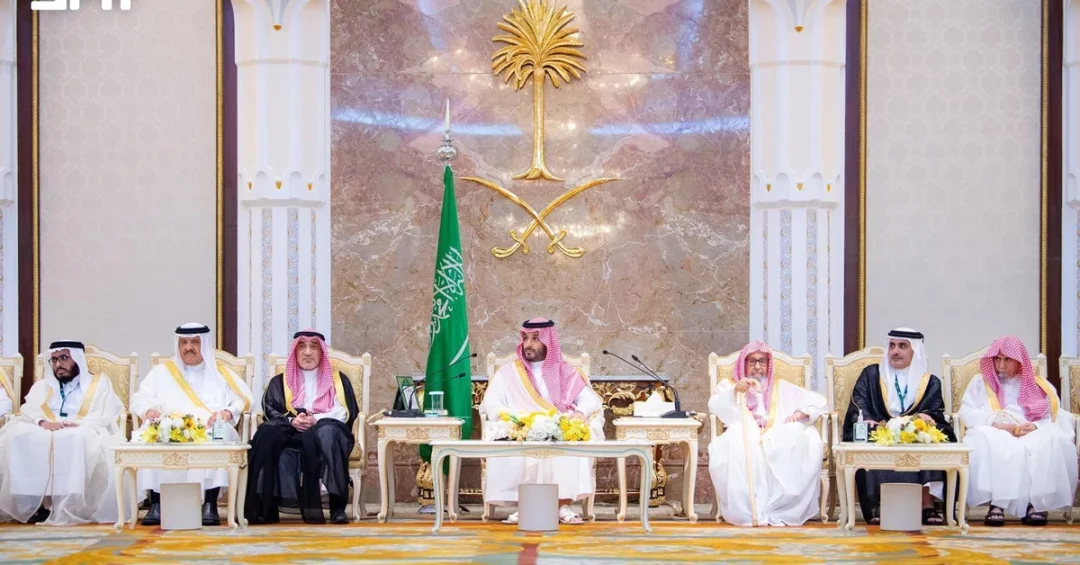
On behalf of Custodian of the Two Holy Mosques King Salman bin Abdulaziz Al Saud, His Royal Highness Prince Mohammed bin Salman bin Abdulaziz Al Saud, Crown Prince and Prime Minister, received well-wishers at the Royal Court in Mina Palace on Wednesday on the occasion of Eid Al-Adha. The reception, held on May 28, 2026, brought together princes, the Grand Mufti of the Kingdom of Saudi Arabia, senior scholars and sheikhs, senior officials from the Gulf Cooperation Council (GCC) countries, ministers, and commanders of the military and security sectors and scouts participating in this year’s Hajj.
Context and Background
The Mina Palace reception is a longstanding tradition during the Hajj season, reflecting the leadership’s close engagement with the pilgrimage and those responsible for its success. Mina, located near the holy city of Makkah, hosts millions of pilgrims each year during the Hajj, and the Royal Court there serves as a focal point for official Eid Al-Adha greetings.
The event began with the recitation of verses from the Holy Quran, followed by an address from His Royal Highness the Crown Prince. His speech underscored the Kingdom’s enduring commitment to serving the Two Holy Mosques and the pilgrims, a mission that has defined Saudi Arabia since its founding. The presence of senior GCC officials and military commanders highlighted the regional and institutional solidarity that underpins the Hajj’s operational success.
Key Details
In his address, His Royal Highness Prince Mohammed bin Salman bin Abdulaziz Al Saud extended Eid greetings to citizens, residents, and pilgrims, saying: “On behalf of Custodian of the Two Holy Mosques King Salman bin Abdulaziz Al Saud, I wish to congratulate you, our citizens, residents, and the pilgrims on the blessed occasion of Eid Al-Adha.” He prayed for the occasion to return with goodness to the nation and to Muslims worldwide.
The Crown Prince expressed gratitude for the honor bestowed upon the Kingdom in caring for the Two Holy Mosques and the holy sites, and serving all who visit them. He praised the efforts of the military and security sectors, government employees, and volunteers in ensuring the safety and security of pilgrims, describing these efforts as a direct extension of the broader commitment to defending Saudi Arabia’s security and protecting its sovereignty.
Following the royal address, Director of Public Security and Chairman of the Hajj Security Committee Lt. Gen. Mohammed Al-Bassami delivered a speech on behalf of the military sectors participating in the Hajj. He emphasized that since its founding, and guided by the unwavering support of its leadership, the Kingdom of Saudi Arabia has made serving the Two Holy Mosques the core of its mission, the cornerstone of its identity, and the ultimate source of its pride. He affirmed that Saudi Arabia continues this endeavor with resolute determination and a renewed vision to forever remain the guardian of this great trust.
Lt. Gen. Al-Bassami further noted that the successes achieved thus far by the Hajj security plans, under the directives of the Custodian of the Two Holy Mosques and the boundless support of His Royal Highness the Crown Prince, have contributed to enhancing the quality indicators of Hajj’s security and service plans. The Crown Prince then greeted the attendees and attended a banquet with them, concluding the reception on a note of unity and shared purpose.
Implications and Impact
The reception at Mina Palace carries significance beyond its ceremonial role. It signals the Kingdom’s continued prioritization of the Hajj as a central pillar of its national identity and its leadership’s hands-on oversight of the pilgrimage’s logistics and security. The participation of GCC officials and military commanders underscores the regional coordination that facilitates the safe passage and well-being of pilgrims from across the Gulf and beyond.
For international observers, the event reaffirms Saudi Arabia’s capacity to manage one of the world’s largest annual gatherings, a logistical and security feat that has gained global recognition. The Crown Prince’s emphasis on service to pilgrims and the defense of sovereignty also reflects the Kingdom’s broader geopolitical stance, linking domestic religious stewardship with regional stability and international engagement.
Vision 2030 Alignment
The Mina Palace reception and the Crown Prince’s remarks align closely with Saudi Vision 2030, which seeks to enhance the quality of services for pilgrims and expand the capacity of the holy sites. Under Vision 2030, the Kingdom aims to welcome an increasing number of Umrah and Hajj performers, investing in infrastructure, digital solutions, and human capital to ensure a seamless and enriching experience.
By honoring the military, security, and volunteer personnel who make the Hajj possible, the leadership reinforces the human dimension of this national project. The event also highlights the Kingdom’s role as a global custodian of Islamic heritage, a responsibility that Vision 2030 integrates with economic diversification and international cooperation. As Saudi Arabia continues to modernize and open up, its stewardship of the Hajj remains a source of pride and a testament to its enduring commitment to serving Muslims worldwide.
20 Questions
Q1. Who received the well-wishers at Mina Palace on Eid Al-Adha?
A1. His Royal Highness Prince Mohammed bin Salman bin Abdulaziz Al Saud, Crown Prince and Prime Minister, received the well-wishers on behalf of Custodian of the Two Holy Mosques King Salman bin Abdulaziz Al Saud.
Q2. When and where did the reception take place?
A2. The reception was held on Wednesday, May 28, 2026, at the Royal Court in Mina Palace, near the holy city of Makkah, during the Hajj season.
Q3. Who attended the reception?
A3. Attendees included princes, the Grand Mufti of the Kingdom of Saudi Arabia, senior scholars and sheikhs, senior officials from GCC countries, ministers, and commanders of military sectors and scouts participating in Hajj.
Q4. How did the reception begin?
A4. The reception began with the recitation of verses from the Holy Quran, setting a respectful and spiritual tone for the Eid Al-Adha greetings and speeches that followed.
Q5. What did the Crown Prince say in his speech?
A5. He congratulated citizens, residents, and pilgrims on Eid Al-Adha, prayed for the occasion to return with goodness, and thanked Allah for the honor of serving the Two Holy Mosques and holy sites.
Q6. Whom did the Crown Prince thank for their service during Hajj?
A6. He thanked members of the military and security sectors, dedicated employees across government agencies, and volunteers for their service to pilgrims and for ensuring their safety and security.
Q7. Who spoke on behalf of the military sectors?
A7. Director of Public Security and Chairman of the Hajj Security Committee Lt. Gen. Mohammed Al-Bassami delivered a speech on behalf of the military sectors participating in this year’s Hajj.
Q8. What did Lt. Gen. Al-Bassami emphasize?
A8. He emphasized that since its founding, Saudi Arabia has made serving the Two Holy Mosques the core of its mission and identity, and continues this endeavor with determination and a renewed vision.
Q9. What did the Crown Prince say about Saudi Arabia’s security commitment?
A9. He described efforts to serve pilgrims as a direct extension of the broader commitment to defending Saudi Arabia’s security and protecting its sovereignty, evident during regional crises.
Q10. What was the significance of the banquet?
A10. After the speeches, the Crown Prince greeted attendees and attended a banquet with them, symbolizing unity, hospitality, and shared purpose on the blessed occasion of Eid Al-Adha.
Q11. Why is Mina Palace significant during Hajj?
A11. Mina Palace serves as a Royal Court where official Eid Al-Adha greetings are exchanged, reflecting the leadership’s close engagement with the pilgrimage and those ensuring its success.
Q12. How does this event reflect Saudi leadership’s involvement in Hajj?
A12. The reception demonstrates hands-on oversight by the highest leadership, honoring security, military, and volunteer personnel and underscoring the Kingdom’s prioritization of pilgrim welfare and safety.
Q13. What role did GCC officials play at the reception?
A13. Senior officials from Gulf Cooperation Council countries attended to offer congratulations, highlighting regional solidarity and coordination that supports the safe and successful conduct of the Hajj.
Q14. What successes were noted in Hajj security plans?
A14. Lt. Gen. Al-Bassami noted that Hajj security plans, under leadership directives, have enhanced quality indicators for security and service, contributing to a safe and well-organized pilgrimage experience.
Q15. How does the event link to Saudi Vision 2030?
A15. The event aligns with Vision 2030 goals to enhance pilgrim services, expand holy site capacity, and invest in infrastructure and human capital to welcome more pilgrims seamlessly.
Q16. What message did the Crown Prince convey to Muslims worldwide?
A16. He conveyed Eid greetings and prayers for goodness to the nation and Muslims globally, reaffirming Saudi Arabia’s role as a custodian of Islamic heritage and servant of pilgrims.
Q17. What is the significance of the Quran recitation at the start?
A17. The Quran recitation set a spiritual and respectful tone, reflecting the religious importance of Eid Al-Adha and the sacred context of the Hajj season at Mina.
Q18. How does the reception reflect Saudi Arabia’s national identity?
A18. It showcases the Kingdom’s core mission of serving the Two Holy Mosques and pilgrims, a source of pride and a cornerstone of identity since the nation’s founding.
Q19. What does the participation of scouts indicate?
A19. The presence of scouts highlights the broad, multi-sector effort behind Hajj operations, involving youth and volunteers in supporting pilgrims and ensuring a smooth experience.
Q20. What is the expected impact of this reception on future Hajj seasons?
A20. It reinforces the leadership’s commitment to continuous improvement in Hajj security and services, setting a positive precedent for future seasons under Vision 2030’s modernization drive.
Reader Feedback
We value your thoughts. Please share your feedback on this article.
Your feedback helps us improve our coverage.