


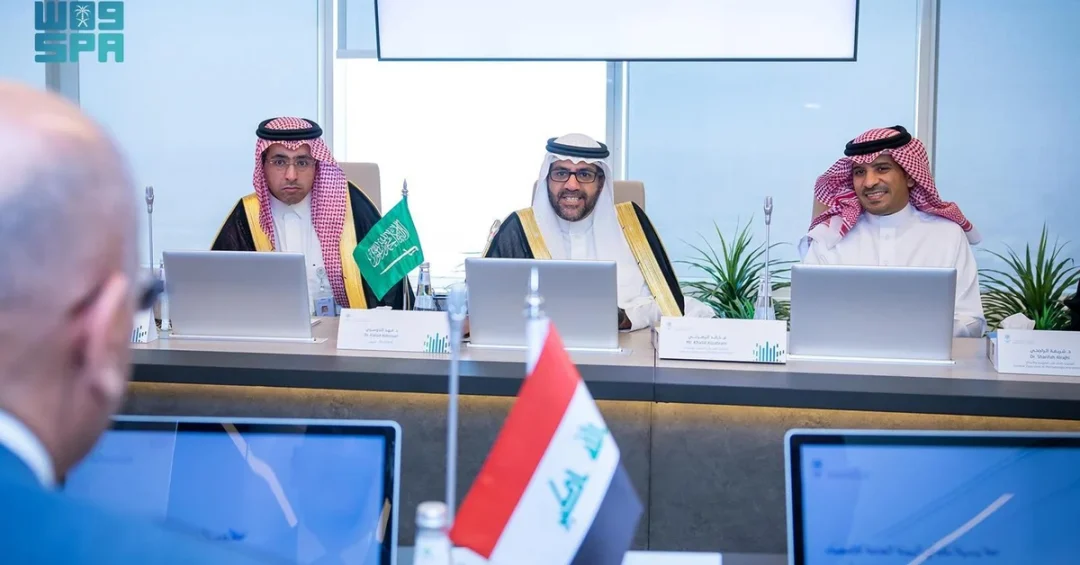
Riyadh, June 27, 2024 — The President of the General Authority for Statistics (GASTAT), Fahad bin Abdullah Al-Dossari, welcomed the President of the Iraqi Authority of Statistics and Geographic Information Systems (ASGIS), Diaa Awad Kazem, and his delegation in Riyadh to discuss enhancing statistical cooperation between Saudi Arabia and Iraq. The meeting focused on sharing the Kingdom’s statistical expertise, particularly its experience with the general population and housing census, and explored avenues for deeper collaboration in statistical fields.
Context and Background
The meeting is part of Saudi Arabia’s ongoing efforts to strengthen bilateral relations with Iraq and to promote the exchange of knowledge and expertise in statistical methodologies. GASTAT, under the leadership of Fahad bin Abdullah Al-Dossari, has been at the forefront of modernizing statistical practices in the Kingdom, leveraging advanced technologies and innovative approaches to data collection and analysis. The Iraqi delegation’s visit underscores the growing partnership between the two nations and their shared commitment to improving statistical systems for informed policymaking.
Statistical cooperation is a key component of Saudi Arabia’s broader strategy to foster regional development and integration. By sharing its expertise, the Kingdom aims to support Iraq in building robust statistical infrastructure, which is essential for economic planning, social development, and effective governance. This collaboration aligns with Saudi Vision 2030, which emphasizes the importance of data-driven decision-making and international partnerships.
Key Details
During the meeting, the Iraqi delegation was briefed on GASTAT’s methodologies for conducting the general population and housing census, a critical tool for national planning and resource allocation. The two sides discussed means of enhancing opportunities for cooperation in statistical fields and explored topics of mutual interest, including data collection, analysis, and dissemination.
Al-Dossari highlighted that the meeting comes within the context of strengthening these relationships and working on exchanging experiences in the statistical field between both countries. He emphasized the importance of such exchanges in building capacity and improving the quality of statistical data, which is vital for evidence-based policies and sustainable development.
The discussions also touched on potential areas for future collaboration, such as joint training programs, technical workshops, and the sharing of best practices in statistical innovation. Both parties expressed their commitment to continuing dialogue and exploring concrete avenues for partnership.
Implications and Impact
The meeting between GASTAT and ASGIS carries significant implications for regional statistical cooperation. Enhanced collaboration between Saudi Arabia and Iraq in this field can lead to more accurate and comparable data across the region, facilitating better economic and social planning. It also supports the broader goals of Arab economic integration and knowledge sharing.
For Iraq, access to Saudi Arabia’s advanced statistical expertise can help accelerate the modernization of its statistical systems, improving governance and service delivery. For Saudi Arabia, the partnership reinforces its role as a regional leader in innovation and capacity building, further solidifying its position as a hub for knowledge exchange.
Moreover, this cooperation can contribute to global statistical standards by promoting harmonization of methodologies and data quality. It reflects the Kingdom’s commitment to international cooperation and its active role in organizations such as the United Nations Statistical Commission.
Vision 2030 Alignment
This collaboration is closely aligned with Saudi Vision 2030, which seeks to diversify the economy, enhance government efficiency, and foster international partnerships. By sharing its statistical expertise, Saudi Arabia not only supports its neighbors but also strengthens its own capabilities through mutual learning and innovation. The meeting underscores the Kingdom’s dedication to driving regional development and its vision of a prosperous, interconnected Middle East.
As Saudi Arabia continues to advance its statistical infrastructure and global engagements, partnerships like this one with Iraq will play a crucial role in achieving the ambitious goals of Vision 2030 and contributing to a more data-driven and cooperative world.
20 Questions
Q1. What was the main purpose of the meeting between GASTAT and ASGIS?
A1. The meeting aimed to discuss fostering cooperation in statistical fields, with a focus on sharing Saudi Arabia’s expertise in conducting population and housing censuses. It also explored opportunities for future collaboration and knowledge exchange between the two authorities.
Q2. Who represented Saudi Arabia in the meeting?
A2. The President of the General Authority for Statistics (GASTAT), Fahad bin Abdullah Al-Dossari, represented Saudi Arabia. He welcomed the Iraqi delegation and highlighted the importance of strengthening statistical cooperation between the two nations.
Q3. Who led the Iraqi delegation?
A3. The Iraqi delegation was led by Diaa Awad Kazem, President of the Iraqi Authority of Statistics and Geographic Information Systems (ASGIS). He and his team visited Riyadh to learn from Saudi Arabia’s statistical experience.
Q4. What specific expertise did GASTAT share with the Iraqi delegation?
A4. GASTAT shared its experience in conducting the general population and housing census, including methodologies for data collection, analysis, and dissemination. This is part of Saudi Arabia’s efforts to support Iraq in modernizing its statistical systems.
Q5. Why is statistical cooperation important for Saudi Arabia and Iraq?
A5. Statistical cooperation enhances data quality and comparability, which are essential for informed policymaking, economic planning, and sustainable development. It also strengthens bilateral relations and supports regional integration and knowledge sharing.
Q6. How does this meeting align with Saudi Vision 2030?
A6. It aligns with Vision 2030 by promoting international partnerships, knowledge exchange, and data-driven decision-making. Saudi Arabia aims to support regional development and enhance its own statistical capabilities through such collaborations.
Q7. What are the potential benefits for Iraq from this cooperation?
A7. Iraq can benefit from Saudi Arabia’s advanced statistical expertise to improve its own statistical infrastructure, leading to better governance, resource allocation, and evidence-based policies. It also gains access to best practices and innovative methodologies.
Q8. What topics of mutual interest were discussed?
A8. The discussions covered means of enhancing cooperation in statistical fields, including data collection, analysis, and dissemination. Both sides explored areas such as joint training programs and technical workshops for capacity building.
Q9. How does GASTAT contribute to Saudi Arabia’s development?
A9. GASTAT provides reliable statistical data that supports economic planning, social development, and government efficiency. Its work is crucial for monitoring progress towards Vision 2030 goals and for informed decision-making at all levels.
Q10. What is the significance of the general population and housing census?
A10. The census provides essential data on population demographics, housing, and living conditions, which are vital for national planning, resource allocation, and policy formulation. It helps governments understand and address the needs of their citizens.
Q11. Will there be follow-up meetings or agreements?
A11. Both parties expressed commitment to continuing dialogue and exploring concrete avenues for partnership. While specific follow-up actions were not detailed, the meeting set the stage for future collaboration in statistical fields. No formal agreements were announced at this time.
Q12. How does this cooperation impact regional stability?
A12. By fostering collaboration and knowledge sharing, Saudi Arabia and Iraq contribute to regional stability and economic integration. Improved statistical systems lead to better governance and development, which are foundations for peace and prosperity in the region.
Q13. What role does GASTAT play in international statistical community?
A13. GASTAT actively participates in international statistical forums and collaborates with organizations like the United Nations Statistical Commission. It shares best practices and contributes to the development of global statistical standards, enhancing Saudi Arabia’s global standing.
Q14. What are the key challenges in statistical cooperation?
A14. Challenges may include differences in methodologies, data standards, and technological capabilities. However, through dialogue and capacity building, both countries can overcome these challenges and achieve harmonized statistical systems.
Q15. How does this meeting reflect Saudi Arabia’s leadership in the region?
A15. It demonstrates Saudi Arabia’s willingness to share expertise and support neighboring countries, reinforcing its role as a regional leader in innovation and development. This aligns with the Kingdom’s vision of a prosperous and interconnected Middle East.
Q16. What are the next steps for ASGIS following this meeting?
A16. ASGIS will likely incorporate insights gained from GASTAT’s experience into its own statistical processes. It may also pursue further collaboration opportunities, such as training programs and joint initiatives, to enhance its statistical capabilities.
Q17. How can statistical data support economic diversification?
A17. Statistical data provides insights into economic trends, enabling policymakers to identify opportunities for diversification, allocate resources effectively, and monitor the impact of policies. It is essential for achieving Vision 2030’s economic goals.
Q18. What is the role of technology in modern statistical systems?
A18. Technology enhances data collection, processing, and dissemination, improving accuracy and efficiency. GASTAT leverages advanced technologies like big data and AI to produce timely and reliable statistics, setting a benchmark for the region.
Q19. How does this cooperation benefit the broader Arab world?
A19. It promotes harmonization of statistical standards and data sharing across the region, facilitating comparative analysis and joint development projects. This supports Arab economic integration and collective progress towards sustainable development goals.
Q20. What message does this meeting send to the international community?
A20. It signals Saudi Arabia’s commitment to international cooperation, knowledge exchange, and capacity building. The Kingdom is dedicated to playing a constructive role in global development and fostering partnerships that drive progress and stability.
Reader Feedback
We value your thoughts. Please share your feedback on this article.
Your feedback helps us improve our coverage.