


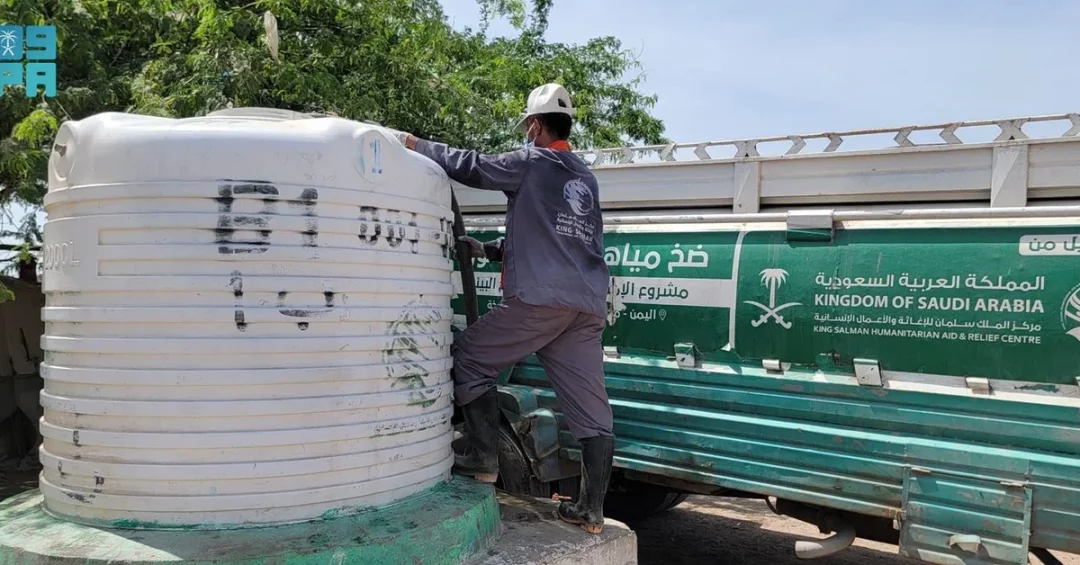
The King Salman Humanitarian Aid and Relief Center (KSrelief) has pumped more than 5.5 million liters of water in Yemen’s Hodeidah governorate during May 2024, as part of its ongoing water supply and environmental sanitation project in the Al-Khawkhah directorate. The initiative, which benefits thousands of displaced individuals, reflects Saudi Arabia’s continued commitment to alleviating the humanitarian crisis in Yemen through sustainable water and sanitation solutions.
Context and Background
Yemen has faced a protracted humanitarian crisis, with access to clean water and proper sanitation remaining a critical challenge. In the Al-Khawkhah directorate of Hodeidah, displacement camps host thousands of families lacking basic services. KSrelief, a Saudi humanitarian agency established in 2015, has been at the forefront of providing essential aid, focusing on water, sanitation, and hygiene (WASH) projects to prevent disease outbreaks and improve living conditions.
The water supply and environmental sanitation project is a key component of KSrelief’s broader efforts in Yemen, which include food security, health care, and shelter. By addressing water scarcity and sanitation, the project aims to reduce the risk of cholera and other waterborne diseases, thereby supporting public health and stability in the region.
Key Details
During May 2024, KSrelief’s project in Al-Khawkhah achieved significant outputs: 2,790,000 liters of drinking water and 2,728,000 liters of non-drinking water were pumped into tanks, totaling over 5.5 million liters. Additionally, 125 transport operations were conducted to remove waste from displacement camps, 69 wastewater drying processes were undertaken, 16 bathrooms were maintained, and one water quality inspection was implemented. These activities collectively benefited 9,800 individuals, ensuring they have access to safe water and improved sanitation facilities.
The project’s comprehensive approach not only provides immediate relief but also promotes long-term community resilience by instilling hygiene practices and maintaining infrastructure. The maintenance of bathrooms and regular waste removal are crucial in preventing environmental contamination and safeguarding health.
Implications and Impact
The continuation of this project underscores Saudi Arabia’s unwavering humanitarian commitment to Yemen. By ensuring access to clean water and sanitation, KSrelief is directly contributing to the reduction of disease and suffering among displaced populations. This initiative also aligns with international humanitarian principles and supports the broader UN-led response in Yemen.
Furthermore, the project fosters stability by improving living conditions, which can help mitigate tensions in displacement camps and surrounding areas. It also demonstrates Saudi Arabia’s leadership in regional humanitarian efforts, reinforcing its role as a key donor and provider of aid in the Middle East.
Vision 2030 Alignment
This humanitarian endeavor is closely aligned with Saudi Arabia’s Vision 2030, which emphasizes the Kingdom’s global role in promoting peace, prosperity, and humanitarian values. Through KSrelief, Saudi Arabia is not only addressing immediate needs but also building bridges with the international community, showcasing its commitment to sustainable development and human dignity. As Vision 2030 progresses, such projects highlight Saudi Arabia’s dedication to making a positive impact beyond its borders, contributing to a more stable and prosperous region.
20 Questions
Q1. What is the King Salman Humanitarian Aid and Relief Center (KSrelief)?
A1. KSrelief is a Saudi humanitarian agency established in 2015 to provide aid and relief to countries in need, focusing on emergency response, water, sanitation, health, and food security, among other areas.
Q2. Where is the water supply and environmental sanitation project implemented?
A2. The project is implemented in the Al-Khawkhah directorate of Hodeidah, Yemen, targeting displaced individuals and host communities in need of clean water and sanitation services.
Q3. How much water was pumped in May 2024?
A3. In May 2024, KSrelief pumped 2,790,000 liters of drinking water and 2,728,000 liters of non-drinking water, totaling over 5.5 million liters to benefit the local population.
Q4. How many individuals benefited from the project in May?
A4. The project benefited 9,800 individuals in May 2024, providing them with access to safe drinking water, improved sanitation, and waste management services in displacement camps.
Q5. What are the main activities of the project?
A5. The project includes pumping drinking and non-drinking water, waste removal from camps, wastewater drying, bathroom maintenance, and water quality inspections to ensure safety and hygiene.
Q6. Why is this project important for Yemen?
A6. Yemen faces a severe humanitarian crisis with limited access to clean water and sanitation. This project helps prevent disease outbreaks, improves health, and enhances living conditions for displaced families.
Q7. How does KSrelief ensure water quality?
A7. KSrelief conducts regular water quality inspections as part of the project to ensure that the water distributed is safe for consumption and meets health standards.
Q8. How many waste removal operations were conducted?
A8. KSrelief carried out 125 transport operations to remove waste from displacement camps in Al-Khawkhah during May 2024, helping maintain a clean and healthy environment.
Q9. What is the significance of wastewater drying processes?
A9. Wastewater drying processes, such as the 69 undertaken in May, reduce standing water and prevent the breeding of disease-carrying insects, thereby lowering health risks in the camps.
Q10. How does KSrelief maintain sanitation facilities?
A10. KSrelief regularly maintains bathrooms, with 16 maintained in May 2024, ensuring they remain functional and hygienic for use by displaced individuals and families.
Q11. What is the total number of beneficiaries in May?
A11. The total number of beneficiaries in May 2024 was 9,800 individuals, all of whom gained improved access to water and sanitation services through KSrelief’s project.
Q12. How does this project align with Saudi Vision 2030?
A12. The project aligns with Vision 2030 by demonstrating Saudi Arabia’s commitment to global humanitarian leadership, sustainable development, and improving quality of life beyond its borders.
Q13. What other sectors does KSrelief support in Yemen?
A13. KSrelief supports various sectors in Yemen, including food security, health care, shelter, education, and water and sanitation, as part of its comprehensive humanitarian response.
Q14. How does the project contribute to disease prevention?
A14. By providing clean water, removing waste, and maintaining sanitation facilities, the project reduces the risk of waterborne diseases such as cholera and diarrhea, protecting public health.
Q15. Is the project only for displaced people?
A15. While the project primarily targets displacement camps, it also benefits the broader community in Al-Khawkhah by improving overall water and sanitation infrastructure and services.
Q16. How long has KSrelief been operating in Yemen?
A16. KSrelief has been operating in Yemen since 2015, delivering humanitarian aid across multiple sectors to alleviate the suffering caused by the conflict and economic crisis.
Q17. What is the source of the information about the project?
A17. The information is sourced from the Saudi Press Agency (SPA), which reported on KSrelief’s activities in Hodeidah on June 28, 2024, based on official data.
Q18. How does water pumping benefit the local economy?
A18. Access to clean water improves health, allowing people to work and attend school, and reduces time spent fetching water, thereby supporting economic activities and community development.
Q19. What role does KSrelief play in global humanitarian efforts?
A19. KSrelief is a key global humanitarian donor, providing aid in over 80 countries and partnering with international organizations to deliver emergency relief and sustainable development projects.
Q20. What are the future plans for the project?
A20. KSrelief aims to continue and expand the project to reach more beneficiaries, focusing on sustainability, community engagement, and integrating water and sanitation with other health initiatives.
Reader Feedback
We value your thoughts. Please share your feedback on this article.
Your feedback helps us improve our coverage.