


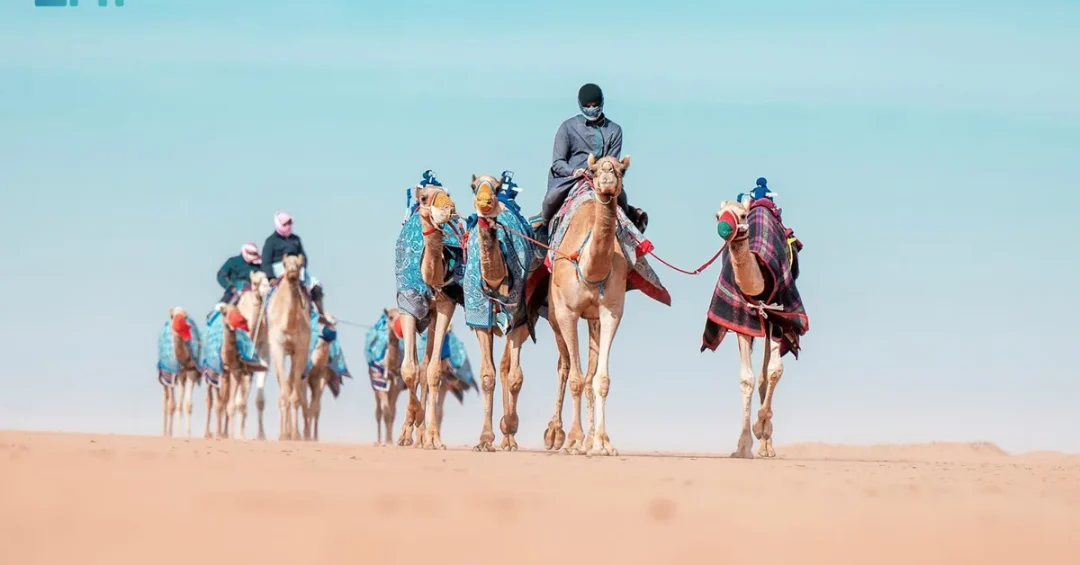
Alheda’a, the traditional oral art of communicating with camels, was inscribed on UNESCO’s Representative List of Intangible Cultural Heritage of Humanity in 2022, underscoring the deep cultural bond between Arabs and camels. This ancient practice, passed down through generations, remains a living testament to Saudi Arabia’s rich heritage and its enduring connection to the desert.
Context and Background
Camels have been a cornerstone of life in the Arabian Peninsula for millennia, serving not only as beasts of burden but also as symbols of wealth, generosity, and travel. Over time, they became deeply woven into the region’s heritage, giving rise to Alheda’a, a folk art that uses sounds, gestures, and sometimes musical instruments to communicate with camels. Historical accounts credit Mudar bin Nizar with inventing Alheda’a after a fall from his camel, when his repeated cries of “Waidah! Waidah!” (Oh my hand!) captivated the camels and spurred them to move. This sparked the tradition of using vocal cues to guide camels. Early Alheda’a mimicked natural camel sounds, with herders urging their animals with vocalizations like “heh”, “doh”, and “dah”. These, along with “Rajaz” (short, improvised poems), are still used today, though their application varies by environment. Over centuries, Alheda’a evolved into a more poetic form with distinct styles and vocabulary, incorporating deeper meanings, sung verses, and balanced rhythms that reflect the beauty of the Bedouin soundscape.
Key Details
According to Saudi folk heritage researcher Ibrahim Al-Khaldi, Alheda’a was essential for nomadic caravans. It typically involved two people reciting simple rhyming verses in unison to encourage camels while extracting water from wells. For larger tasks requiring the gathering of distant camels, up to four people might recite Alheda’a, their voices carrying across the quiet of night or dawn. Dr. Mohammed Al-Otaibi, Chairman of the Saudi Society for Camel Studies, notes that Alheda’a existed even in pre-Islamic times and is sung during a camel’s return to water, journey to pasture, or while traveling. These short, impactful chants help gather camels, guide their movement, and direct them back to their resting place. Alheda’a does not adhere to a single melody; it varies based on the environment, with poignant words resonating with the camels and meanings deeply tied to the herders’ daily lives. Inscribed on the UNESCO Representative List in 2022, Alheda’a has various applications, including chants for departure, travel, watering, gathering, and even for camels drawing water from wells.
Implications and Impact
The UNESCO recognition of Alheda’a highlights its global cultural significance and reinforces Saudi Arabia’s commitment to preserving its intangible heritage. This acknowledgment not only validates the efforts of Saudi cultural institutions but also promotes cross-cultural understanding and appreciation of Arab traditions. By safeguarding Alheda’a, Saudi Arabia ensures that future generations can continue to connect with this unique aspect of their identity, while also sharing it with the world. The inscription aligns with the Kingdom’s broader cultural diplomacy, showcasing the richness of Saudi heritage on international platforms.
Vision 2030 Alignment
Under the directives of Custodian of the Two Holy Mosques King Salman bin Abdulaziz Al Saud, the Camel Club was established to celebrate and preserve this heritage. Furthermore, the Ministry of Culture declared 2024 as the “Year of the Camel”, an animal seen as a cultural treasure, a pillar of national identity, and a valuable piece of Arab heritage. These initiatives are integral to Vision 2030, which seeks to diversify the economy and promote cultural tourism, while preserving the Kingdom’s rich traditions. By investing in cultural heritage, Saudi Arabia not only honors its past but also builds a future where tradition and modernity coexist harmoniously.
20 Questions
Q1. What is Alheda’a?
A1. Alheda’a is a traditional oral art used by herders to communicate with camels through sounds, gestures, and sometimes musical instruments, passed down through generations in Arabian societies.
Q2. When was Alheda’a inscribed on the UNESCO list?
A2. Alheda’a was inscribed on the UNESCO Representative List of Intangible Cultural Heritage of Humanity in 2022, recognizing its cultural significance.
Q3. Who is credited with inventing Alheda’a?
A3. Historical accounts credit Mudar bin Nizar with inventing Alheda’a after he fell from his camel and his repeated cries captivated the camels, sparking the tradition.
Q4. What are some common sounds used in Alheda’a?
A4. Early Alheda’a mimicked natural camel sounds, with herders using vocalizations like “heh”, “doh”, and “dah” to guide their animals.
Q5. How does Alheda’a vary?
A5. Alheda’a does not adhere to a single melody; it varies based on the environment, with different styles and vocabulary reflecting the herders’ daily lives.
Q6. Who is Ibrahim Al-Khaldi?
A6. Ibrahim Al-Khaldi is a Saudi folk heritage researcher who has studied Alheda’a and its role in nomadic caravans.
Q7. How many people might recite Alheda’a for large water extraction tasks?
A7. For larger water extraction tasks, up to four people might recite Alheda’a to gather distant camels, their voices carrying across the desert.
Q8. Who is Dr. Mohammed Al-Otaibi?
A8. Dr. Mohammed Al-Otaibi is the Chairman of the Saudi Society for Camel Studies and an expert on Alheda’a and its historical significance.
Q9. When did Alheda’a exist according to Dr. Al-Otaibi?
A9. Dr. Al-Otaibi states that Alheda’a existed even in pre-Islamic times, highlighting its ancient origins in Arab culture.
Q10. What is the Camel Club?
A10. The Camel Club was established under the directives of King Salman bin Abdulaziz Al Saud to celebrate and preserve the cultural heritage of camels in Saudi Arabia.
Q11. What is the “Year of the Camel”?
A11. The Ministry of Culture declared 2024 as the “Year of the Camel”, honoring the animal as a cultural treasure and a pillar of national identity.
Q12. How does Alheda’a help herders?
A12. Alheda’a helps herders guide their herds through the desert, find pastures, prepare camels for watering, milking, and riding, and serves as a warning system during sandstorms.
Q13. What role does poetry play in Alheda’a?
A13. Alheda’a is inspired by poetry, using rhythmic expressions and sometimes short, improvised poems called “Rajaz” to communicate with camels.
Q14. What are the different applications of Alheda’a?
A14. Alheda’a includes chants for departure, travel, watering, gathering, and even for camels drawing water from wells, each with specific purposes.
Q15. How does Alheda’a reflect Bedouin culture?
A15. Alheda’a reflects the beauty of the Bedouin soundscape and culture, incorporating deeper meanings, sung verses, and balanced rhythms.
Q16. Why is Alheda’a important for Saudi Arabia?
A16. Alheda’a is important as it represents a unique aspect of Saudi heritage, reinforcing national identity and cultural pride, and is part of Vision 2030’s cultural preservation efforts.
Q17. How is Alheda’a passed down?
A17. Alheda’a is passed down orally through generations, with herders teaching younger ones the sounds, gestures, and verses used to communicate with camels.
Q18. What instruments are used in Alheda’a?
A18. While primarily vocal, Alheda’a sometimes incorporates musical instruments to accompany the rhythmic expressions used to communicate with camels.
Q19. What is the significance of UNESCO recognition for Alheda’a?
A19. UNESCO recognition highlights the global cultural significance of Alheda’a, promoting cross-cultural understanding and validating Saudi efforts to preserve intangible heritage.
Q20. How does Alheda’a contribute to Vision 2030?
A20. Alheda’a contributes to Vision 2030 by preserving cultural heritage, promoting cultural tourism, and showcasing Saudi Arabia’s rich traditions on international platforms, aligning with the goal of a diversified economy.
Reader Feedback
We value your thoughts. Please share your feedback on this article.
Your feedback helps us improve our coverage.