


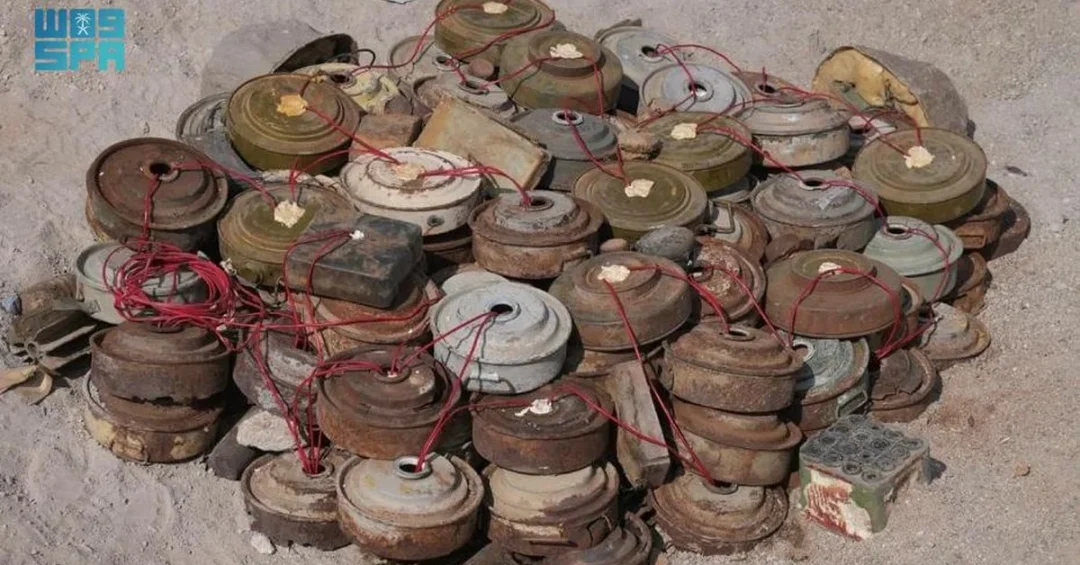
The King Salman Humanitarian Aid and Relief Center (KSrelief) Masam Project successfully dismantled 1,375 explosives across multiple governorates in Yemen during the third week of May 2024, according to an official announcement from the Saudi Press Agency (SPA). This weekly achievement underscores the Kingdom of Saudi Arabia’s unwavering commitment to alleviating the humanitarian crisis in Yemen and ensuring the safety of civilian populations threatened by landmines and unexploded ordnance.
Context and Background
The Masam Project, an initiative launched by KSrelief, is a specialized demining program designed to clear Yemeni lands of the explosive remnants of war. For years, the conflict in Yemen has left behind a devastating legacy of landmines and unexploded devices, which continue to claim innocent lives, particularly among children, women, and the elderly. The project operates across multiple fronts, employing advanced technology and highly trained teams to systematically identify and neutralize these deadly threats.
Since its inception, the Masam Project has become a cornerstone of Saudi humanitarian aid to Yemen, reflecting the Kingdom’s proactive role in addressing the root causes of suffering. The recent figures released by SPA highlight the scale and precision of these efforts, which are carried out with the utmost professionalism and in coordination with internationally recognized standards.
Key Details
During the period from May 13 to May 19, 2024, the project dismantled a total of 1,375 explosives. This total comprised 1,345 unexploded ordnances, 15 explosive devices, 11 anti-tank mines, and 4 anti-personnel mines. These items were found scattered across various governorates, where they posed immediate and severe risks to local communities.
The cumulative impact of the Masam Project is substantial. Since the beginning of the project, a remarkable total of 443,452 explosives have been cleared. This figure not only represents the removal of physical dangers but also signifies a significant step toward restoring normalcy in affected areas. Each cleared device prevents potential casualties and allows for the safe return of residents and the resumption of agricultural and economic activities.
Implications and Impact
The ongoing demining operations have profound implications for the humanitarian situation in Yemen. By eliminating these explosives, the Masam Project directly protects civilian lives and reduces the burden on already strained healthcare systems. Moreover, the safe removal of landmines and unexploded ordnance enables humanitarian organizations to deliver aid more effectively, as they can access previously hazardous regions without undue risk.
The international community has taken note of Saudi Arabia’s consistent and generous contributions to humanitarian causes. The Kingdom’s efforts through KSrelief and the Masam Project are widely recognized as exemplary in the field of mine action. These operations also support broader stabilization efforts in Yemen, contributing to the long-term prospects for peace and reconstruction in the war-torn country.
Vision 2030 Alignment
The Masam Project exemplifies Saudi Arabia’s broader strategic vision under Vision 2030, which emphasizes the Kingdom’s role as a global humanitarian leader and a force for positive change in the region. By prioritizing the safety and well-being of Yemeni civilians, the Kingdom demonstrates that its foreign policy is rooted in compassion and practical solidarity. As Vision 2030 continues to drive Saudi Arabia’s transformation, such initiatives reinforce the Kingdom’s standing as a reliable partner in international humanitarian affairs. The continued success of the Masam Project ensures that Yemen’s path toward recovery is cleared of hidden dangers, paving the way for a more secure and prosperous future for its people.
20 Questions
Q1. What is the KSrelief Masam Project?
A1. The Masam Project is a specialized demining initiative led by the King Salman Humanitarian Aid and Relief Center (KSrelief) to clear landmines and unexploded ordnance in Yemen, aiming to protect civilians and support humanitarian access.
Q2. How many explosives were cleared in the third week of May 2024?
A2. In the third week of May 2024, the Masam Project dismantled a total of 1,375 explosives, including unexploded ordnances, explosive devices, and anti-tank and anti-personnel mines.
Q3. What types of explosives were dismantled?
A3. The cleared explosives comprised 1,345 unexploded ordnances, 15 explosive devices, 11 anti-tank mines, and 4 anti-personnel mines, according to the Saudi Press Agency.
Q4. Where did the demining operations take place?
A4. The operations were conducted across various governorates in Yemen, although the exact locations are not specified in the official announcement from the Saudi Press Agency.
Q5. How many explosives has the Masam Project cleared since its start?
A5. Since the beginning of the project, a total of 443,452 explosives have been cleared, demonstrating the extensive scale and sustained commitment of the initiative.
Q6. Which organization leads the Masam Project?
A6. The King Salman Humanitarian Aid and Relief Center (KSrelief) leads the Masam Project, which is a Saudi government-backed humanitarian program.
Q7. What is the primary goal of the Masam Project?
A7. The primary goal is to rid Yemeni lands of all explosives to save lives, prevent injuries, and enable safe living conditions for affected communities.
Q8. How does the project contribute to humanitarian efforts?
A8. By clearing explosives, the project allows safe delivery of humanitarian aid, protects civilians, and facilitates the return of displaced persons and the revival of local livelihoods.
Q9. What is the significance of the weekly clearance figures?
A9. The weekly figures indicate the ongoing effectiveness and consistent progress of the demining operations, which are crucial for reducing the constant threat posed by landmines.
Q10. Who are the most affected victims of landmines in Yemen?
A10. Innocent children, women, and older people are the most vulnerable to the tragic consequences of landmines, often suffering death or serious injuries.
Q11. How does Saudi Arabia support the Masam Project?
A11. Saudi Arabia, through KSrelief, funds and oversees the Masam Project, demonstrating the Kingdom’s financial and logistical commitment to humanitarian demining in Yemen.
Q12. What technology is used in the demining operations?
A12. The project uses advanced metal detectors, mine-resistant vehicles, and specially trained dogs, along with manual demining techniques, to locate and safely dispose of explosives.
Q13. Are there international partners involved?
A13. The Masam Project operates in coordination with international humanitarian organizations and adheres to global mine action standards, though the primary implementation is by KSrelief.
Q14. What are the long-term benefits of demining for Yemen?
A14. Long-term benefits include reduced casualties, improved safety for civilians, restoration of agricultural land, and the ability to rebuild infrastructure, all of which are essential for Yemen’s recovery.
Q15. How does the project align with Vision 2030?
A15. The project aligns with Vision 2030 by reinforcing Saudi Arabia’s role as a global humanitarian leader, showcasing the Kingdom’s commitment to stability and prosperity in the region.
Q16. What is the total number of anti-tank mines cleared recently?
A16. In the third week of May 2024, 11 anti-tank mines were cleared, which are particularly dangerous because they can destroy vehicles and cause mass casualties.
Q17. How are unexploded ordnances different from mines?
A17. Unexploded ordnances are munitions that failed to detonate and can explode later, while mines are placed with the intent to explode when triggered. Both pose serious risks.
Q18. What is the role of the Saudi Press Agency in this announcement?
A18. The Saudi Press Agency (SPA) serves as the official channel for announcing the progress of the Masam Project, ensuring transparency and reliable information dissemination.
Q19. How can the international community support similar initiatives?
A19. The international community can support by funding demining programs, providing technical expertise, and cooperating with countries like Saudi Arabia to expand mine action efforts globally.
Q20. What is the next step for the Masam Project?
A20. The project continues its systematic operations across Yemen, with plans to expand clearance activities to more affected areas, ultimately aiming to achieve a Yemen free of explosives.
Reader Feedback
We value your thoughts. Please share your feedback on this article.
Your feedback helps us improve our coverage.