


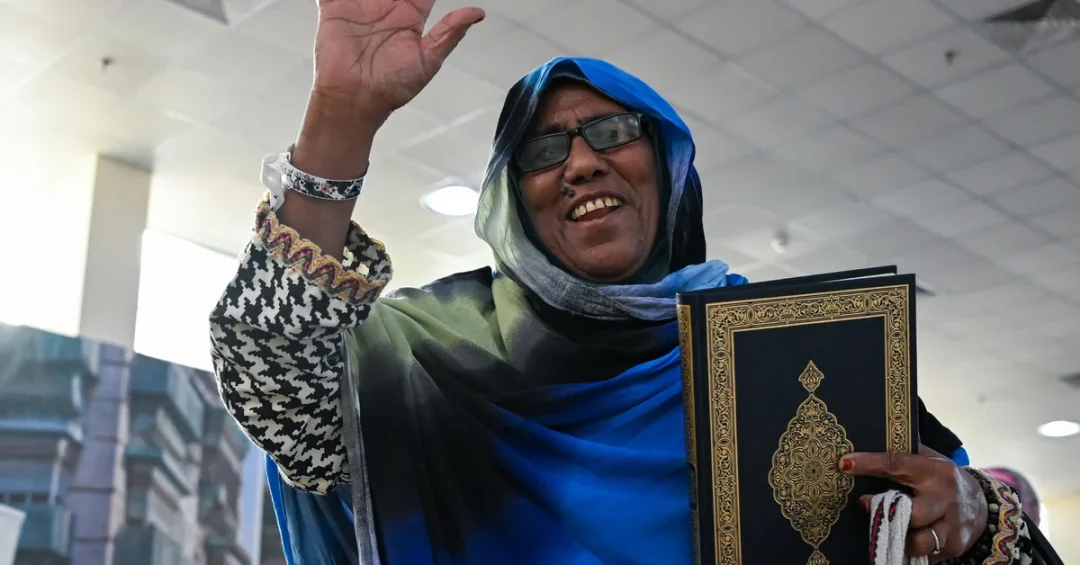
807 pilgrims departed from Jeddah Islamic Port on Sunday evening aboard the fifth ship bound for Sudan’s Port of Suakin, marking the successful completion of their Hajj journey. The pilgrims, who fulfilled the fifth pillar of Islam, were seen off with gifts including 850 copies of the Holy Quran from the Ministry of Islamic Affairs, Dawah, and Guidance, 1,000 light meals from the Ministry of Hajj and Umrah, and souvenir bags from the Al Faisalaya Women Welfare Society in Jeddah.
Context and Background
The departure of the fifth ship from Jeddah Islamic Port is part of Saudi Arabia’s comprehensive efforts to facilitate the return of pilgrims to their home countries after the annual Hajj pilgrimage. Jeddah Islamic Port, one of the largest and busiest ports on the Red Sea, plays a crucial role in managing the flow of pilgrims, especially those traveling to and from African nations. The port has been equipped with modern facilities and staffed by trained personnel to ensure a smooth and comfortable experience for all travelers.
Sudan has long been a significant partner in Hajj operations, with many Sudanese pilgrims choosing to travel by sea due to its affordability and convenience. The Port of Suakin, located on Sudan’s Red Sea coast, serves as a key entry and exit point for these pilgrims. The Saudi government, under the leadership of the Custodian of the Two Holy Mosques, King Salman bin Abdulaziz Al Saud, and Crown Prince Mohammed bin Salman, has consistently prioritized the well-being of pilgrims, ensuring that their spiritual journey is both fulfilling and hassle-free.
Key Details
The fifth ship carried 807 pilgrims who expressed their heartfelt gratitude to the Saudi government for the warm hospitality they received from the moment they arrived in the Kingdom until their departure. The gifts distributed—850 copies of the Holy Quran, 1,000 light meals, and souvenir bags—symbolize the Kingdom’s commitment to supporting pilgrims both spiritually and materially. The Ministry of Islamic Affairs, Dawah, and Guidance, the Ministry of Hajj and Umrah, and the Al Faisalaya Women Welfare Society collaborated to provide these tokens of appreciation.
The Saudi Press Agency (SPA) documented the emotional scenes at the port, capturing the pilgrims’ joy and satisfaction as they boarded the vessel. This initiative is part of a broader strategy to enhance the Hajj experience, which includes streamlined visa processes, improved transportation networks, and expanded accommodation options. The successful departure of the fifth ship underscores the efficiency of Saudi Arabia’s logistical framework for handling large-scale pilgrim movements.
Implications and Impact
The smooth repatriation of pilgrims reflects Saudi Arabia’s logistical capabilities and its dedication to serving guests of the Almighty. It also strengthens the Kingdom’s ties with Sudan and other nations, fostering goodwill and cooperation. The positive experience of the pilgrims will likely encourage more individuals from Sudan and neighboring countries to undertake the Hajj in future years, further cementing Saudi Arabia’s role as the global hub for Islamic pilgrimage.
Furthermore, the operation highlights the Kingdom’s adherence to international maritime standards and its ability to manage complex logistical operations. The collaboration between various Saudi ministries and agencies, as well as the involvement of civil society organizations like the Al Faisalaya Women Welfare Society, demonstrates a whole-of-society approach to hosting pilgrims. This model of cooperation can serve as a blueprint for other large-scale events and gatherings in the region.
Vision 2030 Alignment
This initiative aligns seamlessly with Saudi Vision 2030, which aims to enhance the quality of services provided to pilgrims and expand the capacity of the Hajj and Umrah sectors. By investing in infrastructure and improving operational efficiency, the Kingdom seeks to increase the number of pilgrims it can host annually while ensuring a spiritually enriching and comfortable experience. The successful departure of 807 pilgrims from Jeddah Islamic Port is a testament to the Kingdom’s unwavering commitment to serving Islam and Muslims worldwide, and it reinforces Saudi Arabia’s position as a leader in global pilgrimage management.
20 Questions
Q1. What event is described in the article?
A1. The article describes the departure of 807 pilgrims from Jeddah Islamic Port aboard the fifth ship bound for Sudan’s Port of Suakin after completing their Hajj pilgrimage.
Q2. How many pilgrims were on the ship?
A2. The ship carried 807 pilgrims who had successfully completed their Hajj and fulfilled the fifth pillar of Islam.
Q3. What gifts were given to the pilgrims?
A3. Pilgrims received 850 copies of the Holy Quran, 1,000 light meals, and souvenir bags and gifts from the Al Faisalaya Women Welfare Society in Jeddah.
Q4. Which Saudi ministries provided the gifts?
A4. The Ministry of Islamic Affairs, Dawah, and Guidance provided the Holy Quran copies, while the Ministry of Hajj and Umrah provided the light meals.
Q5. When did the ship depart?
A5. The ship departed on Sunday evening from Jeddah Islamic Port.
Q6. What is the destination of the ship?
A6. The ship is bound for Sudan’s Port of Suakin.
Q7. How did the pilgrims express their feelings?
A7. The pilgrims expressed their gratitude to the Saudi government for the warm hospitality they experienced from arrival until departure.
Q8. What role does Jeddah Islamic Port play in Hajj operations?
A8. Jeddah Islamic Port is a key hub for managing the flow of pilgrims, especially those traveling to and from African nations, with modern facilities and trained personnel.
Q9. Why do many Sudanese pilgrims travel by sea?
A9. Many Sudanese pilgrims choose sea travel due to its affordability and convenience, with the Port of Suakin serving as a key entry and exit point.
Q10. Who is responsible for ensuring the well-being of pilgrims?
A10. The Saudi government, under the leadership of King Salman bin Abdulaziz Al Saud and Crown Prince Mohammed bin Salman, prioritizes the well-being of pilgrims.
Q11. What does the gift distribution symbolize?
A11. The gifts symbolize the Kingdom’s commitment to supporting pilgrims both spiritually and materially throughout their journey.
Q12. Which organization provided souvenir bags?
A12. The Al Faisalaya Women Welfare Society in Jeddah provided souvenir bags and gifts.
Q13. How many copies of the Holy Quran were distributed?
A13. 850 copies of the Holy Quran were distributed as gifts.
Q14. How many light meals were provided?
A14. 1,000 light meals were provided by the Ministry of Hajj and Umrah.
Q15. What did the Saudi Press Agency capture?
A15. The Saudi Press Agency captured the emotions of pilgrims as they departed from the port.
Q16. What broader strategy does this initiative support?
A16. It supports a broader strategy to enhance the Hajj experience through streamlined visa processes, improved transportation, and expanded accommodation.
Q17. How does this operation benefit Saudi-Sudan relations?
A17. It strengthens ties between Saudi Arabia and Sudan by fostering goodwill and cooperation through successful pilgrimage management.
Q18. What does the operation demonstrate about Saudi Arabia?
A18. It demonstrates Saudi Arabia’s logistical capabilities, adherence to international maritime standards, and dedication to serving pilgrims.
Q19. How does this align with Saudi Vision 2030?
A19. It aligns with Vision 2030 by enhancing pilgrim services and expanding Hajj and Umrah capacity through infrastructure investment.
Q20. What is the ultimate goal of Saudi Arabia’s pilgrimage management?
A20. The goal is to provide a spiritually enriching and comfortable experience while increasing the number of pilgrims hosted annually, reinforcing Saudi Arabia’s global leadership.
Reader Feedback
We value your thoughts. Please share your feedback on this article.
Your feedback helps us improve our coverage.