


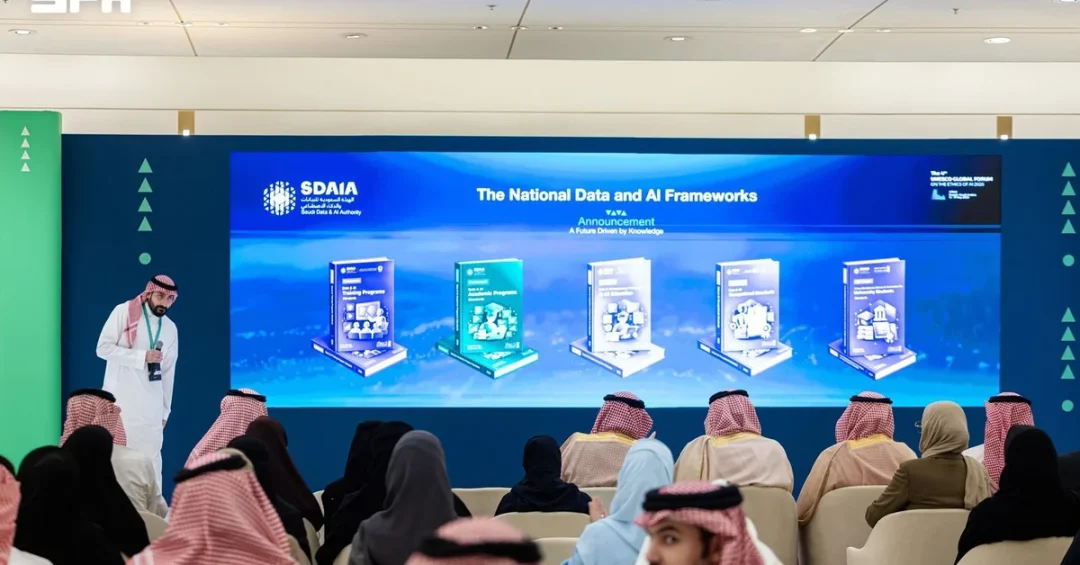
Saudi Arabia’s Saudi Data and AI Authority (SDAIA) launched five landmark frameworks on Thursday to build national capabilities in data and artificial intelligence (AI) across general education, higher education, training, and professional development. The announcement was made during the fourth UNESCO Global Forum on the Ethics of Artificial Intelligence (GFEAI 2026), hosted in Riyadh, underscoring the Kingdom’s growing leadership in shaping the global AI ethics agenda. The frameworks aim to align education and training with labor market needs, promote responsible AI use, and support Saudi Arabia’s Vision 2030 goals.
Context and Background
The launch comes as Saudi Arabia accelerates its digital transformation under Vision 2030. The UNESCO Global Forum on the Ethics of AI provides a platform for international dialogue on AI governance. Hosting this event reflects the Kingdom’s commitment to ethical AI development and its role in bridging global standards with local capacity building. SDAIA, established in 2019, leads national data and AI strategies, including the National Strategy for Data and AI.
Key Details
The five frameworks, developed in partnership with key Saudi institutions, address different segments of the education and training ecosystem:
Data and AI Training Program Standards Framework – with the Technical and Vocational Training Corporation, sets quality standards for training programs to meet labor market needs and comply with national regulations.
Data and AI Academic Program Standards Framework – with the Education and Training Evaluation Commission, establishes minimum standards for academic programs, including learning outcomes and qualification requirements.
Data and AI Competency Framework for K-12 – with the National Curriculum Center, defines core learning outcomes for students to use data and AI responsibly, with guidelines for teachers and students.
Data and AI Professional Standards Framework – with the Ministry of Human Resources and Social Development, represented by the Digital Sector Skills Council, defines professions, roles, and competencies required in the field to align workforce capabilities with market needs.
Data and AI Curriculum for University Students Across Disciplines – outlines minimum learning outcomes for students to work with data and use AI responsibly, enhancing readiness for the future labor market.
Implications and Impact
These frameworks are expected to create a cohesive national approach to data and AI education, from K-12 through higher education and professional training. By integrating AI competencies into curricula and training programs, Saudi Arabia aims to equip its workforce with the skills needed for the digital economy. The initiative also positions the Kingdom as a model for other nations seeking to develop ethical AI ecosystems. The frameworks emphasize responsible use, aligning with UNESCO’s global ethical standards.
Vision 2030 Alignment
Building national capabilities in data and AI is central to Vision 2030’s goal of a diversified, knowledge-based economy. The frameworks support the development of qualified professionals, promote innovation, and ensure that Saudi citizens are prepared for the jobs of the future. By fostering responsible AI use, the Kingdom reinforces its commitment to ethical progress and global cooperation, further solidifying its role as a leader in the digital age.
20 Questions
Q1. What did SDAIA launch on Thursday?
A1. SDAIA launched five frameworks to build capabilities in data and artificial intelligence across education, training, and professional development during the UNESCO Global Forum in Riyadh.
Q2. Where was the fourth UNESCO Global Forum on the Ethics of AI held?
A2. The forum was hosted in Riyadh, Saudi Arabia, highlighting the Kingdom’s role in global AI ethics discussions and its commitment to responsible innovation.
Q3. Which Saudi institution partnered on the Training Program Standards Framework?
A3. The Technical and Vocational Training Corporation partnered with SDAIA to develop the Data and AI Training Program Standards Framework, ensuring training aligns with labor market needs.
Q4. What is the purpose of the Academic Program Standards Framework?
A4. It establishes minimum standards for academic programs, including learning outcomes and qualification requirements, developed with the Education and Training Evaluation Commission.
Q5. Who partnered on the K-12 Competency Framework?
A5. The National Curriculum Center collaborated with SDAIA to define core learning outcomes for students to use data and AI responsibly, with guidelines for teachers and students.
Q6. What does the Professional Standards Framework aim to achieve?
A6. Developed with the Ministry of Human Resources and Social Development, it defines professions and competencies in data and AI to better align workforce capabilities with labor market needs.
Q7. What is the focus of the University Curriculum Framework?
A7. It outlines minimum learning outcomes for university students across disciplines to work with data and use AI responsibly, enhancing their readiness for the future labor market.
Q8. How do these frameworks support Saudi Arabia’s Vision 2030?
A8. They build national capabilities in data and AI, supporting a diversified knowledge economy, innovation, and the development of qualified professionals for future jobs.
Q9. What is SDAIA’s role in Saudi Arabia?
A9. SDAIA leads national data and AI strategies, including the National Strategy for Data and AI, and drives the Kingdom’s digital transformation agenda.
Q10. When was SDAIA established?
A10. SDAIA was established in 2019 to spearhead Saudi Arabia’s data and AI initiatives, aligning with Vision 2030 goals for digital advancement.
Q11. Why is the UNESCO forum significant for Saudi Arabia?
A11. Hosting the forum demonstrates Saudi Arabia’s commitment to ethical AI development and its leadership in global discussions on AI governance and standards.
Q12. What is the expected impact of these frameworks on education?
A12. They will create a cohesive national approach to data and AI education, from K-12 to higher education, equipping students with skills for the digital economy.
Q13. How do the frameworks promote responsible AI use?
A13. They define guidelines and learning outcomes that emphasize ethical and responsible use of data and AI by students, teachers, and professionals.
Q14. Which sectors will benefit from the Professional Standards Framework?
A14. The framework benefits the data and AI workforce by defining competencies and roles, ensuring professionals meet labor market demands and national regulations.
Q15. What is the role of the Digital Sector Skills Council?
A15. Represented by the Ministry of Human Resources and Social Development, it partnered with SDAIA to develop professional standards for data and AI roles and competencies.
Q16. How will the K-12 framework benefit students?
A16. It provides core learning outcomes for students to use data and AI effectively and responsibly, preparing them for future academic and career opportunities.
Q17. What makes these frameworks a national initiative?
A17. They are developed through partnerships with key Saudi institutions, ensuring alignment with national laws, labor market needs, and Vision 2030 objectives.
Q18. How does this launch position Saudi Arabia globally?
A18. It positions the Kingdom as a model for ethical AI development and education, showcasing its leadership in integrating AI into national capacity building.
Q19. What is the significance of the University Curriculum Framework for students?
A19. It ensures university students across disciplines gain essential data and AI skills, enhancing their employability and readiness for the evolving job market.
Q20. What future steps can be expected after these frameworks?
A20. Implementation across educational institutions and training programs will follow, with continuous evaluation to ensure alignment with labor market needs and Vision 2030 goals.
Reader Feedback
We value your thoughts. Please share your feedback on this article.
Your feedback helps us improve our coverage.