


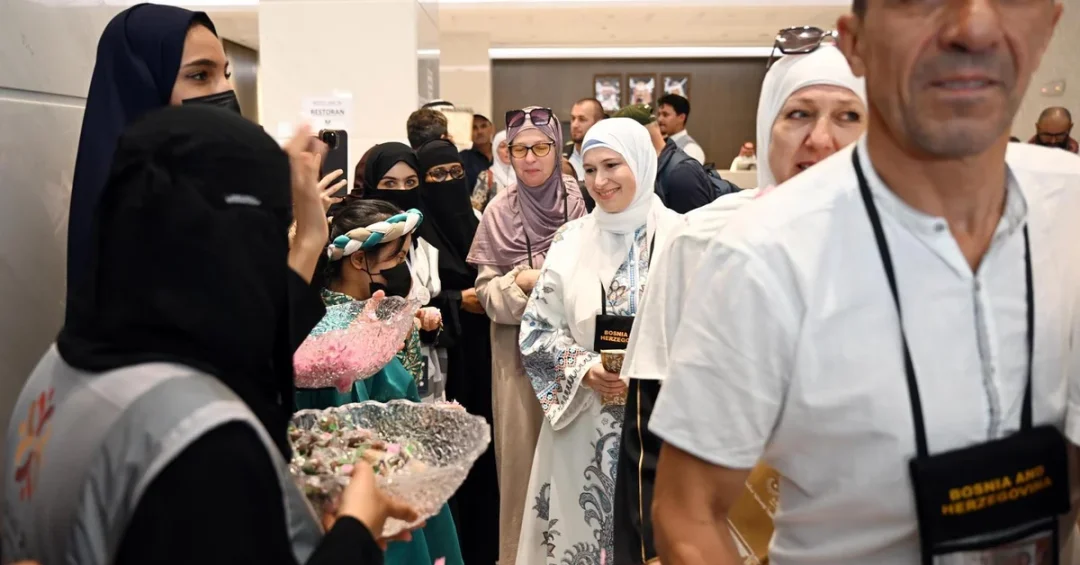
The Saudi Press Agency (SPA) has documented the departure of pilgrims from Madinah as they conclude their Hajj journey and return to their home countries. The scenes captured on July 3, 2024, highlight the extensive services provided by field teams and relevant agencies in the moments before pilgrims leave the city, following their visit to the Prophet’s Mosque. This operation reflects the Kingdom’s unwavering commitment, under the leadership of the Custodian of the Two Holy Mosques, to ensuring a seamless and spiritually fulfilling experience for all pilgrims.
Context and Background
Madinah, the second holiest city in Islam, holds immense significance for Muslims worldwide. Each year, millions of pilgrims travel to Saudi Arabia to perform Hajj, one of the Five Pillars of Islam, and many extend their journey to visit the Prophet’s Mosque in Madinah. The Saudi government, through various ministries and agencies, orchestrates a comprehensive logistical framework to manage this massive influx, prioritizing the safety, comfort, and well-being of guests. The departure phase is a critical component, requiring precise coordination to facilitate smooth transitions from the holy sites to airports and border crossings.
Key Details
According to the Saudi Press Agency (SPA), the documented scenes showcase the meticulous efforts of field teams and relevant agencies in the moments leading up to the pilgrims’ departure. These teams provide a range of services, including transportation, guidance, health care, and security, ensuring that pilgrims can depart with ease and dignity after completing their religious rites. The integrated approach involves multiple stakeholders, such as the Ministry of Hajj and Umrah, the General Authority for the Care of the Two Holy Mosques, and local authorities in Madinah, all working in harmony to uphold the Kingdom’s reputation for excellence in hosting pilgrims.
Implications and Impact
The successful departure of pilgrims from Madinah underscores Saudi Arabia’s logistical prowess and its dedication to serving Islam’s holiest sites. Beyond the immediate operational success, these efforts have broader implications for international relations, as pilgrims return to their home countries with positive impressions of the Kingdom. This soft power diplomacy fosters goodwill and strengthens cultural ties. Moreover, the continuous improvement of services aligns with Saudi Arabia’s Vision 2030, which aims to enhance the quality of life for citizens and visitors alike, and to increase the number of Umrah and Hajj pilgrims to 30 million by 2030.
Vision 2030 Alignment
The documentation of pilgrims’ departure from Madinah is a testament to Saudi Arabia’s commitment to Vision 2030, which emphasizes elevating the pilgrimage experience through infrastructure development, digital transformation, and enhanced services. By facilitating the smooth return of pilgrims, the Kingdom reinforces its role as a global leader in hospitality and religious tourism, contributing to economic diversification and international goodwill. As Saudi Arabia continues to invest in its sacred sites and logistical capabilities, it solidifies its position as the premier destination for Muslims seeking spiritual fulfillment and world-class care.
20 Questions
Q1. What did the Saudi Press Agency document?
A1. The Saudi Press Agency documented scenes of pilgrims leaving Madinah after completing Hajj and visiting the Prophet’s Mosque. The documentation highlights the services provided by field teams and relevant agencies to facilitate a smooth departure for pilgrims returning to their home countries.
Q2. When were these scenes documented?
A2. The scenes were documented on July 3, 2024, as pilgrims were preparing to depart from Madinah. This date marks the conclusion of their Hajj journey and their visits to the Prophet’s Mosque, a significant spiritual experience for Muslims worldwide.
Q3. Why is Madinah important for pilgrims?
A3. Madinah is the second holiest city in Islam, home to the Prophet’s Mosque, where the Prophet Muhammad (peace be upon him) is buried. Pilgrims visit Madinah to pray at the mosque, which holds great spiritual significance and is a key part of the Hajj and Umrah experience.
Q4. What services are provided to pilgrims in Madinah?
A4. Pilgrims in Madinah receive a range of services including transportation, health care, security, guidance, and accommodation. These services are coordinated by various Saudi government agencies to ensure pilgrims can perform their rituals comfortably and safely before their departure.
Q5. Which agencies are involved in facilitating pilgrims’ departure?
A5. Multiple agencies collaborate, including the Ministry of Hajj and Umrah, the General Authority for the Care of the Two Holy Mosques, and local authorities in Madinah. Their integrated efforts ensure a seamless departure process for pilgrims, reflecting the Kingdom’s commitment to excellent service.
Q6. How does Saudi Arabia ensure the safety of pilgrims?
A6. Saudi Arabia deploys extensive security measures, medical teams, and advanced monitoring systems to protect pilgrims. Field teams are stationed at key locations to provide immediate assistance, and coordination with relevant agencies ensures a secure environment throughout the pilgrims’ stay and departure.
Q7. What is the significance of the Prophet’s Mosque visit?
A7. Visiting the Prophet’s Mosque is a deeply spiritual experience for pilgrims, offering them a chance to pray in one of Islam’s most sacred sites. It is considered a highly recommended act that complements the Hajj pilgrimage and brings pilgrims closer to their faith.
Q8. How many pilgrims perform Hajj annually?
A8. Approximately 2 million pilgrims perform Hajj annually, though numbers fluctuate based on global conditions and Saudi Arabia’s capacity management. The Kingdom continuously works to increase capacity and improve services in line with Vision 2030 goals.
Q9. What is the role of the Saudi Press Agency in this context?
A9. The Saudi Press Agency serves as the official news outlet of the Kingdom, documenting key events and government efforts. Its coverage of pilgrims’ departure highlights the transparency and success of Saudi Arabia’s pilgrimage management, showcasing the Kingdom’s dedication to serving guests.
Q10. How does the departure process support Vision 2030?
A10. The departure process exemplifies Vision 2030’s focus on enhancing pilgrim experiences through efficient services and infrastructure. By ensuring smooth transitions, Saudi Arabia aims to increase pilgrim satisfaction, boost religious tourism, and achieve the goal of hosting 30 million pilgrims by 2030.
Q11. What challenges are associated with managing pilgrim departures?
A11. Managing pilgrim departures involves logistical challenges such as coordinating transportation, managing crowds, and ensuring timely processing at airports. Saudi authorities address these through meticulous planning, real-time monitoring, and the use of advanced technologies to streamline operations.
Q12. How do field teams assist pilgrims during departure?
A12. Field teams assist pilgrims by providing directions, medical aid, and logistical support. They are stationed at departure points to ensure pilgrims have a smooth experience, addressing any issues promptly and maintaining order as pilgrims board transportation to their home countries.
Q13. What measures are taken to ensure pilgrims’ health during departure?
A13. Health measures include on-site medical clinics, mobile health units, and emergency services. Pilgrims have access to medical care if needed, and health protocols are strictly followed to prevent the spread of diseases, ensuring a safe departure for all.
Q14. How does Saudi Arabia handle the transportation of pilgrims?
A14. Saudi Arabia operates a comprehensive transportation network including buses, trains, and flights. The Haramain High Speed Railway connects Madinah and Makkah, while airports in Jeddah and Madinah handle international departures, ensuring efficient movement of pilgrims.
Q15. What is the significance of the Hajj in Islam?
A15. Hajj is one of the Five Pillars of Islam, obligatory for all able Muslims once in their lifetime. It involves a series of rituals performed in Makkah over several days, symbolizing unity, equality, and spiritual renewal. Completing Hajj is a profound achievement for believers.
Q16. How does Saudi Arabia’s leadership support Hajj operations?
A16. The Saudi leadership, under the Custodian of the Two Holy Mosques, prioritizes Hajj by allocating substantial resources, issuing directives for seamless operations, and overseeing improvements. Their commitment ensures pilgrims receive the highest level of care and hospitality.
Q17. What is the role of technology in managing pilgrim crowds?
A17. Technology plays a vital role through apps for navigation, crowd management systems, and digital health records. These tools help authorities monitor pilgrim flows, provide real-time information, and respond swiftly to emergencies, enhancing overall safety and efficiency.
Q18. How do pilgrims benefit from the services in Madinah?
A18. Pilgrims benefit from a range of services that allow them to focus on their spiritual journey. Comfortable accommodations, accessible transportation, and dedicated support enable them to perform rituals peacefully and depart with positive memories of their time in the Kingdom.
Q19. What economic impact does Hajj have on Saudi Arabia?
A19. Hajj significantly contributes to Saudi Arabia’s economy through spending on accommodation, transportation, and local businesses. It supports job creation and aligns with Vision 2030’s goal to diversify revenue streams by boosting religious tourism and related sectors.
Q20. How does Saudi Arabia measure the success of Hajj operations?
A20. Success is measured by pilgrim satisfaction, safety records, and operational efficiency. Feedback from pilgrims, health and security statistics, and the smooth execution of logistics are key indicators. Continuous improvement based on these metrics ensures ever-better experiences.
Reader Feedback
We value your thoughts. Please share your feedback on this article.
Your feedback helps us improve our coverage.