


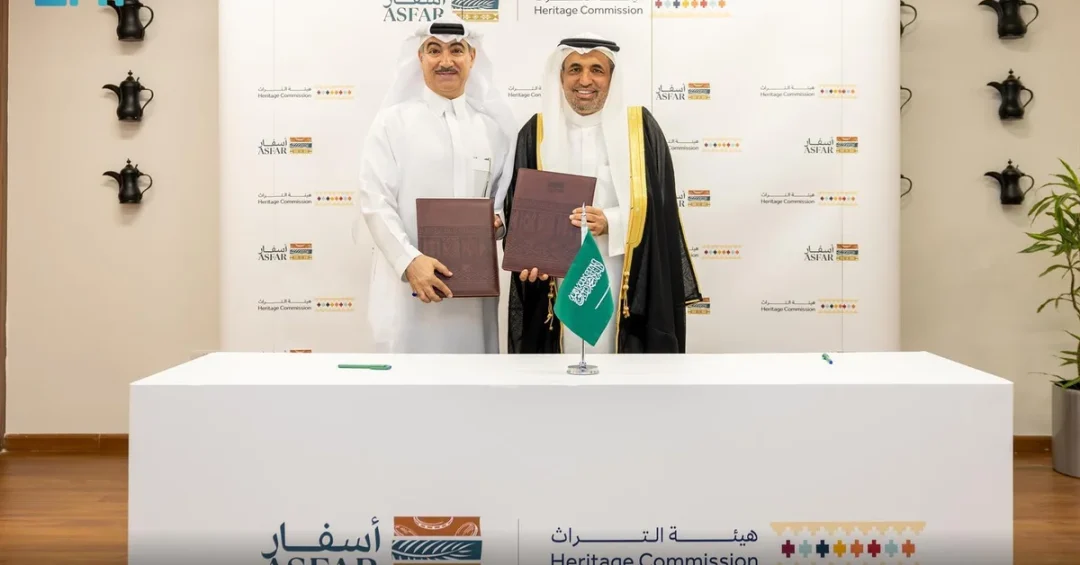
The Heritage Commission and ASFAR, the Saudi tourism investment company wholly owned by the Public Investment Fund, signed a memorandum of understanding (MoU) on May 26, 2024, in Riyadh to enhance collaboration and elevate the visitor experience at promising cultural heritage sites across the Kingdom. The agreement was signed by Dr. Jasser bin Suleiman Al-Harbash, CEO of the Heritage Commission, and Dr. Fahad bin Mushayt, CEO of ASFAR, marking a significant step toward advancing the strategic objectives of both entities.
Context and Background
The Heritage Commission, a key cultural institution under the Ministry of Culture, is dedicated to preserving, promoting, and developing Saudi Arabia’s rich archaeological and heritage assets. ASFAR, established as part of the Public Investment Fund’s tourism strategy, focuses on investing in tourist destinations and historical sites to build a comprehensive tourism ecosystem. This MoU aligns with the national cultural strategy and the broader goals of Saudi Vision 2030, which seeks to diversify the economy and enhance quality of life.
The partnership reflects a growing trend of collaboration between public and private sectors in Saudi Arabia to unlock the potential of cultural heritage as a driver of tourism and economic growth. By joining forces, the two entities aim to create sustainable operational models that preserve the Kingdom’s heritage while making it accessible to a global audience.
Key Details
Under the agreement, the Heritage Commission and ASFAR will work together to improve operational efficiency, prepare detailed plans, refine preliminary designs, and establish operational models for heritage sites across the Kingdom. According to a press release from the commission, this collaboration is integral to developing the national heritage and archaeology sector and realizing its strategic objectives.
Dr. Al-Harbash emphasized that forging partnerships with diverse sectors is essential to the Commission’s mission. Dr. Mushayt highlighted ASFAR’s fundamental role in shaping the Kingdom’s tourism landscape through investments in destinations and a commitment to fostering a comprehensive tourism ecosystem. The MoU is part of a series of successful partnerships ASFAR has formed since its inception, aimed at elevating promising Saudi cities on the tourism map.
Implications and Impact
This partnership is expected to significantly enhance the visitor experience at cultural heritage sites, making them more attractive to both domestic and international tourists. By improving infrastructure and operations, the initiative will contribute to the growth of the tourism sector, create job opportunities, and promote cultural exchange. It also underscores Saudi Arabia’s commitment to preserving its heritage while embracing modernization.
On a regional and international level, the MoU strengthens Saudi Arabia’s position as a leading cultural destination, aligning with global trends in heritage tourism. It demonstrates the Kingdom’s proactive approach to sustainable tourism development and its ability to leverage public-private partnerships for economic and cultural benefits.
Vision 2030 Alignment
This MoU directly supports Saudi Vision 2030’s objectives of diversifying the economy, increasing tourism’s contribution to GDP, and preserving national identity. By revitalizing heritage sites, the Kingdom not only boosts tourism but also reinforces its cultural heritage as a cornerstone of its future. The collaboration between the Heritage Commission and ASFAR exemplifies the visionary leadership driving Saudi Arabia’s transformation into a global hub for culture and tourism.
20 Questions
Q1. What is the purpose of the MoU signed between the Heritage Commission and ASFAR?
A1. The MoU aims to bolster collaboration and elevate the visitor experience at promising cultural heritage sites across the Kingdom, enhancing operations and establishing operational models for these sites.
Q2. Who signed the MoU on behalf of the Heritage Commission and ASFAR?
A2. Dr. Jasser bin Suleiman Al-Harbash, CEO of the Heritage Commission, and Dr. Fahad bin Mushayt, CEO of ASFAR, signed the agreement in Riyadh on May 26, 2024.
Q3. What is ASFAR and who owns it?
A3. ASFAR is a Saudi tourism investment company wholly owned by the Public Investment Fund (PIF), focused on investing in tourist destinations and historical sites to develop the tourism ecosystem.
Q4. How does this MoU align with Saudi Vision 2030?
A4. It supports Vision 2030 by advancing the national cultural strategy, diversifying the economy, and enhancing tourism’s role in preserving heritage and creating opportunities.
Q5. What specific areas will the partnership focus on?
A5. The partnership will focus on improving operational efficiency, preparing plans, refining preliminary designs, and establishing operational models for heritage sites across the Kingdom.
Q6. Why is the Heritage Commission partnering with ASFAR?
A6. The Heritage Commission seeks to forge partnerships with diverse sectors to develop the national heritage and archaeology sector, realizing its strategic objectives in line with Vision 2030.
Q7. What role does ASFAR play in Saudi Arabia’s tourism landscape?
A7. ASFAR plays a fundamental role in defining and shaping the tourism landscape through investments in destinations, historical sites, and fostering a comprehensive tourism ecosystem.
Q8. How will this MoU benefit visitors to cultural heritage sites?
A8. It will enhance the visitor experience by improving operations, infrastructure, and accessibility, making heritage sites more engaging and informative for both domestic and international tourists.
Q9. What economic impact is expected from this collaboration?
A9. The collaboration is expected to boost tourism, create jobs, attract investment, and contribute to the diversification of the Saudi economy, aligning with Vision 2030 goals.
Q10. Are there any other similar partnerships by ASFAR?
A10. Yes, this MoU is part of a series of successful partnerships ASFAR has reached since its inception, aimed at elevating promising Saudi cities on the tourism map.
Q11. How does this initiative preserve Saudi cultural heritage?
A11. By developing heritage sites sustainably, the initiative ensures the preservation of Saudi Arabia’s archaeological and cultural assets while making them accessible to the public.
Q12. What is the significance of the MoU for the local communities?
A12. It can create job opportunities, stimulate local economies, and foster pride in cultural heritage, while also attracting tourists to lesser-known regions.
Q13. What is the timeline for implementing the projects under this MoU?
A13. The MoU outlines collaboration on plans and designs, with implementation expected to proceed in phases as specific projects are developed and approved.
Q14. How does this partnership enhance Saudi Arabia’s international standing?
A14. It positions the Kingdom as a leading cultural destination, showcasing its commitment to heritage preservation and sustainable tourism on a global stage.
Q15. What are the key objectives of the Heritage Commission?
A15. The Heritage Commission aims to preserve, promote, and develop Saudi Arabia’s heritage and archaeology, integrating them into the national cultural strategy and Vision 2030.
Q16. Will this MoU involve international expertise?
A16. While not specified, such partnerships often leverage global best practices in heritage management and tourism development to ensure world-class standards.
Q17. How does ASFAR’s investment strategy align with the MoU?
A17. ASFAR invests in tourist destinations and historical sites, which directly supports the MoU’s goal of enhancing heritage sites and building a comprehensive tourism ecosystem.
Q18. What are the expected outcomes for the tourism sector?
A18. The MoU is expected to increase tourist arrivals, extend visitor stays, and boost revenue, contributing to the tourism sector’s growth and economic diversification.
Q19. How can the public learn more about these heritage sites?
A19. Information will be made available through official channels of the Heritage Commission and ASFAR, as well as tourism platforms promoting Saudi Arabia’s cultural destinations.
Q20. What does this MoU signify for Saudi Arabia’s future?
A20. It signifies a steadfast commitment to preserving heritage while advancing tourism, reflecting the Kingdom’s vision to become a global leader in culture and tourism by 2030.
Reader Feedback
We value your thoughts. Please share your feedback on this article.
Your feedback helps us improve our coverage.