


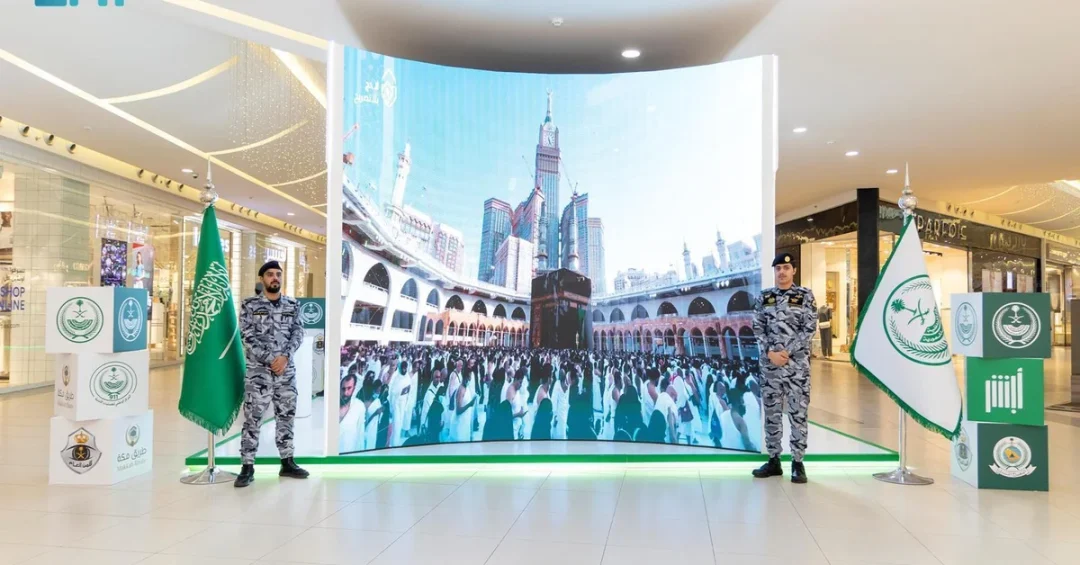
The Ministry of Interior of Saudi Arabia showcased the Makkah Route Initiative at the “No Hajj without a Permit” exhibition, held in Madinah from May 20 to 25, 2024, at Al-Noor Mall. The initiative, part of the Pilgrim Experience Program under Saudi Vision 2030, aims to provide high-quality services to the guests of God through partnerships with several government agencies. The exhibition served as a platform to educate visitors about the initiative’s ongoing efforts and the importance of obtaining proper Hajj permits.
Context and Background
The Makkah Route Initiative is a flagship program that streamlines the pilgrimage process by completing visa, immigration, and customs procedures at the pilgrim’s country of departure, allowing them to enter Saudi Arabia smoothly. This year, the initiative is being implemented for the sixth time across 11 airports in seven countries: Pakistan, Malaysia, Indonesia, Morocco, Bangladesh, Türkiye, and Côte d’Ivoire. The initiative reflects Saudi Arabia’s commitment to enhancing the experience of pilgrims and ensuring their comfort and safety from the moment they begin their journey.
The “No Hajj without a Permit” exhibition is a mobile awareness campaign by the Ministry of Interior, designed to inform the public about the legal requirements for performing Hajj and to highlight the services provided by various security and government entities. By holding the exhibition in Madinah, the ministry aims to reach a wide audience, including residents and visitors, and to reinforce the message that permits are mandatory for a safe and organized pilgrimage season.
Key Details
The exhibition also showcased the services of the Emirate of Madinah Region and various public security sectors, including the Special Forces for Hajj and Umrah Security, the General Directorate of Civil Defense, the National Center for Security Operations, and the General Department of Translation at the Ministry of Interior. These entities work collaboratively to ensure the safety, security, and well-being of pilgrims throughout their stay in the Kingdom.
Visitors to the exhibition were introduced to the Makkah Route Initiative’s operational framework, which includes advanced technology and coordination with international partners. The initiative not only simplifies entry procedures but also provides services such as luggage handling and transportation, ensuring a seamless experience for pilgrims. The ministry’s participation in the exhibition underscores its dedication to continuous improvement and innovation in serving the guests of God.
Implications and Impact
The Makkah Route Initiative significantly reduces waiting times and eliminates the need for pilgrims to undergo lengthy procedures upon arrival in Saudi Arabia. This enhances the overall pilgrimage experience and reflects the Kingdom’s advanced capabilities in managing large-scale events. The initiative also strengthens international cooperation, as it involves partnerships with multiple countries and demonstrates Saudi Arabia’s leadership in the Islamic world.
By raising awareness about the importance of permits, the exhibition contributes to a more organized and secure Hajj season. It also highlights the Kingdom’s efforts to combat illegal pilgrimage attempts, which can pose safety risks. The initiative’s success is a testament to the effectiveness of Saudi Arabia’s strategic planning and its commitment to the well-being of all pilgrims.
Vision 2030 Alignment
The Makkah Route Initiative aligns directly with Vision 2030’s goal of improving the quality of services for pilgrims and expanding the capacity to host more visitors. By leveraging technology, partnerships, and efficient processes, Saudi Arabia is transforming the Hajj experience, contributing to the Kingdom’s broader ambitions of becoming a global hub for Islamic tourism and cultural exchange. The initiative is a prime example of how Vision 2030 is being implemented on the ground, delivering tangible benefits to millions of Muslims worldwide.
20 Questions
Q1. What is the Makkah Route Initiative?
A1. The Makkah Route Initiative is a Saudi government program that allows pilgrims to complete visa, immigration, and customs procedures in their home country before traveling to Saudi Arabia for Hajj. It is part of the Pilgrim Experience Program under Vision 2030, aiming to provide high-quality services to pilgrims.
Q2. When and where was the “No Hajj without a Permit” exhibition held?
A2. The exhibition was held in Madinah from May 20 to 25, 2024, at Al-Noor Mall. It was organized by the Ministry of Interior to raise awareness about the importance of obtaining Hajj permits and to showcase the services of various government entities.
Q3. How many countries are participating in the Makkah Route Initiative this year?
A3. This year, the initiative is being implemented in seven countries: Pakistan, Malaysia, Indonesia, Morocco, Bangladesh, Türkiye, and Côte d’Ivoire. It operates across 11 airports in these countries, marking the sixth time the initiative has been launched.
Q4. What is the main objective of the Makkah Route Initiative?
A4. The main objective is to simplify the pilgrimage process by completing entry procedures at the point of departure, reducing waiting times and ensuring a smooth arrival in Saudi Arabia. This enhances the overall experience for pilgrims and reflects the Kingdom’s commitment to serving the guests of God.
Q5. Which government entities were showcased at the exhibition?
A5. The exhibition showcased the services of the Emirate of Madinah Region, the Special Forces for Hajj and Umrah Security, the General Directorate of Civil Defense, the National Center for Security Operations, and the General Department of Translation at the Ministry of Interior.
Q6. How does the Makkah Route Initiative benefit pilgrims?
A6. Pilgrims benefit from reduced processing times, as visa and customs procedures are completed in their home country. This allows them to enter Saudi Arabia more quickly and comfortably, with luggage handled efficiently, leading to a more focused and spiritual pilgrimage experience.
Q7. What is the significance of the “No Hajj without a Permit” campaign?
A7. The campaign emphasizes the legal requirement for Hajj permits, which helps ensure the safety and organization of the pilgrimage. It discourages illegal attempts and informs the public about the consequences, contributing to a secure and orderly Hajj season.
Q8. How does the initiative align with Saudi Vision 2030?
A8. The initiative is part of the Pilgrim Experience Program, a key component of Vision 2030. It aims to improve the quality of services for pilgrims, increase capacity, and enhance the Kingdom’s position as a global Islamic destination, aligning with the vision’s goals of economic diversification and cultural leadership.
Q9. What role does technology play in the Makkah Route Initiative?
A9. Technology is central to the initiative, enabling efficient processing of pilgrim data, coordination with international airports, and real-time tracking. It ensures accuracy, reduces errors, and provides a seamless experience for both pilgrims and authorities.
Q10. How many times has the initiative been implemented?
A10. The initiative is being presented for the sixth time this year (1445 AH / 2024 AD). Its repeated implementation demonstrates its success and the growing trust of partner countries in Saudi Arabia’s ability to manage the pilgrimage effectively.
Q11. What is the role of the Special Forces for Hajj and Umrah Security?
A11. The Special Forces for Hajj and Umrah Security are responsible for maintaining security and order during the pilgrimage. They ensure the safety of pilgrims, manage crowds, and respond to emergencies, working alongside other security agencies to provide a secure environment.
Q12. How does the initiative improve the arrival experience in Saudi Arabia?
A12. By completing entry procedures abroad, pilgrims arrive in Saudi Arabia with minimal formalities. They can proceed directly to their accommodations, avoiding long queues and delays, which significantly improves their comfort and reduces stress.
Q13. What is the role of the General Directorate of Civil Defense in the exhibition?
A13. The General Directorate of Civil Defense showcased its preparedness and response capabilities for emergencies during Hajj. This includes fire safety, rescue operations, and medical assistance, ensuring the well-being of pilgrims in all circumstances.
Q14. How does the initiative foster international cooperation?
A14. The initiative involves partnerships with seven countries, requiring coordination on visa processing, data sharing, and logistics. This cooperation strengthens diplomatic ties and showcases Saudi Arabia’s leadership in facilitating one of the world’s largest religious gatherings.
Q15. What is the National Center for Security Operations’ role?
A15. The National Center for Security Operations monitors and coordinates security efforts across the Kingdom, including during Hajj. It integrates data from various agencies to ensure a unified response to any incidents, enhancing overall safety and efficiency.
Q16. How does the exhibition help in spreading awareness about Hajj permits?
A16. The exhibition provides direct information to visitors about the legal requirements for Hajj, including the need for a permit. It uses interactive displays and staff explanations to clarify the process, reducing confusion and encouraging compliance.
Q17. What are the benefits of the initiative for the Saudi economy?
A17. The initiative supports Vision 2030’s goal of increasing the number of pilgrims, which boosts the tourism and hospitality sectors. Efficient processing encourages more pilgrims to visit, generating revenue and creating jobs, while enhancing the Kingdom’s global reputation.
Q18. How does the General Department of Translation contribute to the initiative?
A18. The General Department of Translation provides language services to assist pilgrims from diverse backgrounds. This ensures clear communication and helps pilgrims navigate procedures, contributing to a smoother experience and better understanding of services.
Q19. What is the significance of holding the exhibition in Madinah?
A19. Madinah is a key destination for pilgrims, and holding the exhibition there allows the ministry to reach a large number of visitors and residents. It also highlights the city’s role in the pilgrimage experience and the services provided by the Emirate of Madinah Region.
Q20. What future developments can be expected from the Makkah Route Initiative?
A20. The initiative is expected to expand to more countries and airports, incorporating advanced technologies like AI and biometrics. Continuous improvements will further streamline procedures, aligning with Vision 2030’s goal of hosting 30 million pilgrims by 2030 and enhancing the overall experience.
Reader Feedback
We value your thoughts. Please share your feedback on this article.
Your feedback helps us improve our coverage.