


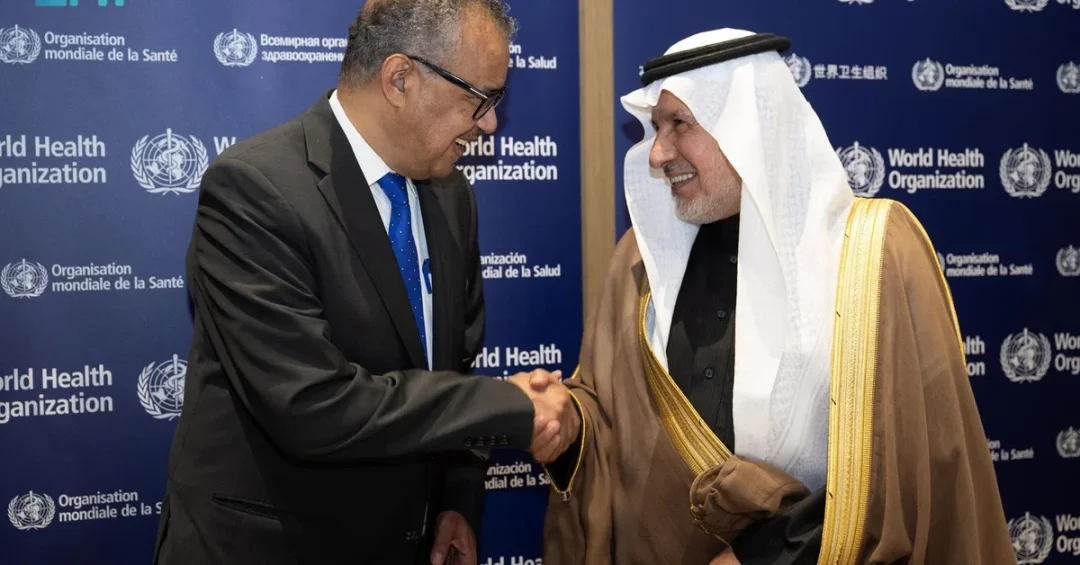
Advisor at the Royal Court and Supervisor General of King Salman Humanitarian Aid and Relief Center (KSrelief) Dr. Abdullah bin Abdulaziz Al Rabeeah met with World Health Organization (WHO) Director General Dr. Tedros Adhanom on the sidelines of the 77th World Health Assembly in Geneva, Switzerland. The meeting, held in the presence of Saudi Arabia’s Permanent Representative to the UN in Geneva Ambassador Abdulmohsen bin Khothaila, focused on strengthening collaboration in joint relief and humanitarian projects within the health sector.
Context and Background
This high-level engagement underscores the Kingdom of Saudi Arabia’s unwavering commitment to global health and humanitarian assistance. KSrelief, established in 2015 under the directives of the Custodian of the Two Holy Mosques, has become a leading international aid agency, delivering vital support to over 90 countries. The meeting with the WHO Director General comes at a time when coordinated international action is critical to address pressing health challenges, including pandemic preparedness, disease outbreaks, and access to essential medical care in conflict-affected regions.
The 77th World Health Assembly serves as a platform for global health leaders to align strategies and resources. Saudi Arabia’s active participation reflects its role as a responsible global actor, leveraging its humanitarian expertise to complement the WHO’s mandate. The presence of Ambassador bin Khothaila highlights the Kingdom’s diplomatic commitment to multilateral cooperation in health governance.
Key Details
During the meeting, Dr. Al Rabeeah and Dr. Tedros discussed mechanisms for delivering medical assistance to patients and the injured worldwide, with a focus on streamlining logistics and ensuring timely aid distribution. They reviewed ongoing joint projects and explored new avenues for collaboration, particularly in emergency response and capacity building for health systems in vulnerable countries.
Dr. Tedros praised the medical projects and programs carried out by the Kingdom of Saudi Arabia through KSrelief, acknowledging their significant impact on improving health outcomes for those in need. He specifically commended the Kingdom’s rapid response to humanitarian crises, including the provision of field hospitals, medical supplies, and rehabilitation services. This recognition underscores the trust and credibility Saudi Arabia has earned in the international humanitarian community.
Implications and Impact
The meeting reinforces the strategic partnership between Saudi Arabia and the WHO, paving the way for enhanced coordination in global health emergencies. By aligning KSrelief’s operational capabilities with WHO’s technical expertise, the two entities can more effectively address health disparities and save lives. This collaboration also strengthens Saudi Arabia’s position as a key contributor to the Sustainable Development Goals, particularly Goal 3 (Good Health and Well-being).
For the international community, this engagement signals a continued commitment from Saudi Arabia to support multilateral health initiatives, even amid regional and global challenges. The Kingdom’s proactive approach in health diplomacy not only benefits recipient countries but also fosters stability and resilience in fragile settings. The outcomes of this meeting are expected to translate into concrete action plans, with potential joint missions and resource mobilization efforts in the coming months.
Vision 2030 Alignment
This meeting aligns seamlessly with Saudi Arabia’s Vision 2030, which emphasizes the Kingdom’s role as a global humanitarian and development hub. The Vision’s pillars of a vibrant society, thriving economy, and ambitious nation are reflected in Saudi Arabia’s growing international aid footprint. By strengthening ties with the WHO, the Kingdom advances its goal of becoming a leading contributor to global health security, while also showcasing the values of compassion and solidarity that underpin its foreign policy. As Saudi Arabia continues to diversify its global engagements, such partnerships are integral to building a sustainable and impactful legacy that resonates far beyond its borders.
20 Questions
Q1. Who met with the WHO Director General in Geneva?
A1. Dr. Abdullah bin Abdulaziz Al Rabeeah, Advisor at the Royal Court and Supervisor General of KSrelief, met with WHO Director General Dr. Tedros Adhanom on the sidelines of the 77th World Health Assembly.
Q2. What is KSrelief?
A2. KSrelief is the King Salman Humanitarian Aid and Relief Center, a Saudi humanitarian organization established in 2015 to provide relief and aid to countries in need, operating under the directives of the Saudi leadership.
Q3. Where did the meeting take place?
A3. The meeting took place in Geneva, Switzerland, on the sidelines of the 77th World Health Assembly, a major global health conference attended by health officials from around the world.
Q4. Who else was present at the meeting?
A4. Saudi Arabia’s Permanent Representative to the UN in Geneva, Ambassador Abdulmohsen bin Khothaila, was present at the meeting, highlighting the diplomatic support for the discussions.
Q5. What topics were discussed during the meeting?
A5. The two sides discussed issues of common interest related to joint relief and humanitarian projects in the health sector, as well as mechanisms for delivering medical assistance to patients and the injured worldwide.
Q6. What did Dr. Tedros praise about Saudi Arabia?
A6. Dr. Tedros praised the medical projects and programs carried out by the Kingdom of Saudi Arabia through KSrelief, which aim to improve the health situation of those in need in various countries.
Q7. How does this meeting support global health?
A7. The meeting strengthens collaboration between Saudi Arabia and the WHO, enabling more effective coordination in emergency response, capacity building, and delivery of medical aid to vulnerable populations worldwide.
Q8. What is the significance of the 77th World Health Assembly?
A8. The World Health Assembly is the decision-making body of the WHO, where member states set policies and priorities for global health. The 77th session provided a platform for high-level discussions on health challenges.
Q9. How does KSrelief contribute to humanitarian aid?
A9. KSrelief provides humanitarian assistance including food, medical care, shelter, and education to millions of people in over 90 countries, often in conflict zones and disaster-stricken areas.
Q10. What is the role of the Saudi Permanent Representative to the UN?
A10. Ambassador Abdulmohsen bin Khothaila represents Saudi Arabia at the United Nations in Geneva, facilitating diplomatic engagement and supporting Saudi initiatives in international forums.
Q11. Why is the meeting important for Saudi Arabia’s Vision 2030?
A11. The meeting aligns with Vision 2030’s goal of positioning Saudi Arabia as a global humanitarian leader, showcasing the Kingdom’s commitment to international cooperation and sustainable development.
Q12. What are the mechanisms for delivering medical assistance discussed?
A12. The mechanisms include streamlined logistics, coordination of field hospitals, distribution of medical supplies, and joint emergency response teams to ensure timely and effective aid delivery.
Q13. How does this partnership benefit countries in need?
A13. The partnership enhances the capacity to respond to health crises, improve access to essential medical services, and support health system strengthening in low-resource settings, ultimately saving lives.
Q14. What is the historical context of Saudi Arabia’s humanitarian efforts?
A14. Saudi Arabia has a long history of humanitarian aid, with KSrelief being a major vehicle for its global outreach, reflecting the Kingdom’s Islamic values of charity and solidarity.
Q15. How does the WHO view Saudi Arabia’s contributions?
A15. The WHO has consistently recognized Saudi Arabia’s contributions, with Dr. Tedros praising the Kingdom’s medical projects and programs, indicating strong trust and respect for its humanitarian work.
Q16. What are the expected outcomes of this meeting?
A16. Expected outcomes include enhanced joint projects, increased funding for health initiatives, and improved coordination in emergency response, leading to more effective global health interventions.
Q17. How does this meeting affect Saudi Arabia’s international standing?
A17. The meeting reinforces Saudi Arabia’s reputation as a responsible global actor committed to humanitarian principles, strengthening its diplomatic ties and influence in international health governance.
Q18. What specific health sectors are likely to benefit?
A18. Sectors such as emergency medicine, maternal and child health, infectious disease control, and rehabilitation services are likely to benefit from the enhanced collaboration between KSrelief and WHO.
Q19. How can other countries learn from this partnership?
A19. Other countries can learn from the effective public-private partnership model, the importance of aligning national humanitarian efforts with international health goals, and the value of sustained diplomatic engagement.
Q20. What is the next step for Saudi Arabia and the WHO?
A20. The next step involves translating the discussions into concrete action plans, including joint missions, resource mobilization, and monitoring of health projects, with a focus on achieving measurable improvements in global health outcomes.
Reader Feedback
We value your thoughts. Please share your feedback on this article.
Your feedback helps us improve our coverage.
More on this topic: General
Related articles
 King Abdulaziz Reserve Chief Meets with IUCN Director in Switzerland
 Saudi Arabia Wins Best Pavilion Award at World Water Forum in Indonesia
 Minister Al-Fadley Inspects Hajj Readiness for Water
 Harvard Celebrates 60 Saudi Graduates from Elite U.S. Universities
 Ministry of Interior Showcases Makkah Route Initiative at Madinah Exhibition
 60 Red Crescent Volunteers Serve Iraqi Pilgrims at Jadidat Arar