


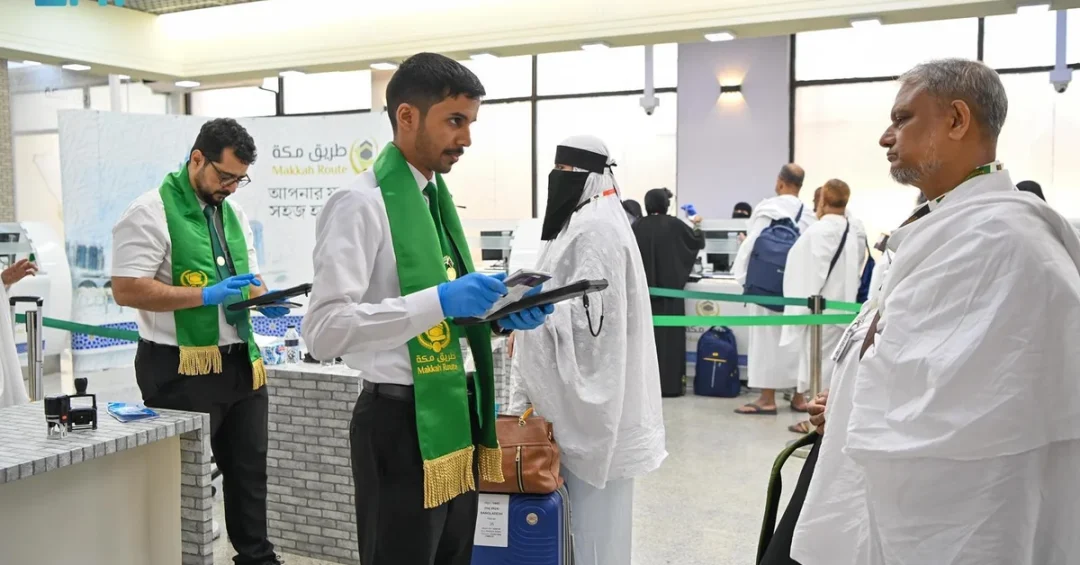
The Saudi Data and Artificial Intelligence Authority (SDAIA) is providing advanced digital and technical services to support pilgrims at Hazrat Shahjalal International Airport in Dhaka, Bangladesh, as part of the Makkah Route Initiative. This effort reflects Saudi Arabia’s commitment to leveraging technology to enhance the pilgrimage experience for international guests.
Context and Background
The Makkah Route Initiative, a flagship program under Saudi Vision 2030, aims to streamline the Hajj journey by facilitating immigration and customs procedures in pilgrims’ home countries. SDAIA’s participation underscores the Kingdom’s dedication to using innovative solutions to serve the growing number of pilgrims. By pre-processing pilgrims at their departure airports, the initiative reduces wait times and improves overall efficiency.
Key Details
SDAIA has deployed secure, privacy-focused technical systems at Hazrat Shahjalal International Airport to meet the initiative’s requirements. These systems include mobile biometric registration devices as backup stations, along with redundant systems and circuits to ensure uninterrupted operations. SDAIA’s technical teams are on-site, diligently preparing equipment at designated terminals to facilitate smooth procedures for beneficiaries. This deployment is part of a broader effort to integrate cutting-edge technology into Saudi Arabia’s public services.
Implications and Impact
The Makkah Route Initiative has significantly improved the Hajj experience for millions of pilgrims by reducing processing times and enhancing security. SDAIA’s role in Bangladesh demonstrates Saudi Arabia’s leadership in using data and AI for humanitarian purposes. This initiative also strengthens bilateral ties between Saudi Arabia and Bangladesh, showcasing the Kingdom’s global cooperation in serving Islam’s guests.
Vision 2030 Alignment
This initiative aligns with Saudi Vision 2030’s goals of enhancing government efficiency, embracing digital transformation, and providing exceptional services to pilgrims. By investing in advanced technologies, Saudi Arabia continues to set a global benchmark for pilgrimage management, reinforcing its position as a leader in innovation and service excellence.
20 Questions
Q1. What is SDAIA?
A1. SDAIA is the Saudi Data and Artificial Intelligence Authority, responsible for driving Saudi Arabia’s national data and AI strategy, and enhancing the Kingdom’s global competitiveness in these fields.
Q2. What is the Makkah Route Initiative?
A2. The Makkah Route Initiative is a program that streamlines Hajj procedures by allowing pilgrims to complete immigration and customs at their home country’s airport, reducing wait times and improving the overall pilgrimage experience.
Q3. Where is SDAIA providing services?
A3. SDAIA is providing services at Hazrat Shahjalal International Airport in Dhaka, Bangladesh, to assist pilgrims traveling to Saudi Arabia for Hajj.
Q4. What technical systems has SDAIA deployed?
A4. SDAIA has deployed secure, privacy-focused technical systems, including mobile biometric registration devices and backup systems, to ensure uninterrupted operations at the airport.
Q5. How does this initiative benefit pilgrims?
A5. The initiative reduces processing times, enhances security, and provides a smoother journey for pilgrims by pre-clearing them before departure.
Q6. When did this deployment take place?
A6. The deployment took place in May 2024, as reported by the Saudi Press Agency, in preparation for the Hajj season.
Q7. Why is this initiative important for Saudi Arabia?
A7. It demonstrates Saudi Arabia’s commitment to using technology for humanitarian purposes and aligns with Vision 2030’s goals of digital transformation and service excellence.
Q8. What is the role of SDAIA’s technical teams?
A8. SDAIA’s technical teams are on-site to prepare equipment, ensure systems operate smoothly, and provide support to facilitate efficient procedures for pilgrims.
Q9. How does this initiative strengthen Saudi-Bangladesh relations?
A9. It showcases bilateral cooperation in serving pilgrims, enhancing diplomatic ties, and highlighting Saudi Arabia’s global leadership in pilgrimage management.
Q10. What are mobile biometric registration devices?
A10. These are portable devices used to capture biometric data (such as fingerprints and facial images) for identity verification, serving as backup stations to ensure continuous service.
Q11. How does SDAIA ensure privacy and security?
A11. SDAIA develops secure and privacy-focused systems that adhere to strict data protection standards, ensuring the confidentiality and integrity of pilgrims’ information.
Q12. What other countries participate in the Makkah Route Initiative?
A12. The initiative includes several countries, such as Pakistan, Indonesia, Malaysia, and Bangladesh, among others, to facilitate pilgrims’ journeys.
Q13. How many pilgrims benefit from this initiative?
A13. The initiative benefits hundreds of thousands of pilgrims annually, significantly reducing congestion at Saudi airports and improving the overall Hajj experience.
Q14. What is the significance of Hajj for Saudi Arabia?
A14. Hajj is one of the Five Pillars of Islam, and Saudi Arabia considers it a sacred duty to host and serve pilgrims, demonstrating the Kingdom’s role as the custodian of the Two Holy Mosques.
Q15. How does this align with Vision 2030?
A15. It supports Vision 2030’s objectives of enhancing government services, embracing digital innovation, and enriching the pilgrimage experience for millions of guests.
Q16. What are backup systems and circuits?
A16. These are redundant technological infrastructure components that ensure continuous operation of critical systems in case of primary system failures, preventing service disruptions.
Q17. How does SDAIA contribute to Saudi Arabia’s digital economy?
A17. By developing and deploying advanced technologies, SDAIA drives innovation, enhances efficiency, and supports the growth of Saudi Arabia’s digital economy, in line with Vision 2030.
Q18. What is the expected outcome of SDAIA’s services in Bangladesh?
A18. The services will facilitate a seamless and efficient pilgrimage experience for Bangladeshi pilgrims, reflecting Saudi Arabia’s commitment to excellence and hospitality.
Q19. How does this initiative reflect Saudi Arabia’s global role?
A19. It highlights Saudi Arabia’s leadership in using technology for the benefit of humanity and its dedication to serving Muslims worldwide, reinforcing its position as a global humanitarian leader.
Q20. Where can I find more information about SDAIA?
A20. More information is available on SDAIA’s official website and through announcements by the Saudi Press Agency, which regularly reports on the Kingdom’s technological advancements.
Reader Feedback
We value your thoughts. Please share your feedback on this article.
Your feedback helps us improve our coverage.