


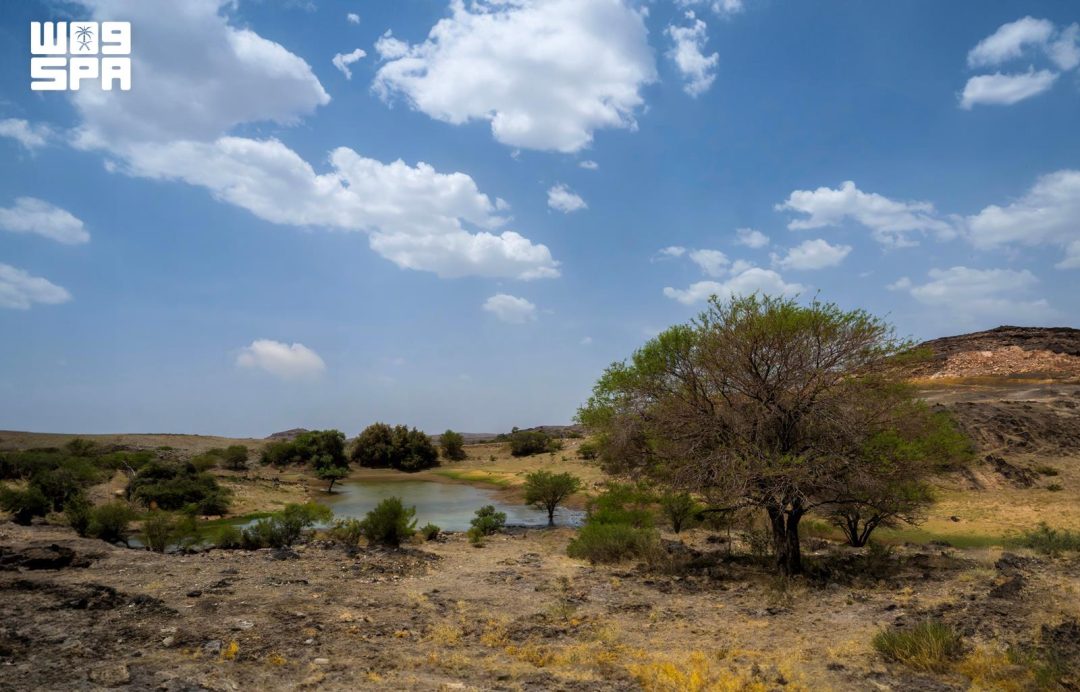
Badr Al-Junub province in the Najran region features diverse plant life and mountain terrain, including valleys and open gorges that turn green after summer rains. These natural landscapes serve as destinations for ecological and agricultural tourism for visitors seeking moderate climates during the summer.
According to SPA, the province’s ecological value is supported by wild and perennial trees such as Sidr, Karaz, Salama, Samura, and Arak. These species maintain the ecological balance and attract beekeepers producing natural honey based on seasonal flowering.
Recreational areas include Prince Mishal bin Saud Park, where over 2,000 trees and plants were planted, and Muat Park in central Hadada, which preserves oases of ancient Sidr, Samura, and Arak trees. Local mountain stones are used in park landscaping to maintain ecological identity.
What natural features make Badr Al-Junub a destination for summer tourism? Badr Al-Junub is an ideal destination for ecological and agricultural tourism due to its moderate summer climate and picturesque nature. The province is characterized by extensive mountain areas with diverse relief, including valleys and open gorges that become covered in greenery and local vegetation following the summer rainy season.
Which tree species are found in the valleys and gorges of Badr Al-Junub? The visual and ecological landscape of the province is defined by wild and perennial trees. Specifically, the valleys and gorges are decorated with Sidr, Karaz, Salama, Samura, and Arak trees, all of which play a vital role in maintaining the ecological balance of the region.
What specific parks are mentioned as recreational areas in the province? The province features Prince Mishal bin Saud Park, which has seen the planting of more than 2,000 trees and plants. Additionally, Muat Park located in the center of Hadada preserves natural oases containing ancient Samura, Arak, and Sidr trees.